
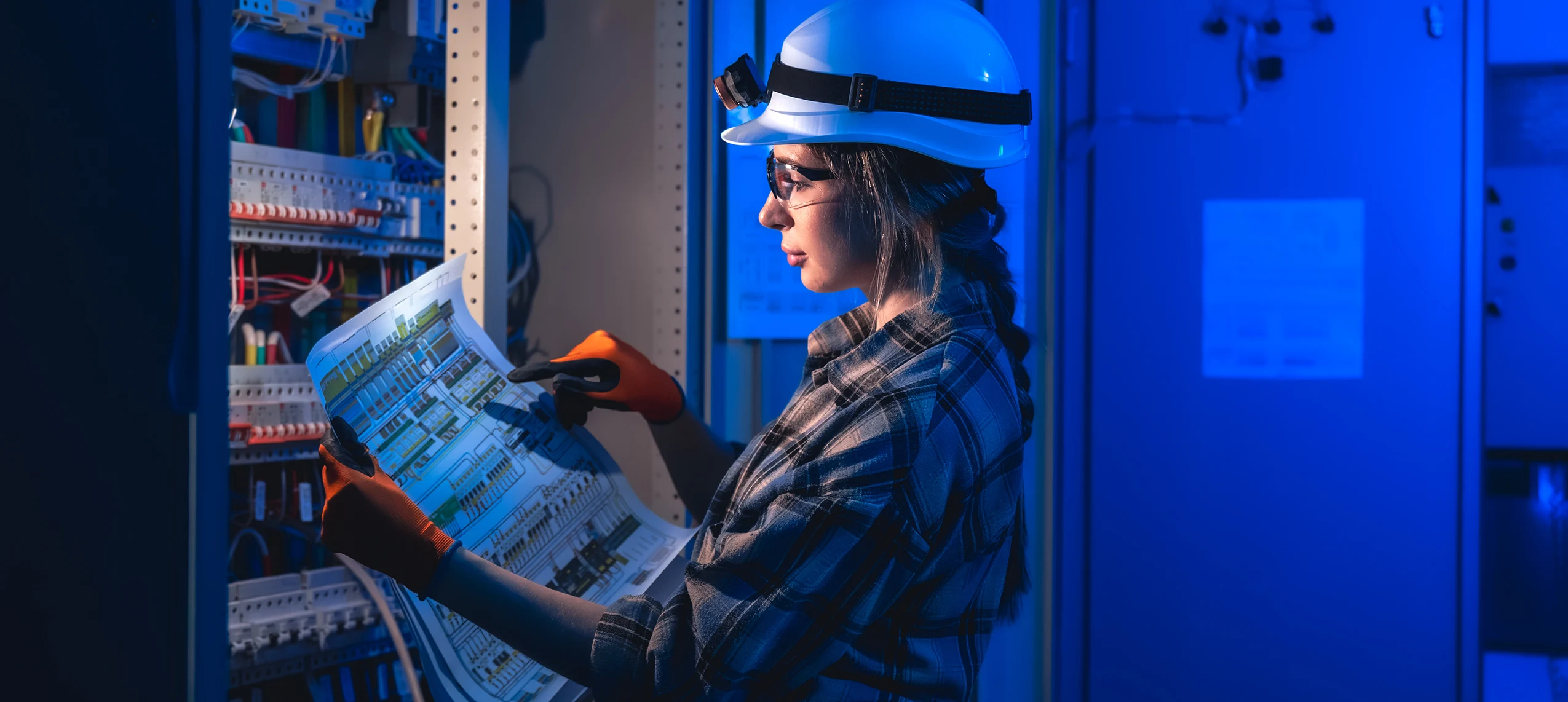
Top Project Ideas for Electrical Engineering Students
Electrical engineering powers the world—from the smartphones in your pocket to the smart grids lighting up cities.
If you're a student itching to turn theory into action, diving into hands-on projects is your launchpad. These aren't just assignments; they're your ticket to practical learning, where you build electronics prototypes, tinker with circuits, and unleash innovation engineering. Whether you're hunting for electrical mini projects to boost your resume or ambitious final year project ideas to impress recruiters, this guide has you covered. Let's electrify your skills with 10 standout ideas, complete with why they matter, how to start, and pro tips. If you're a student itching to turn theory into action, diving into hands-on projects is your launchpad. These aren't just assignments; they're your ticket to practical learning, where you build electronics prototypes, tinker with circuits, and unleash innovation engineering. Whether you're hunting for electrical mini projects to boost your resume or ambitious final year project ideas to impress recruiters, this guide has you covered. Let's electrify your skills with 10 standout ideas, complete with why they matter, how to start, and pro tips.




Why Electrical Projects Spark Real-World Innovation
Before we jump into the ideas, consider this: 70% of engineering grads land jobs faster when they showcase practical learning through projects. Electrical mini projects like LED blinkers evolve into electronics prototypes that solve problems, from renewable energy to IoT gadgets. They teach troubleshooting, coding, and scaling—skills employers crave. Ready to prototype? Grab an Arduino, breadboard, and multimeter. These projects scale from beginner-friendly electrical mini projects to capstone final year project ideas, blending creativity with innovation engineering.
Smart Energy Meter with IoT Integration
Imagine monitoring your home's power usage in real-time via a phone app. This electrical mini project uses current sensors (like ACS712) and an ESP32 microcontroller to track voltage, current, and power factor. Data beams to a cloud dashboard via Wi-Fi for alerts on spikes.
Why it rocks for practical learning: Tackles energy conservation, a hot topic in sustainability. Add machine learning to predict bills—boom, final year project ideas gold.
Build tips: Code in Arduino IDE; integrate Blynk app. Cost: Under $20. Level: Intermediate
Solar-Powered Phone Charger with MPPT
Tired of dead batteries during outages? Craft a portable charger harvesting solar energy efficiently. Use a TP4056 module, buck converter, and Maximum Power Point Tracking (MPPT) algorithm to squeeze 20% more juice from panels.
Innovation engineering alert: Optimize for cloudy days with perturb-and-observe methods. Perfect electronics prototype for eco-warriors.
Practical twist: Display charge status on an LCD. Scale to final year project ideas by adding battery health monitoring. Components: $15-25.
Voice-Controlled Home Automation System
"Alexa, turn on the fan!" Build your own using a Raspberry Pi, speech recognition (via Google API or PocketSphinx), and relays for lights/AC. Integrate IR blasters for legacy remotes.
This electrical mini project screams practical learning—debugging audio signals hones signal processing chops. Evolve into a full smart home hub for final year project ideas.
Pro hack: Add facial recognition for security. Budget: $30. Beginner-to-intermediate.
Wireless Power Transfer Pad
Ever dreamed of charging devices without plugs? Construct a Qi-standard pad with transmitter and receiver coils, using MOSFETs for resonant inductive coupling at 6.6kHz
Electronics prototypes don't get cooler—this demos Faraday's law in action, powering LEDs or phones across 4cm gaps. Push innovation engineering by scaling to EV charging models.
Final year upgrade: Efficiency analyzer app. Cost: $25. Intermediate.
Obstacle-Avoiding Robot with Ultrasonic Sensors
Robots are the future! Assemble a chassis with DC motors, HC-SR04 sensors, and Arduino. PID control makes it dodge walls like a pro gamer.
Core practical learning: Sensor fusion and motor control. Amp it up for final year project ideas with camera vision (OpenCV) or swarm robotics.
Fun fact: Mimics self-driving cars. Total build: $40. Beginner-friendly.
RFID-Based Attendance System
Electrical mini projects like this nail access control, a staple in offices. Innovation engineering twist: Biometric fusion (fingerprint module).
Practical learning payoff: Database handling. Cost: $20. Great for groups.
BLDC Motor Controller for Drones
Power the next drone craze with a sensorless Brushless DC (BLDC) driver using ESC and STM32. Implement field-oriented control (FOC) for smooth spins.
This electronics prototype dives into power electronics—vital for EVs and robotics. Ideal final year project ideas with telemetry for flight data.
Tip: Simulate in MATLAB first. Budget: $50. Advanced.
Smart Traffic Light Controller
Beat city jams with adaptive signals. Use IR sensors to detect vehicle density, then adjust timings via microcontroller and LEDs.
Practical learning through FSM (Finite State Machines). Innovation engineering boost: V2V communication for emergencies.
Scale to city models—prime final year project ideas. Cost: $15.
ECG Monitoring Wearable
Health tech is booming. Build a portable ECG using AD8232 module, Arduino, and OLED display. Bluetooth sends data to apps for arrhythmia detection.
Electrical mini projects meet medicine—process bio-signals with filters. Electronics prototypes for wearables shine here.
Upgrade path: ML anomaly detection. Cost: $30. Intermediate-advanced.
Home Security System with GSM Alerts
Guard your castle with PIR sensors, cameras (ESP32-CAM), and GSM module for SMS alerts. Add face detection to ignore pets.
Practical learning in embedded systems and networks. Top final year project ideas with cloud storage.
Edge: Solar-powered for off-grid. Budget: $35.
Level Up Your Projects: Pro Tips
Start small: Prototype on breadboards before PCBs (use EasyEDA).
Document everything: GitHub repos with videos showcase innovation engineering.
Team up: Divide tasks—hardware, code, testing—for final year project ideas.
Budget hack: Scavenge from old gadgets; AliExpress for cheap parts.
Test rigorously: Simulate failures to build resilience.
These electrical mini projects transform you from student to innovator, blending practical learning with portfolio-worthy electronics prototypes.
Conclusion: Ignite Your Electrical Engineering Journey
From electrical mini projects buzzing on your desk to game-changing final year project ideas that redefine innovation engineering, these ideas deliver hands-on practical learning you'll carry forever. They're not just builds—they're your edge in a competitive field hungry for skilled tinkerers.
For top-tier guidance in electrical engineering, where students thrive on cutting-edge labs and mentorship for such electronics prototypes, GLA University stands out. Its robust program equips you with the tools and projects to excel.


Admission Open For
B.Tech
2027
Start your journey with us
Apply OnlineGet In Touch With Us
 Virtual Tour
 B.Tech Programs
UG Programs
Lateral Entry
M.Tech Programs
PG Programs
Doctoral Programs
Diploma Programs
Admissions Helpline

-

-

-

-

17km Stone, NH-19, Mathura-Delhi Road, P.O.
Chaumuhan, Mathura-281 406, (U.P.) INDIA