 Syllabus PDF
 Download Brochure
 Syllabus PDF
 Download Brochure
roles like Scientist, Engineer, Technical Officer, JE, often requiring competitive exams like GATE, ESE, or specific PSU tests for roles in R&D, infrastructure, and defense technology.


Programs
UG Degree
BBA (Hons/By Research) in Data Analytics and Business Intelligence
 4 Years
Overview
The BBA (Hons./Research) in Data Analytics and Business Intelligence at GLA University prepares students to understand business through the power of data. The programme blends management fundamentals with analytics tools, helping students learn how to interpret data, uncover insights, and support smarter business decisions in today’s digital economy.
Eligibility Criteria
10+2 in any stream with minimum required marks as per GLA University admission guidelines.
Academic Fee
- 1st Year : INR.1,50,000/-
- 2nd Year : INR.1,55,000/-
- 3rd Year : INR.1,60,000/-
- 4th Year : INR.1,65,000/-
Scholarship
For B Tech Students On the basis of PCM percentage
Candidates eligible for scholarship on the basis of Physics, Chemistry & Mathematics percentage at 10+2 level as mentioned below:


Note: The scholarship amount received in the first year will be applicable for all subsequent years. The student must maintain a minimum CPI of 8.00 to avail the scholarship in the next year of his/her studies.
Top-Tier Companies in Our Placement Network











Programs
UG Degree
BBA (Hons/By Research) in Data Analytics and Business Intelligence
 4 Years
Overview
The BBA (Hons./Research) in Data Analytics and Business Intelligence at GLA University prepares students to understand business through the power of data. The programme blends management fundamentals with analytics tools, helping students learn how to interpret data, uncover insights, and support smarter business decisions in today’s digital economy.
Eligibility Criteria
10+2 in any stream with minimum required marks as per GLA University admission guidelines.
Academic Fee
- 1st Year : INR.1,50,000/-
- 2nd Year : INR.1,55,000/-
- 3rd Year : INR.1,60,000/-
- 4th Year : INR.1,65,000/-

GLdvantage
Designed to Produce Future-Ready Engineers
At GLA University, we emphasize education beyond classrooms with project-based learning to ensure our students imbibe what the industry requires.

Programme Overview
The BBA (Honours/By Research) in Data Analytics and Business Intelligence is a four year undergraduate degree that combines comprehensive business education with specialist expertise in data analytics and business intelligence.

Key Learning Outcomes
This programme equips students to understand both business fundamentals and data driven decision making, giving them practical skills to interpret complex datasets and generate insights.

Practical Learning & Industry Exposure
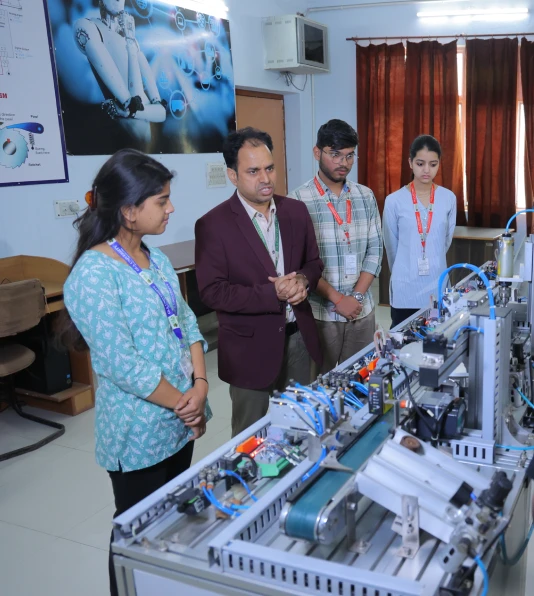
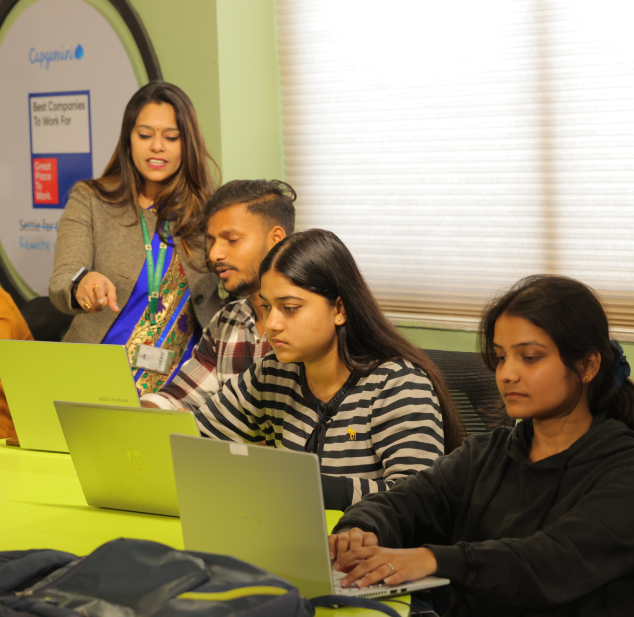
Students experience a blend of classroom learning, research projects, industry exposure and hands on training, ensuring they are ready for real business challenges.

Curriculum Focus
The curriculum emphasises analytical tools, strategic thinking and effective use of data for business solutions, preparing students for careers that rely on data intelligence.
Rankings & Accreditations
-
NIRF
Ministry of Education, Govt. of India

-
Times
Higher Education

-
UGC
12B Status by UGC

-
NAAC A+
Grade

-
IACBE
IACBE (USA)
Accredited

-
AACSB
AACSB (USA) – Member
ISER under submission

-
NPTEL
Top Performing Local Chapter

-
CIPU
Member
Confederation of Indian Private Universities (CIPU)

Career Prospects
Graduates of this specialised BBA programme are prepared for a range of roles where data and business strategy intersect, including

Public Sector
B.Tech ECE graduates in the government sector can pursue careers in PSUs, Defense & Space, Telecom, Research, Railways, and Civil Services, with key

Private Sector
B.Tech ECE graduates in the private sector can pursue core electronics roles (VLSI, Embedded Systems, Telecom, RF Engineering, Electronics Design),
IT/Software jobs (Software Developer, AI/ML Engineer, Data Analyst), and emerging tech fields like Robotics and IoT, with top recruiters including major IT firms. Key paths involve Hardware/Software roles, R&D, and Network Engineering, focusing on areas like signal processing, systems, and automation for diverse opportunities in tech giants and startups.

Further Study Options
Career Opportunities
- Business Analyst – using data to influence strategy and growth.
- Data Analyst – interpreting datasets to support decisions.
- Business Intelligence Analyst – building dashboards and reports for insight.
- Market Research Analyst – analysing trends to inform marketing strategies.
- Operations Analyst – optimising systems using performance data.
- Consultant in analytics and strategic planning – guiding organisations based on data findings.

Higher Studies & Career Advancement
Many graduates also choose to pursue advanced study such as an MBA or specialised postgraduate programmes in analytics, management or data science, further enhancing their prospects.
Research
Think Beyond Innovation in a Research-Driven Environment
Our researchers pushing the frontiers of knowledge and discovery to explore complex problems and find solutions.
850+
Patents
Published
14
Research
Centres
12k+
Publications in
SCI & Scopus

Outcomes & Objectives
Graduates of this programme will be able to
Understand and apply key concepts in data analytics, business intelligence, and management.
Use analytical tools and technologies to extract, process and interpret data.
Apply research methodologies in business contexts to derive meaningful insights.
Collaborate effectively and communicate solutions to organisational challenges.
Adapt to evolving industry needs and pursue lifelong learning in data driven business environments.
On successful completion of the programme, students will be able to
Build a strong foundation in business principles alongside analytical and intelligence skills.
Apply data analysis techniques and strategic business thinking to solve real organisational problems.
Conduct independent research with confidence, reflecting depth of insight and critical judgement.
Communicate findings effectively in both written and verbal forms for professional audiences.
Demonstrate ethical and professional behaviour when handling data and information in business contexts.
Students graduating from the programme will also be able to
Translate data into actionable business strategies that improve performance and competitiveness.
Select and apply appropriate analytical frameworks and tools for business intelligence tasks.
Critically evaluate research findings and integrate them with organisational goals.
Demonstrate proficiency in reasoning, problem solving and logical decision making using data.
Why BBA (Hons. by Research) in Data Analytics and Business Intelligence?
The BBA (Hons. by Research) in Data Analytics and Business Intelligence program is designed to equip students with managerial knowledge combined with analytical and research-oriented skills required in today’s data-driven business environment. The program covers core areas such as business analytics, data visualization, statistical analysis, market intelligence, decision-making models, and digital business strategies, enabling students to interpret business data effectively and support strategic planning.
With additional emphasis on research methodology, analytical tools, and project-based learning, students develop the ability to extract insights from complex datasets and apply them to real business challenges. The program prepares graduates for emerging opportunities in corporate strategy, consulting, analytics, and research-driven business functions while building a strong foundation for higher studies.
BBA (Hons. by Research) in Data Analytics and Business Intelligence grads acquire the following positions




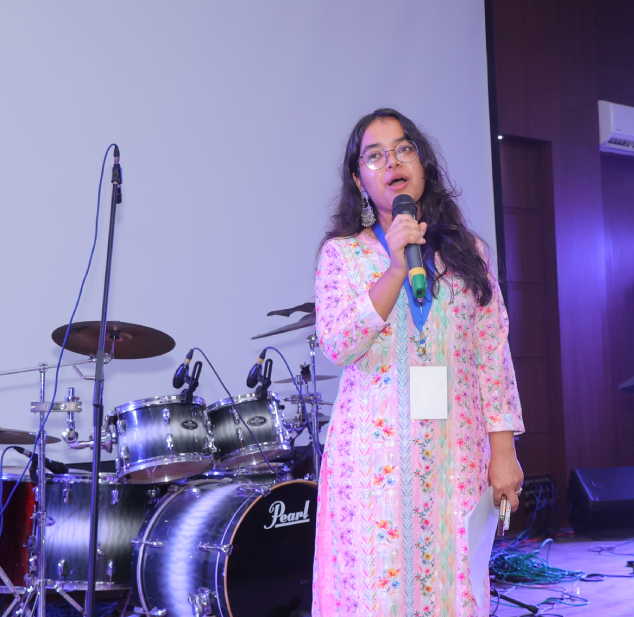
What else can you do while studying at GLA
GLA University offers a wide range of campus extra-curricular activities across all domains.
These activities are organized through student clubs, departmental societies, university festivals, and regular institutional programs. Typical categories and representative examples



BBA (Hons/By Research) in Data Analytics and Business Intelligence Frequently Asked Questions
The faculty is experienced and supportive, guiding students in both theoretical concepts and practical applications, especially in analytics and business tools used in real-world scenarios.
The program combines business studies with data analytics, practical projects, and industry exposure, making it unique compared to traditional BBA programs.
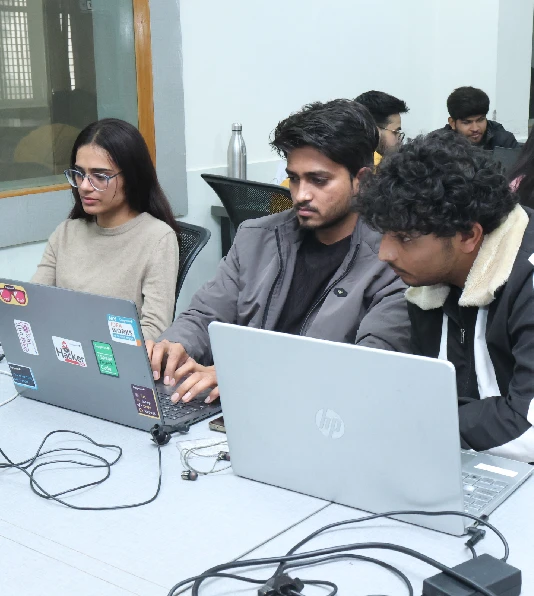
Yes, students have access to computer labs and software tools required for data analysis, helping them gain hands-on experience with real datasets and business problems.
Yes, the university provides placement assistance through training, mock interviews, and industry connections, helping students prepare for roles in analytics and business fields.
Yes, students regularly attend workshops and seminars conducted by industry professionals, which helps them stay updated with current trends in data analytics and business intelligence
Yes, the course is designed to be industry-oriented, including practical learning, case studies, and projects that prepare students for real-world challenges in analytics and management.
GLA University supports students through career guidance, skill development programs, and placement training, helping them build confidence and secure job opportunities in analytics and management roles.
Admission Process
How to apply to GLA

Registration
Register online by filling in your basic details on the admission portal.
https://
student.glauniversity.in/
Main/Admission


That’s it — your journey with GLA begins here.
Choose More Than a Degree. Choose GLA.
Learn more, grow faster, and discover your direction
Open for admission year 2026-27
 Virtual Tour
 B.Tech Programs
UG Programs
Lateral Entry
M.Tech Programs
PG Programs
Doctoral Programs
Diploma Programs
Admissions Helpline

-

-

-

-

17km Stone, NH-19, Mathura-Delhi Road, P.O.
Chaumuhan, Mathura-281 406, (U.P.) INDIA