 Syllabus PDF
 Download Brochure
What Students Will Learn
- Advanced physics fundamentals & elective specialisations
- Research methodology & scientific communication
- Experimental techniques & data interpretation
- Presentation skills for seminars & conferences


 2 Years
The M.Sc. Physics programme, offered under CBCS, provides advanced theoretical and applied training with research exposure in each semester. Core courses build depth in classical & quantum physics, while electives allow specialisation in electronics, astrophysics, plasma physics, general theory of relativity, and materials science. Students engage in research projects, scientific writing, seminars, and visits to research laboratories—ensuring strong preparation for PhD, competitive exams, and careers in academia and industry.
What Students Will Learn
Eligibility Criteria
B.Sc. with Physics and 50% marks
For B Tech Students On the basis of PCM percentage
Candidates eligible for scholarship on the basis of Physics, Chemistry & Mathematics percentage at 10+2 level as mentioned below:


Note: The scholarship amount received in the first year will be applicable for all subsequent years. The student must maintain a minimum CPI of 8.00 to avail the scholarship in the next year of his/her studies.















Master of Science Physics
 2 Years
The M.Sc. Physics programme, offered under CBCS, provides advanced theoretical and applied training with research exposure in each semester. Core courses build depth in classical & quantum physics, while electives allow specialisation in electronics, astrophysics, plasma physics, general theory of relativity, and materials science. Students engage in research projects, scientific writing, seminars, and visits to research laboratories—ensuring strong preparation for PhD, competitive exams, and careers in academia and industry.
What Students Will Learn
Eligibility Criteria
B.Sc. with Physics and 50% marks

GLdvantage
At GLA University, we emphasize education beyond classrooms with project-based learning to ensure our students imbibe what the industry requires.

The M.Sc. Physics programme offers an in depth understanding of advanced concepts in physics, helping students strengthen their theoretical and analytical foundations in the subject.

The programme covers specialised areas such as quantum mechanics, classical mechanics, electromagnetism, solid state physics, and statistical mechanics.
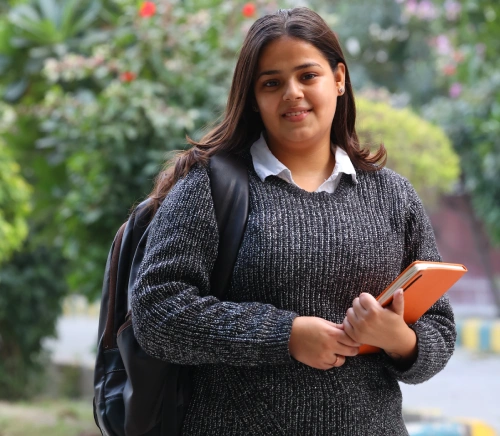
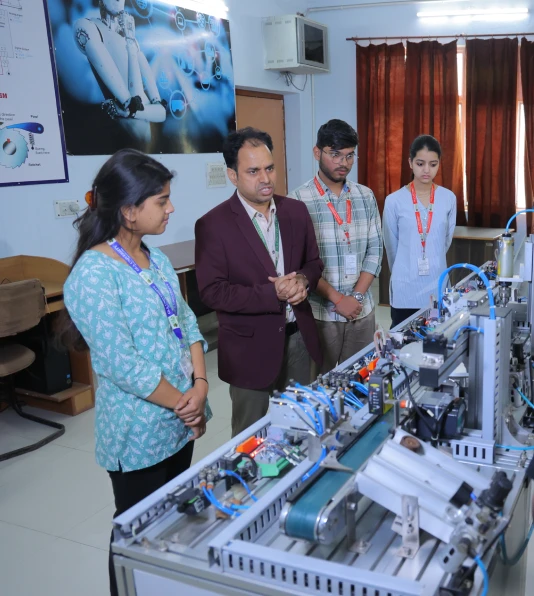
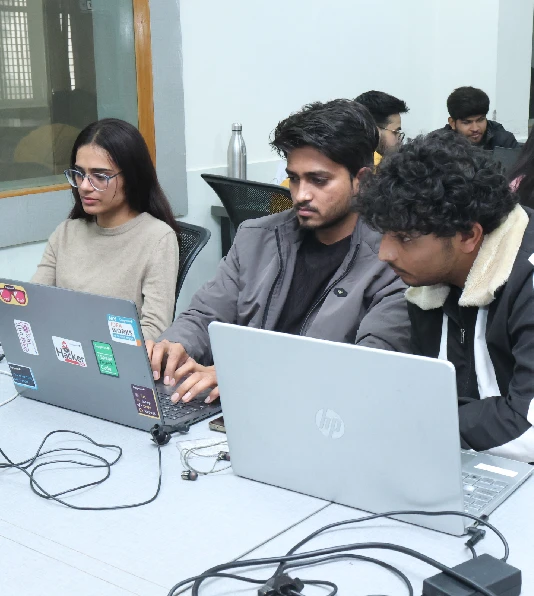
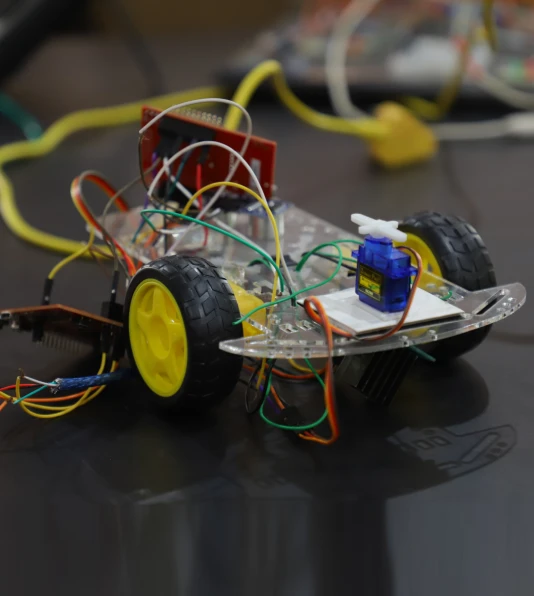
Students gain practical exposure through laboratory work, enabling them to understand experimental techniques and the application of physical principles.

The curriculum encourages scientific enquiry, analytical thinking, and problem solving through seminars, projects, and guided academic work.
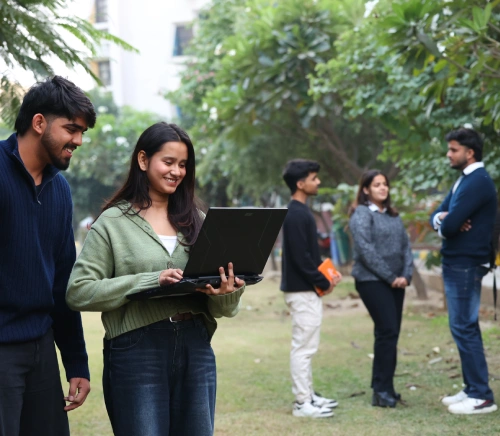
The programme prepares students for higher research studies and professional opportunities in scientific, technical, and analytical fields.


Graduates of the M.Sc. Physics programme can pursue careers in scientific research, education, and technical sectors.

Our researchers pushing the frontiers of knowledge and discovery to explore complex problems and find solutions.
Patents
Published
Research
Centres
Publications in
SCI & Scopus
Demonstrate advanced knowledge of key concepts and theories in modern physics.
Apply mathematical and analytical techniques to solve complex problems in physics.
Conduct scientific experiments and analyse experimental results with accuracy and precision.
Develop critical thinking and scientific reasoning skills required for research and problem solving.
Communicate scientific ideas and research findings effectively in written and verbal forms.
Work independently and collaboratively in academic and laboratory settings.
Apply knowledge of physics to interdisciplinary areas within science and technology.
Demonstrate readiness for research, teaching, or professional careers in physics related fields.
Develop graduates with a deeper understanding of theoretical and applied aspects of physics.
Encourage the ability to analyse complex physical phenomena using scientific reasoning and mathematical tools.
Prepare students to pursue research and higher academic studies in physics and related disciplines.
Promote responsible scientific practices and ethical conduct in academic and research environments.
Apply advanced principles of quantum mechanics, classical mechanics, and electromagnetism to analyse complex physical systems.
Conduct laboratory based investigations and interpret experimental observations using scientific methods.
Use mathematical techniques and computational methods to model and solve physical problems.
For Honours / By Research students, undertake guided research work to explore advanced topics in physics.
The M.Sc. Physics (Choice Based Credit System) program is designed to provide students with advanced knowledge in theoretical and experimental physics while allowing flexibility to choose specialized elective courses. The curriculum covers core areas such as quantum mechanics, statistical physics, classical mechanics, electrodynamics, condensed matter physics, and computational methods, along with hands-on laboratory training and research-oriented projects.
This program equips students to develop strong analytical, problem-solving, and research skills. Through laboratory experiments, project work, and interdisciplinary electives, students gain the expertise required to pursue careers in research, higher education, and technology-driven industries, as well as to continue into doctoral programs in physics.
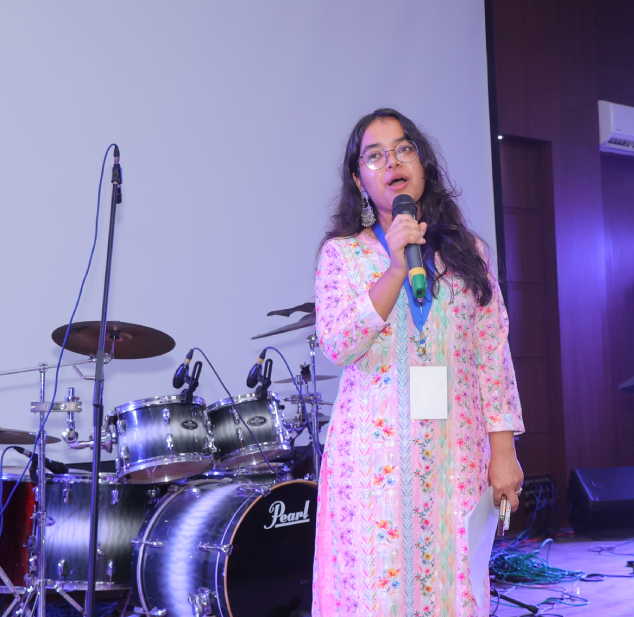
These activities are organized through student clubs, departmental societies, university festivals, and regular institutional programs. Typical categories and representative examples

Register online by filling in your basic details on the admission portal.
https://
student.glauniversity.in/
Main/Admission
That’s it — your journey with GLA begins here.
Learn more, grow faster, and discover your direction
Open for admission year 2026-27
 B.Tech Programs
UG Programs
Lateral Entry
M.Tech Programs
PG Programs
Doctoral Programs
Diploma Programs


17km Stone, NH-19, Mathura-Delhi Road, P.O.
Chaumuhan, Mathura-281 406, (U.P.) INDIA
 Syllabus PDF
 Download Brochure










 Virtual Tour
