 Syllabus PDF
 Download Brochure
 Syllabus PDF
 Download Brochure
roles like Scientist, Engineer, Technical Officer, JE, often requiring competitive exams like GATE, ESE, or specific PSU tests for roles in R&D, infrastructure, and defense technology.

Programs
UG Degree
B.Tech Civil Engineering
 4 Years
Overview
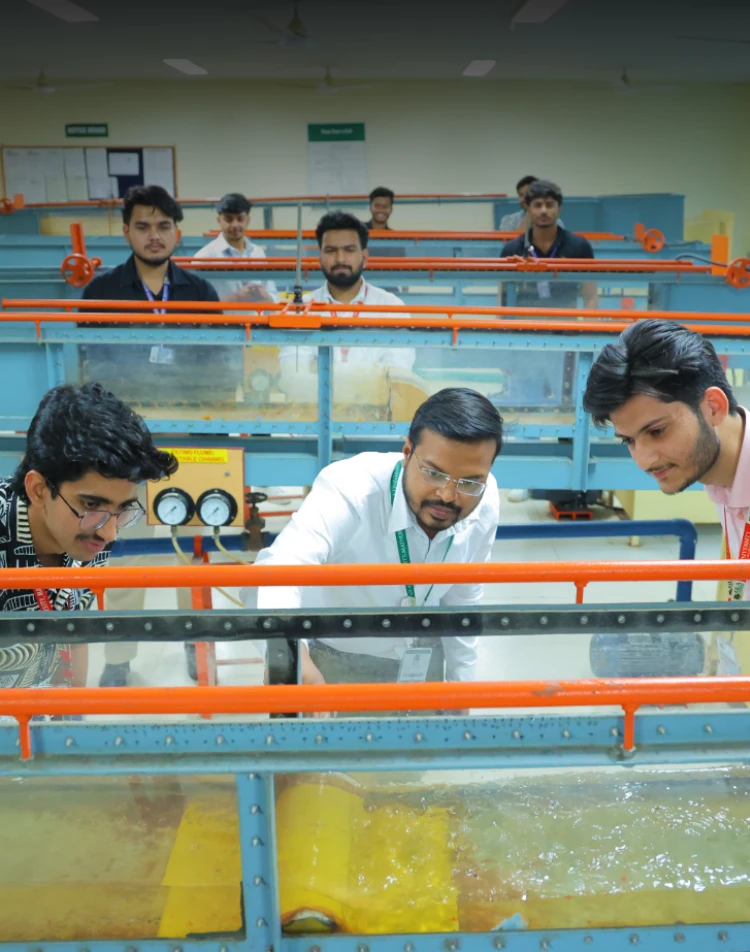
The program offers a well-rounded civil engineering education across key domains such as structural, geotechnical, transportation and environmental engineering. With hands-on learning through labs, projects and field exposure, students develop practical and analytical skills. Supported by experienced faculty and modern tools, the course nurtures innovation, teamwork and professional growth, preparing graduates for diverse roles in the evolving construction and infrastructure sector.
Eligibility Criteria
Applicants must have completed 10+2 or equivalent examination with:
- Physics and Mathematics as compulsory subjects
- Chemistry or Computer Science as an additional subject
- Minimum 50% marks in the qualifying subjects and overall
Academic Fee
- 1st Year : INR.1,90,000/-
- 2nd Year : INR.1,95,000/-
- 3rd Year : INR.2,00,000/-
- 4th Year : INR.2,05,000/-
Scholarship
For B Tech Students On the basis of PCM percentage
Candidates eligible for scholarship on the basis of Physics, Chemistry & Mathematics percentage at 10+2 level as mentioned below:

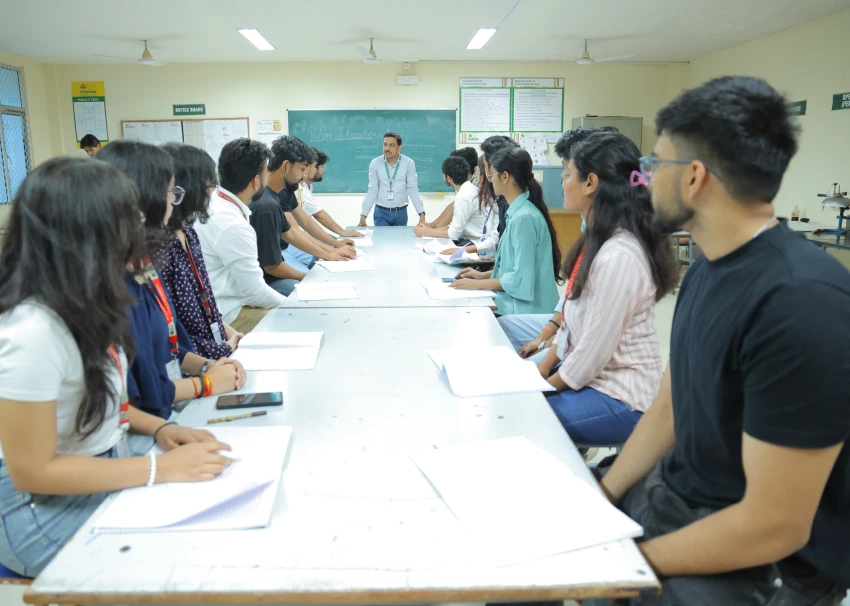
Note: The scholarship amount received in the first year will be applicable for all subsequent years. The student must maintain a minimum CPI of 8.00 to avail the scholarship in the next year of his/her studies.
Top-Tier Companies in Our Placement Network
































Programs
UG Degree
B.Tech Civil Engineering
 4 Years
Overview
The program offers a well-rounded civil engineering education across key domains such as structural, geotechnical, transportation and environmental engineering. With hands-on learning through labs, projects and field exposure, students develop practical and analytical skills. Supported by experienced faculty and modern tools, the course nurtures innovation, teamwork and professional growth, preparing graduates for diverse roles in the evolving construction and infrastructure sector.
Eligibility Criteria
Applicants must have completed 10+2 or equivalent examination with:
- Physics and Mathematics as compulsory subjects
- Chemistry or Computer Science as an additional subject
- Minimum 50% marks in the qualifying subjects and overall
Academic Fee
- 1st Year : INR.1,90,000/-
- 2nd Year : INR.1,95,000/-
- 3rd Year : INR.2,00,000/-
- 4th Year : INR.2,05,000/-

GLdvantage
Designed to Produce Future-Ready Engineers
At GLA University, we emphasize education beyond classrooms with project-based learning to ensure our students imbibe what the industry requires.
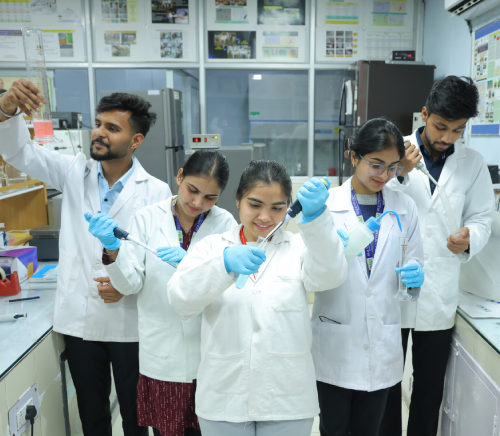
Comprehensive Curriculum
Covers key civil engineering domains including structural engineering, geotechnical engineering, transportation engineering, environmental engineering, and construction management.
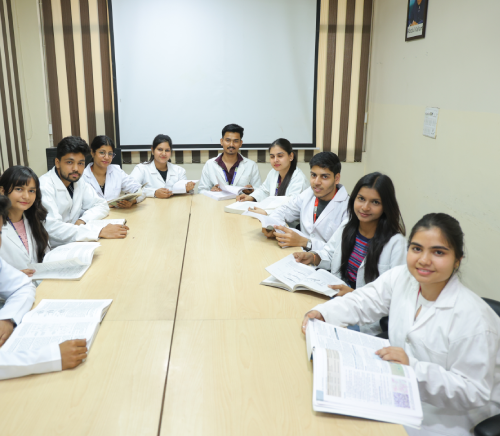
Practical Learning Environment
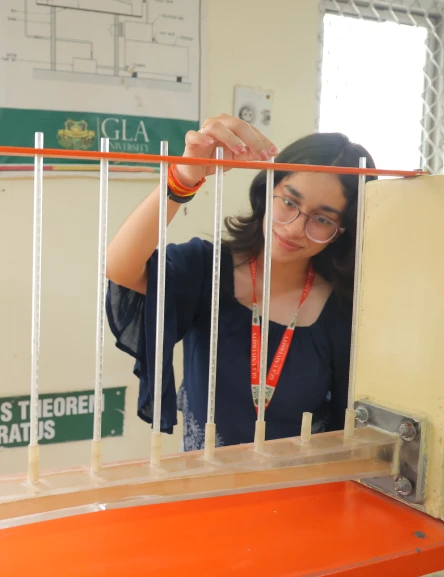
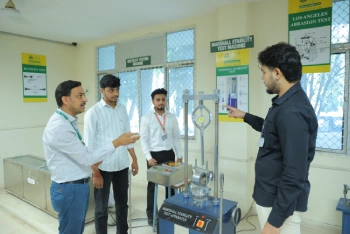
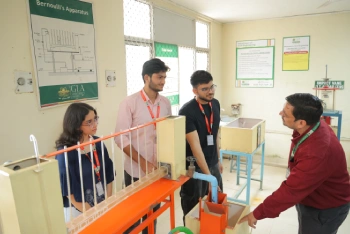
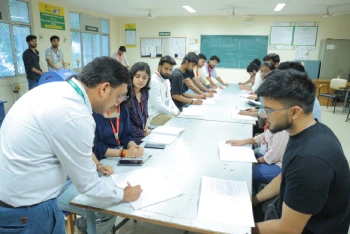
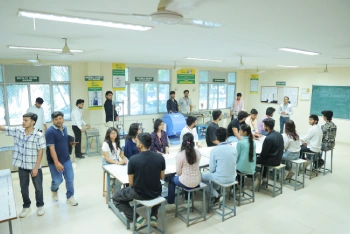
Students gain hands on experience through modern laboratories, design projects, field visits, and technical workshops.
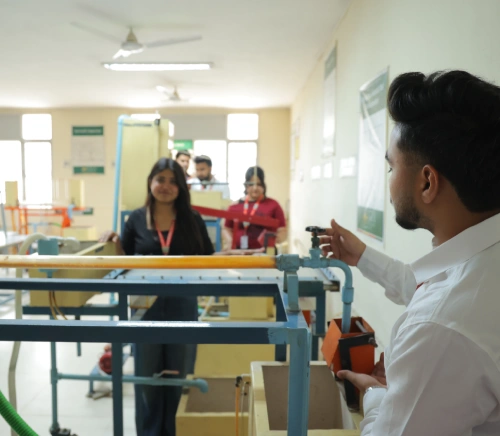
Project Based Approach
Encourages analytical thinking and problem solving through real world assignments and engineering design projects.
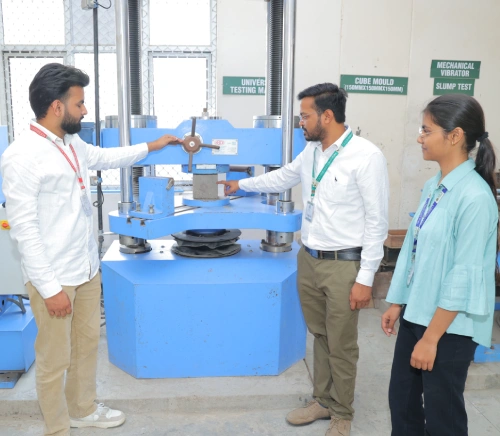
Exposure to Modern Tools and Technologies
Introduces students to engineering software, design tools, and contemporary construction practices used in the industry.
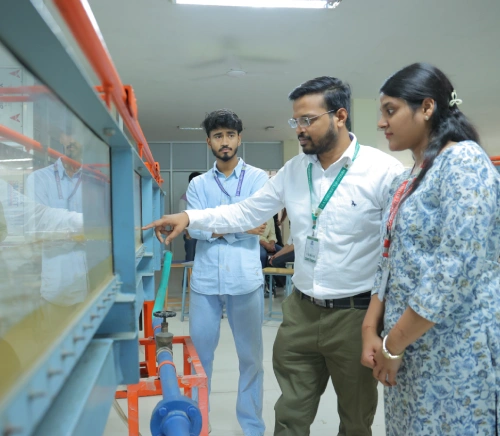
Experienced Faculty Support
Guidance from qualified faculty members who combine academic knowledge with practical insights.
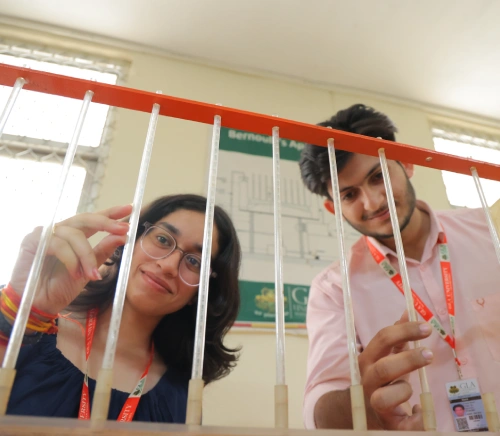
Holistic Academic Development
Promotes teamwork, innovation, and professional growth through collaborative learning and technical activities.
Rankings & Accreditations
-
UGC
12B Status by UGC

-
NAAC A+
Accredited

-
#200
NIRF Ranking 2025
Listed among the Top 200 Engineering Institutes in India

-
#781-790
Overall Asia Rank
Ranked in the 781–790 Band in Asia Overall

Career Prospects
Civil engineering remains one of the most essential and enduring engineering disciplines, especially with the rapid expansion of infrastructure and urban development.
The growing focus on smart cities, sustainable construction, and large-scale infrastructure development continues to create strong demand for civil engineering professionals.

Public Sector
B.Tech ECE graduates in the government sector can pursue careers in PSUs, Defense & Space, Telecom, Research, Railways, and Civil Services, with key

Private Sector
B.Tech ECE graduates in the private sector can pursue core electronics roles (VLSI, Embedded Systems, Telecom, RF Engineering, Electronics Design),
IT/Software jobs (Software Developer, AI/ML Engineer, Data Analyst), and emerging tech fields like Robotics and IoT, with top recruiters including major IT firms. Key paths involve Hardware/Software roles, R&D, and Network Engineering, focusing on areas like signal processing, systems, and automation for diverse opportunities in tech giants and startups.

Further Study Options
Graduates can explore opportunities in
- Construction and infrastructure companies
- Structural design and consultancy firms
- Urban planning and sustainable development projects
- Government departments and public sector organisations
- Infrastructure and transportation projects
Common career roles include
- Structural Engineer
- CAD Technician
- Quantity Surveyor
- Environmental Consultant
- Engineering Geologist
- Sustainability Consultant
- Urban Designer
- Building Control Surveyor
Research
Think Beyond Innovation in a Research-Driven Environment
Our researchers pushing the frontiers of knowledge and discovery to explore complex problems and find solutions.
850+
Patents
Published
14
Research
Centres
12k+
Publications in
SCI & Scopus

Outcomes & Objectives
On successful completion of the programme, graduates will be able to
Apply knowledge of mathematics, science, and engineering principles to solve civil engineering problems.
Analyse structural, geotechnical, environmental, and transportation engineering challenges.
Design civil engineering systems and infrastructure components while considering safety, sustainability, and societal needs.
Conduct experiments, analyse data, and interpret results to support engineering decisions.
Use modern engineering tools, design software, and digital technologies relevant to construction and infrastructure development.
Understand professional ethics, environmental responsibilities, and the broader societal impact of engineering projects.
Communicate effectively with technical teams, industry professionals, and stakeholders.
Engage in lifelong learning to remain relevant in an evolving engineering landscape.
The B.Tech in Civil Engineering programme aims to nurture professionals who can contribute meaningfully to the development of modern infrastructure and sustainable environments.
Within a few years of graduation, students are expected to
Build a strong foundation in civil engineering fundamentals and apply this knowledge to real-world engineering challenges.
Contribute to the planning, design, and development of infrastructure projects while maintaining professional and ethical standards.
Adapt to evolving technologies in construction, structural design, and environmental engineering through continuous learning.
Work effectively in multidisciplinary teams and demonstrate leadership, communication, and project management abilities.
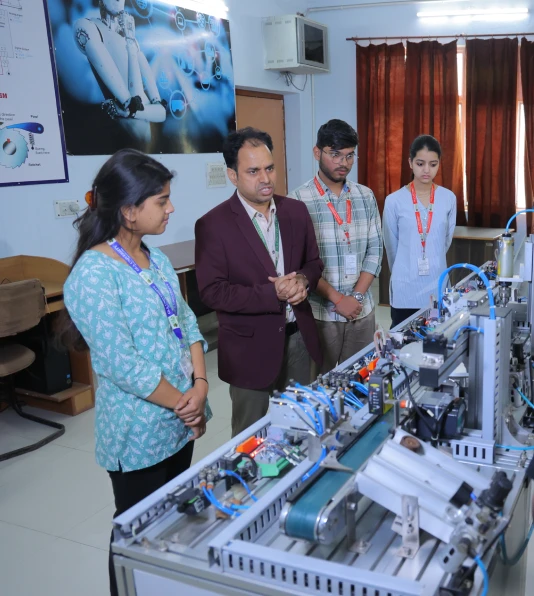
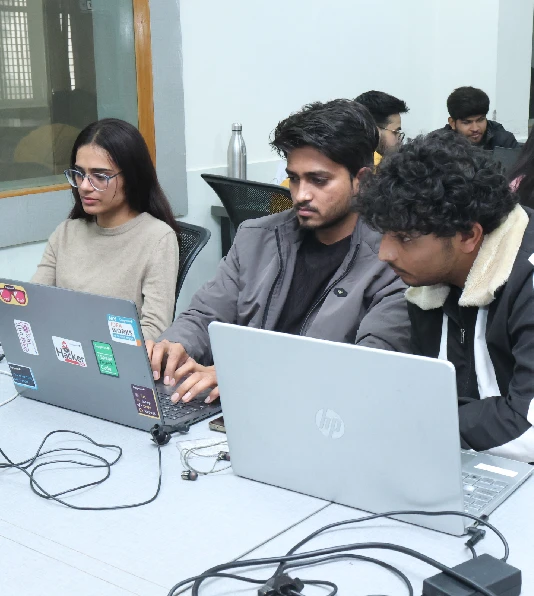
The programme also emphasises project-based learning, modern laboratories, and industry exposure, enabling students to connect classroom concepts with real engineering practice.
Graduates of the Civil Engineering programme will develop the ability to
Apply structural engineering concepts for the analysis and design of buildings, bridges, and other infrastructure systems.
Understand geotechnical, transportation, environmental, and water resource engineering for sustainable infrastructure development.
Use modern construction management practices, project planning tools, and design software for efficient project execution.
Integrate technical knowledge with practical insights through laboratories, fieldwork, and industry-oriented projects.
Why B.Tech Civil Engineering – Lateral Entry?
The B.Tech Civil Engineering – Lateral Entry program is designed for diploma holders and eligible candidates who wish to directly enter advanced stages of civil engineering education and strengthen their technical expertise in infrastructure development and construction technologies. The program covers major areas such as structural engineering, geotechnical engineering, transportation systems, environmental engineering, surveying, and construction management, enabling students to understand the planning, design, and execution of civil infrastructure projects.
With practical exposure through laboratory work, design software, field training, and project-based learning, students develop problem-solving and technical skills required for modern construction and infrastructure sectors. The program prepares graduates for professional roles in construction companies, consultancy firms, government departments, and infrastructure development projects.
What else can you do while studying at GLA
GLA University offers a wide range of campus extra-curricular activities across all domains.
These activities are organized through student clubs, departmental societies, university festivals, and regular institutional programs. Typical categories and representative examples





B.Tech Civil Engineering Frequently Asked Questions
The program follows an 8-semester CBCS system with core subjects, labs, and fieldwork. Final-year students work on infrastructure-related projects.
Students must complete 10+2 with Physics and Mathematics and at least 50% aggregate marks. This is as per GLA admission criteria.
Yes, fieldwork is an important part of the course including surveying practice and site visits. This helps students understand real construction work.
Evaluation includes internal exams, assignments, lab work, and final semester exams. Practical understanding is also assessed.
Yes, internships at construction sites or infrastructure companies are strongly encouraged. They provide real-world exposure.
Projects include structural design, surveying analysis, and infrastructure planning. These are done especially in final year.
The placement cell provides training and connects students with construction and infrastructure companies.
Practical learning is very important and includes labs, fieldwork, and real project exposure. It complements theoretical knowledge.
Admission Process
How to apply to GLA

Registration
Register online by filling in your basic details on the admission portal.
https://
student.glauniversity.in/
Main/Admission


That’s it — your journey with GLA begins here.
Choose More Than a Degree. Choose GLA.
Learn more, grow faster, and discover your direction
Open for admission year 2026-27
 Virtual Tour
 B.Tech Programs
UG Programs
Lateral Entry
M.Tech Programs
PG Programs
Doctoral Programs
Diploma Programs
Admissions Helpline

-

-

-

-

17km Stone, NH-19, Mathura-Delhi Road, P.O.
Chaumuhan, Mathura-281 406, (U.P.) INDIA