 Download Brochure
 Download Brochure
roles like Scientist, Engineer, Technical Officer, JE, often requiring competitive exams like GATE, ESE, or specific PSU tests for roles in R&D, infrastructure, and defense technology.


Programs
Ph.D in Electrical Engineering
 3 Years
Overview
The PhD in Electrical Engineering at GLA University is designed for those keen to explore advanced research and innovation. Scholars work closely with experienced faculty, engaging in independent study and tackling complex engineering challenges. With access to modern tools and laboratories, the programme nurtures deep technical expertise and prepares graduates for impactful careers in academia, research and advanced engineering roles.
Eligibility Criteria
A minimum of 60% marks in a relevant postgraduate degree from a recognised discipline is required.
Academic Fee
- 1st Year : INR. 80,000/-
- 2nd Year : INR. 80,000/-
- 3rd Year : INR. 80,000/-
Scholarship
For B Tech Students On the basis of PCM percentage
Candidates eligible for scholarship on the basis of Physics, Chemistry & Mathematics percentage at 10+2 level as mentioned below:


Note: The scholarship amount received in the first year will be applicable for all subsequent years. The student must maintain a minimum CPI of 8.00 to avail the scholarship in the next year of his/her studies.
Top-Tier Companies in Our Placement Network











Programs
Ph.D in Electrical Engineering
 3 Years
Overview
The PhD in Electrical Engineering at GLA University is designed for those keen to explore advanced research and innovation. Scholars work closely with experienced faculty, engaging in independent study and tackling complex engineering challenges. With access to modern tools and laboratories, the programme nurtures deep technical expertise and prepares graduates for impactful careers in academia, research and advanced engineering roles.
Eligibility Criteria
A minimum of 60% marks in a relevant postgraduate degree from a recognised discipline is required.
Academic Fee
- 1st Year : INR. 80,000/-
- 2nd Year : INR. 80,000/-
- 3rd Year : INR. 80,000/-

GLdvantage
Designed to Produce Future-Ready Engineers
The Ph.D in Electrical Engineering at GLA University is designed for scholars who wish to pursue advanced research and contribute to the development of electrical engineering knowledge and technologies.

Specialised Research Pathways
The programme provides opportunities to conduct in-depth research in specialised areas of electrical engineering under the guidance of experienced faculty members.

Complex Engineering Research
Scholars engage in independent research, academic study and technical investigations aimed at addressing complex engineering challenges.

Modern Research Tools & Facilities
The programme encourages the use of modern research tools, analytical techniques and advanced laboratory facilities.

Key Focus Areas
Research work may focus on areas such as power systems, electrical machines, control systems, power electronics and energy systems.

Advanced Engineering Careers
The programme prepares scholars for careers in academic institutions, research organisations and advanced engineering roles in industry.
Rankings & Accreditations
-
UGC
12B Status by UGC

-
NAAC A+
Accredited

-
#200
NIRF Ranking 2025
Listed among the Top 200 Engineering Institutes in India

-
#781-790
Overall Asia Rank
Ranked in the 781–790 Band in Asia Overall

Career Prospects
Graduates of the programme can pursue roles such as:

Public Sector
B.Tech ECE graduates in the government sector can pursue careers in PSUs, Defense & Space, Telecom, Research, Railways, and Civil Services, with key

Private Sector
B.Tech ECE graduates in the private sector can pursue core electronics roles (VLSI, Embedded Systems, Telecom, RF Engineering, Electronics Design),
IT/Software jobs (Software Developer, AI/ML Engineer, Data Analyst), and emerging tech fields like Robotics and IoT, with top recruiters including major IT firms. Key paths involve Hardware/Software roles, R&D, and Network Engineering, focusing on areas like signal processing, systems, and automation for diverse opportunities in tech giants and startups.

Further Study Options
Graduates may pursue careers in
- Research Scientist
- Senior Electrical Engineer
- Technical Consultant
- Research and Development Specialist
- Engineering Innovation Leader
Common career roles include
Career opportunities are available in universities, research institutions, government organisations, technology companies and engineering industries. Graduates may also contribute to advanced research, innovation and technological development in the electrical engineering domain.
Research
Think Beyond Innovation in a Research-Driven Environment
Our researchers pushing the frontiers of knowledge and discovery to explore complex problems and find solutions.
850+
Patents
Published
14
Research
Centres
12k+
Publications in
SCI & Scopus

Outcomes & Objectives
Demonstrate advanced knowledge and expertise in specialised areas of electrical engineering.
Identify research problems and develop systematic approaches to investigate and solve complex engineering challenges.
Conduct high-quality research using appropriate analytical tools, experimental techniques and modern technologies.
Interpret and evaluate research results to generate meaningful technical insights.
Present and publish research findings in scholarly and professional platforms.
Demonstrate ethical research practices and professional responsibility in academic and industrial environments.
Engage in continuous learning and research to support technological progress and innovation.
Graduates of the Ph.D in Electrical Engineering programme will be able to conduct independent and original research that contributes to the advancement of electrical engineering knowledge.
Develop innovative solutions to complex engineering challenges through analytical and research-based approaches.
Demonstrate academic integrity, ethical responsibility and professional conduct in research and scholarly activities.
Communicate research findings effectively through technical publications, presentations and academic discussions.
Contribute to teaching, research and technological innovation in electrical engineering and related fields.
Conduct advanced research in areas related to power systems, electrical machines, control systems, power electronics and energy technologies.
Develop innovative engineering solutions based on rigorous research and technical analysis.
Apply advanced modelling, simulation and experimental methods in electrical engineering research.
Contribute to the development of new technologies, methodologies and engineering practices.
Disseminate research outcomes through academic publications, conferences and collaborative research initiatives.
Why Ph.D. in Electrical Engineering?
The Ph.D. in Electrical Engineering program is designed for scholars who aim to contribute to advanced research, innovation, and technological development in electrical sciences and engineering systems. The program focuses on specialized research areas such as power systems, control engineering, electrical machines, power electronics, renewable energy technologies, and smart grid systems, enabling scholars to investigate complex engineering challenges and develop innovative technical solutions.
Through rigorous research methodology, advanced simulations, experimental studies, and interdisciplinary investigation, scholars develop expertise in scientific problem-solving, technology development, and knowledge creation. The program prepares candidates for leadership roles in academia, research institutions, power industries, and advanced engineering consultancy where research-driven innovation is highly valued.
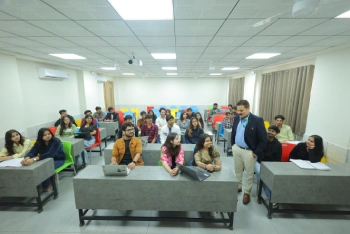



What else can you do while studying at GLA
GLA University offers a wide range of campus extra-curricular activities across all domains.
These activities are organized through student clubs, departmental societies, university festivals, and regular institutional programs. Typical categories and representative examples





Ph.D in Electrical Engineering Frequently Asked Questions
Candidates must have a Master’s degree in the relevant discipline with a minimum of 55% marks (50% for SC/ST/OBC). NET/GATE/Equivalent qualification is preferred but not mandatory for all disciplines.
Admission to Ph.D. programs involves an online application, followed by a written entrance test and personal interview. Candidates with valid UGC-NET/UPPSC or GATE scores may be exempted from the entrance test.
Yes, GLA University offers University Research Fellowship to full-time Ph.D. scholars. Selected candidates receive a monthly stipend along with contingency grant to support their research work.
GLA University offers PhD in Computer Science, Law, Pharmacy, Management, Engineering (all branches), Biotechnology, Physics, Mathematics, and several other Science fields.
After successful completion of the entrance test and interview, a Ph.D. supervisor is allotted based on the candidate’s research interest and availability of faculty in the respective department.
Scholars are required to publish at least two research papers in UGC-approved or Scopus-indexed journals before thesis submission as per university and UGC guidelines.
Ph.D. scholars get access to well-equipped laboratories, advanced research instruments, central library with e-resources, and high-performance computing facilities for research work.
The progress of every Ph.D. scholar is monitored through six-monthly progress seminars and reports reviewed by the Departmental Research Committee.
After completing research work and manuscript preparation, scholars submit a plagiarism-free thesis. It is evaluated by two external examiners followed by a final viva-voce.
Yes, hostel accommodation is available for full-time Ph.D. research scholars at GLA University with all necessary amenities.
There is no upper age limit for Ph.D. admission at GLA University. Candidates of any age fulfilling the eligibility criteria can apply.
Research areas in Ph.D. Computer Science include Artificial Intelligence, Machine Learning, Data Science, Cybersecurity, Cloud Computing, and Internet of Things.
Ph.D. in Pharmacy covers areas like Pharmacautics, Pharmacology, Pharmaceutical Chemistry, Pharmacognosy, Drug Design, and Clinical Research.
The Research Degree Committee approves the research topic, reviews progress, and recommends thesis submission for all Ph.D. programs.
Yes, GLA University encourages and supports Ph.D. scholars in filing patents for innovative research outcomes through its IPR cell.
Yes, international students can apply for Ph.D. programs. They must fulfill the eligibility norms and provide equivalent certificates as per UGC guidelines.
After Ph.D., candidates can pursue careers as Assistant Professors, Research Scientists, Post-doctoral fellows, or take up leadership roles in industry and R&D organizations.
Candidates must bring original marksheets, degree certificates, research proposal, and valid ID proof for the interview.
Yes, regular workshops, seminars, and conferences on research methodology, academic writing, and data analysis are organized for all Ph.D. research scholars.
Ph.D. duration can be extended up to a maximum of 6 years (including coursework) with proper justification and approval from the competent authority.
Candidates can contact the Ph.D. admission cell through the official university website or email for any queries related to Ph.D. programs.
Admission Process
How to apply to GLA

Registration
Register online by filling in your basic details on the admission portal.
https://
student.glauniversity.in/
Main/Admission


That’s it — your journey with GLA begins here.
Choose More Than a Degree. Choose GLA.
Learn more, grow faster, and discover your direction
Open for admission year 2026-27
 Virtual Tour
 B.Tech Programs
UG Programs
Lateral Entry
M.Tech Programs
PG Programs
Doctoral Programs
Diploma Programs
Admissions Helpline

-

-

-

-

17km Stone, NH-19, Mathura-Delhi Road, P.O.
Chaumuhan, Mathura-281 406, (U.P.) INDIA