
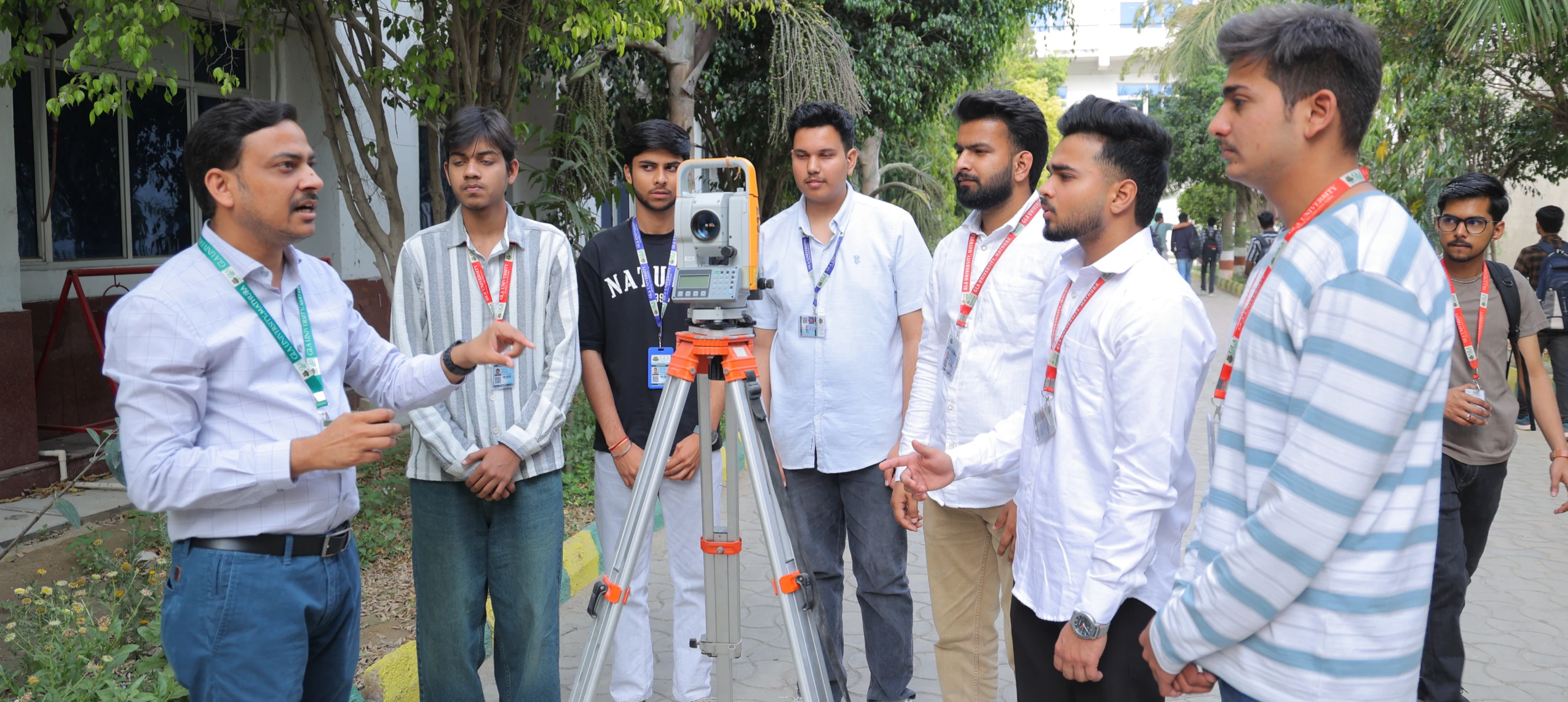
Why B. Tech in Civil Engineering Still Matters in 2026
Walk through any growing city in 2026. You hear metro trains thundering.
You see cranes slicing bright evening skies. You will see dust rising from fresh roads and sidewalks. Neighbourhoods spread outward every month. Smart sensors blink along traffic lights and bridges.


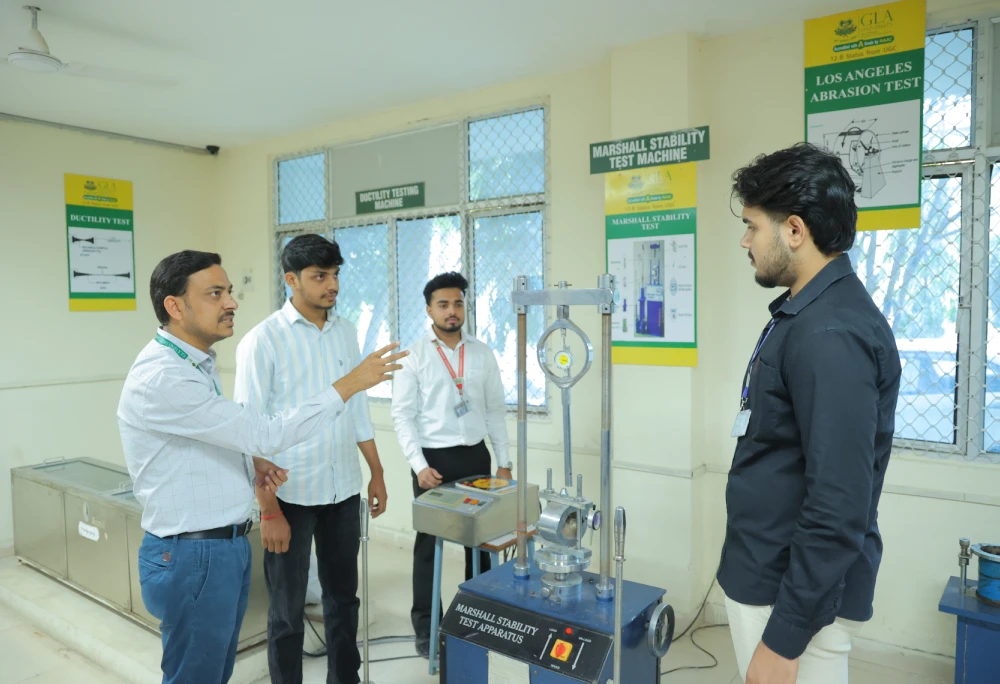
Headlines blaze with dazzling AI and glittering automation news. Neon algorithms pulse across glowing digital screens worldwide. Yet cities still breathe through solid concrete, shimmering steel, and flowing water networks. Civil engineers design these powerful systems with steady hands. They pour foundations that anchor towering buildings against roaring winds. Drones circle sites while smart sensors whisper constant data.
A B. Tech in Civil Engineering shapes future builders and problem solvers. Students learn to create living infrastructure. They design tall skyscrapers. They plan splendid bridges. They build smooth highways. They construct resilient dams. They study soil behaviour carefully. They test flowing water systems while working with steel and concrete day and night.
The core areas of civil engineering include the following:
- 01 Structural engineering systems
- 02 Transportation network design
- 03 Environmental water management
- 04 Geotechnical soil analysis
- 05 Construction project management
- 06 Water resources planning
- 07 Surveying and mapping
- 08 Urban infrastructure planning
- 09 Earthquake-resistant structures
- 10 Sustainable building design
- 11 Highway and traffic engineering
- 12 Infrastructure maintenance systems.
Looking at Civil Engineering in 2026
Fast Urbanization
This phenomenon transforms cities completely. Migrants pour in every morning with hopes and energy. Neighbourhoods spread outward at breathtaking speed. Traffic surges through every busy road. Water pipes strain under heavy demand. Drains choke during heavy monsoon rains. Noise fills the air day and night. Civil engineers step forward with calm confidence in this scenario. They plan resilient layouts, stronger bridges, and wider roads. Urban growth races ahead, and engineering keeps cities alive.
Civil engineers, after B. Tech in Civil Engineering, step forward with steady resolve in such a scenario. They plan resilient layouts, stronger bridges, and wider roads. They stitch communities together with transit and utilities. Urban growth races ahead, yet engineering keeps steady discipline.
Need for better infrastructure
Drive through any busy city. You feel it right away. Roads rattle under your wheels. Horns blare nonstop. Water drips from broken pipes. Have you ever sat in endless traffic? It makes you wonder. Cities are growing too fast. Old systems cannot keep up. Stronger bridges, smarter drains, and cleaner water lines help. Smoother transit makes life safer and calmer.
Smart Cities Mission
Smart cities' mission links technology to daily life. Sensors watch traffic and air quality. They also track energy use. Streetlights turn on only when needed. Buses move through smart signals. Data improves planning decisions. Civil engineers build real roads, drains, and buildings. They turn digital ideas into physical cities. Smart cities make life safer and cleaner. All thanks to those having B. Tech Degree in Civil Engineering
Sustainable and green construction
- 01 Energy-efficient buildings reduce emissions
- 02 Solar panels power urban spaces
- 03 Recycled materials lower construction waste
- 04 Green roofs cool dense neighbourhoods
Rising population and housing demand
As time goes on, new apartment buildings across cities pop up like bright glass woods. The streets are always busy with cars. It's hard for families to find enough room. Bulldozers roar across dusty sites. It looks like the construction never stops.
Role of Technology in Modern Civil Engineering
On a 2026 building site, you can notice the change immediately. Though machines roar and dust rises, technology silently manages the show. Engineers now use AI to plan before pouring concrete. It anticipates delays, suggests materials, and identifies hidden dangers. Heavy machinery moves efficiently, almost instinctively. Look up, and you may see a drone flying. It maps land in minutes, not days, eliminating slow surveys.
This data goes directly into BIM, where buildings become 3D models. Teams walk virtual buildings to discover faults early and save costly rework. Smart materials alter building behaviour. Sensors monitor everything in real time. If something goes wrong, alarms come into play immediately. Digital twins create dynamic virtual roads, railroads, and bridges.
Without damaging the structure, engineers simulate storms, traffic, and earthquakes. Civil engineering is now more data-driven, safer, and smarter, but still human, based on real materials and places people live. Needless to say, a B. Tech Degree in Civil Engineering enables them to do what they do.
Career Avenues in 2026
- 01 Site project supervision
- 02 Structural building design
- 03 Transportation network planning
- 04 Environmental pollution control
- 05 Urban city planning
- 06 PWD infrastructure projects
- 07 Railway track development
- 08 NHAI highway construction
- 09 Metro rail engineering
- 10 Private construction firms
- 11 Water resource management
- 12 Geotechnical soil analysis
- 13 Sustainable building projects
- 14 Quantity cost estimation
- 15 Infrastructure maintenance roles
Government & Mega Projects Driving Demand
- 01 Smart Cities Mission
- 02 National Highways expansion
- 03 Metro rail projects
- 04 Housing for All schemes
- 05 Bridges, dams, airports, and ports
Who Should Choose Civil Engineering?
Civil engineering suits curious minds who adore numbers like glowing puzzle pieces in motion. These students tackle complex problems with sharp logic and patient creativity every single day. They feel excitement when equations transform into towering structures above bustling streets.
They care deeply about clean water, green parks, and breathable cities. Sustainability sparks passion in their practical, forward-looking hearts. Infrastructure feels like art, responsibility, and purpose blended together. Such students build not just structures but resilient communities for future generations. And, obviously, they earn a B. Tech in Civil Engineering to actualize their dream.
Concluding Remarks
Bold technology, innovation, and resilience propel civil engineering forward. Digital technologies refine designs, but human judgment guides major decisions. Smart sensors detect bridge breathing under heavy traffic and winds. Emerald-green materials guard brilliant skylines and highways.
Villages to cities, marketplaces to homes, hopes to opportunity, structures are tested by climate while engineers improve foundations.
Planning keeps cities safe and balanced as urban development accelerates. Every bridge, tunnel, highway, and building represents national progress. Young engineers build their future in classrooms and on building sites. They are inventive, future-ready, and vital. They reconstruct aged cities and preserve culture, heritage, rivers, woods, and communities for decades.

Admission Open For
B.Tech
2027
Start your journey with us
Apply OnlineGet In Touch With Us
 Virtual Tour
 B.Tech Programs
UG Programs
Lateral Entry
M.Tech Programs
PG Programs
Doctoral Programs
Diploma Programs
Admissions Helpline

-

-

-

-

17km Stone, NH-19, Mathura-Delhi Road, P.O.
Chaumuhan, Mathura-281 406, (U.P.) INDIA