Center for Excellence for Developing Real-Time Applications in NI LabVIEW
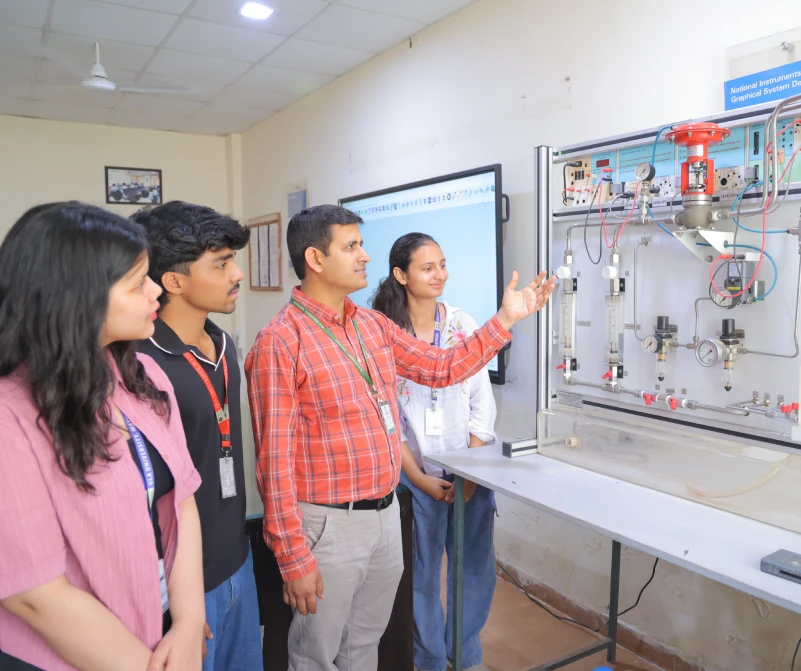
Faculty Coordinator: Dr. Manish Kalra (Assistant Professor)
Technical Assistant: Mr. Pramod Tomar
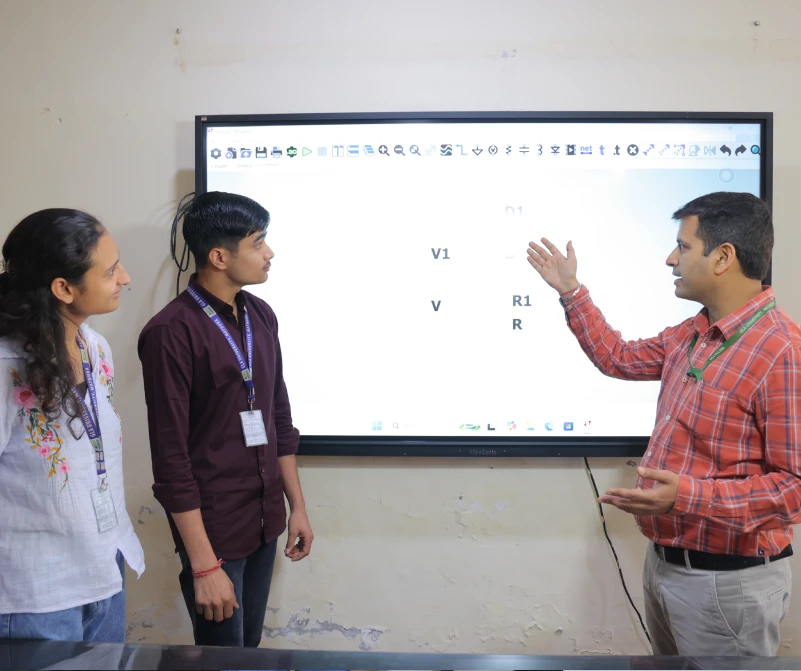
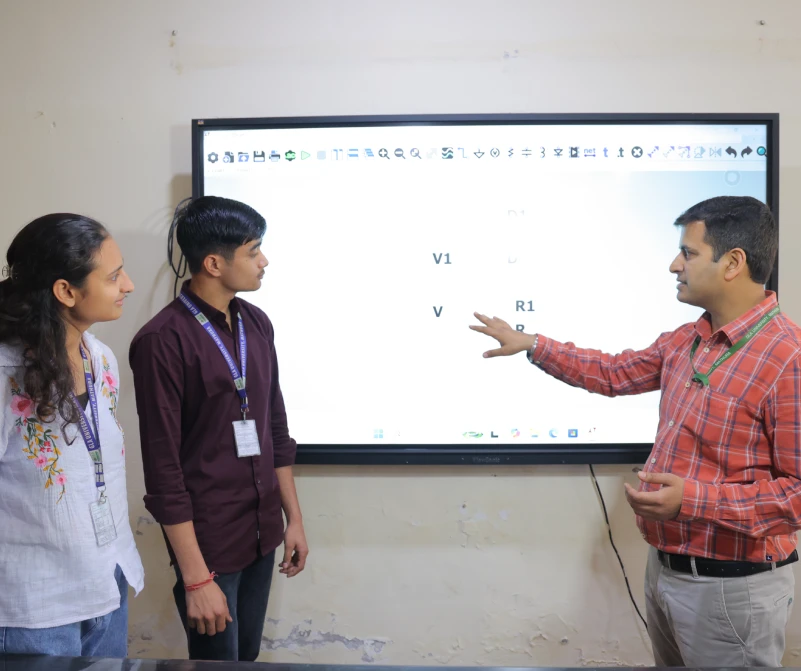
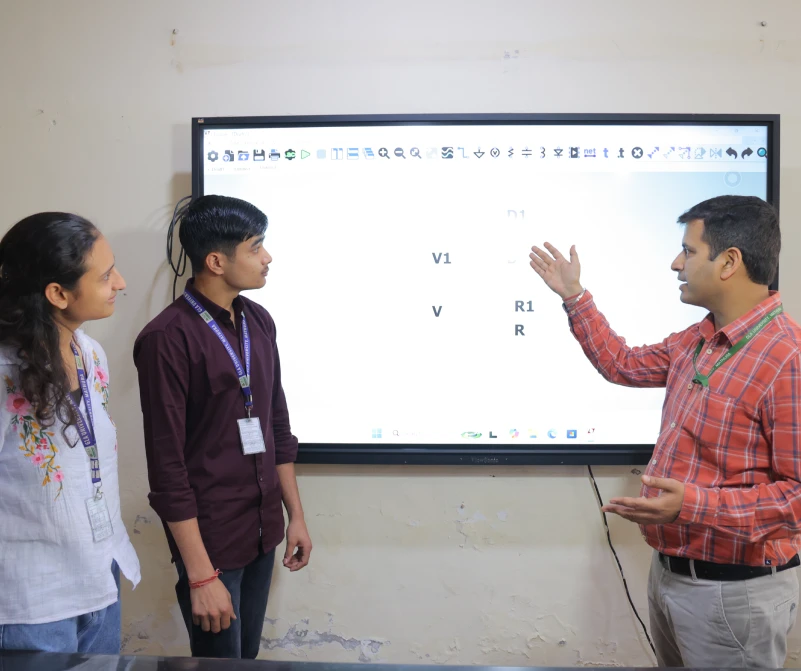
LabVIEW is the graphical programming environment, i.e., it includes graphical language in the program instead of script. This feature of LabVIEW makes it easier to program and work with its associated hardware. However, it is not limited to that, we can easily attach it to any hardware, regardless of the vendor. Further, we can integrate it with state-of-the-art programming languages like Python and C. Furthermore, LabVIEW has thousands of analysis functions, which makes it versatile.
Objectives:
- Introduce the fundamental principles of LabVIEW programming.
- Debug the basic building blocks of programming structures to provide hands-on experience with NI myRIO, NI ELVIS, and NI myDAQ.
- Equip students and faculty members with the fundamental concepts and tools of LabVIEW design and programming. Finally, at the end of the training program, students should be able to get placement in core companies.
- The laboratory possesses computers that are well-equipped with the licensed version of LabVIEW.
- The laboratory is equipped with Controls and embedded software, signal processing, and communication software.
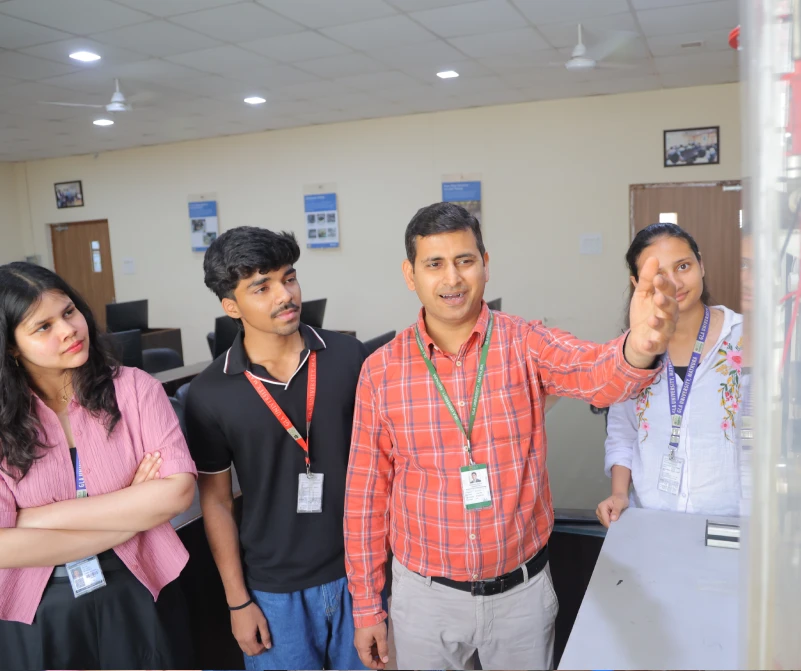
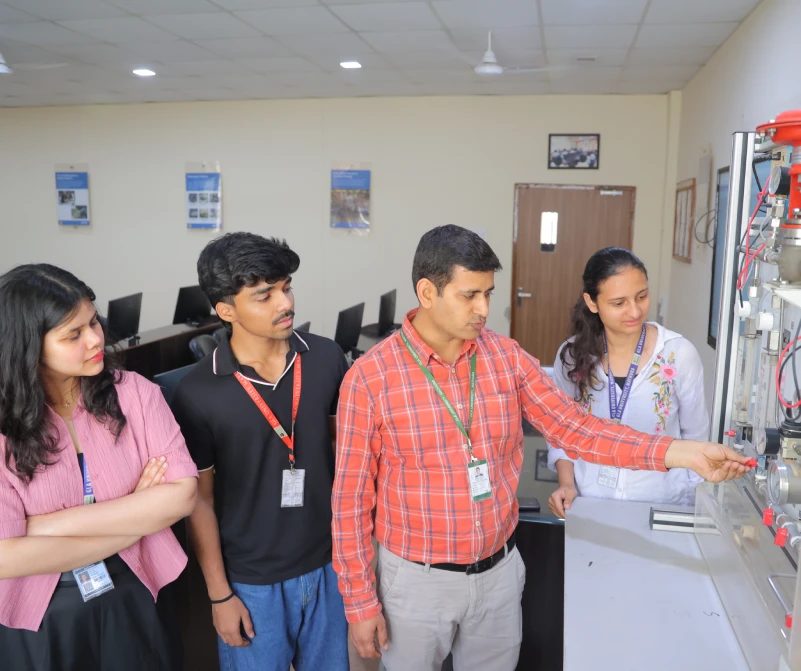
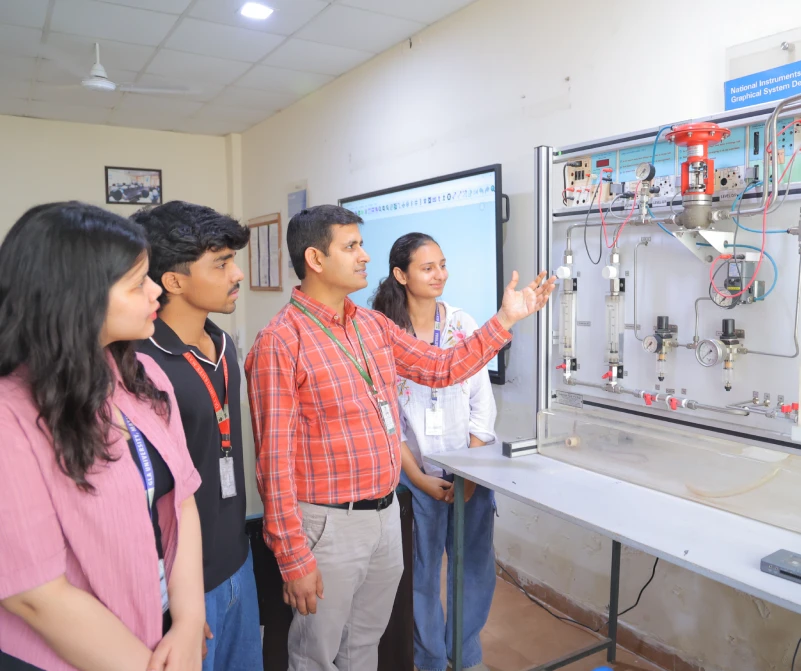
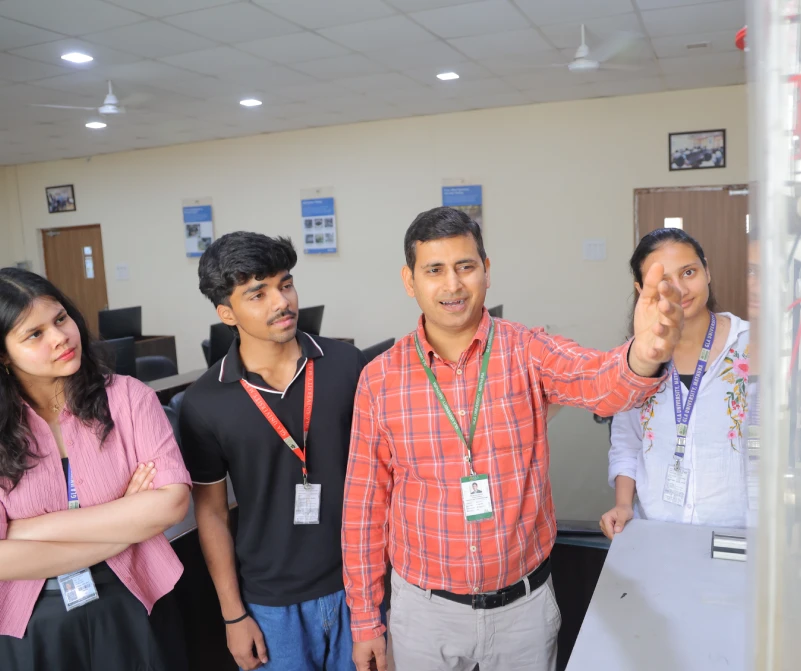
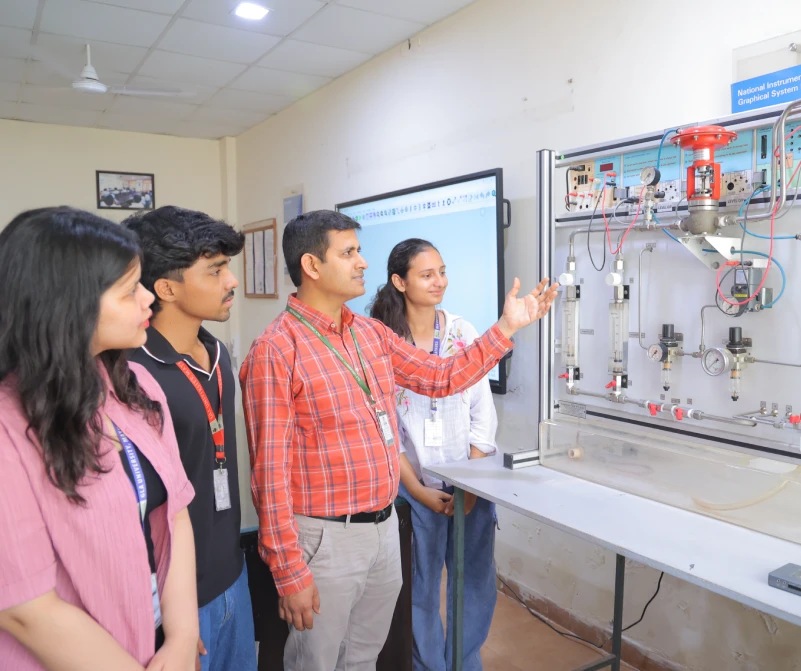
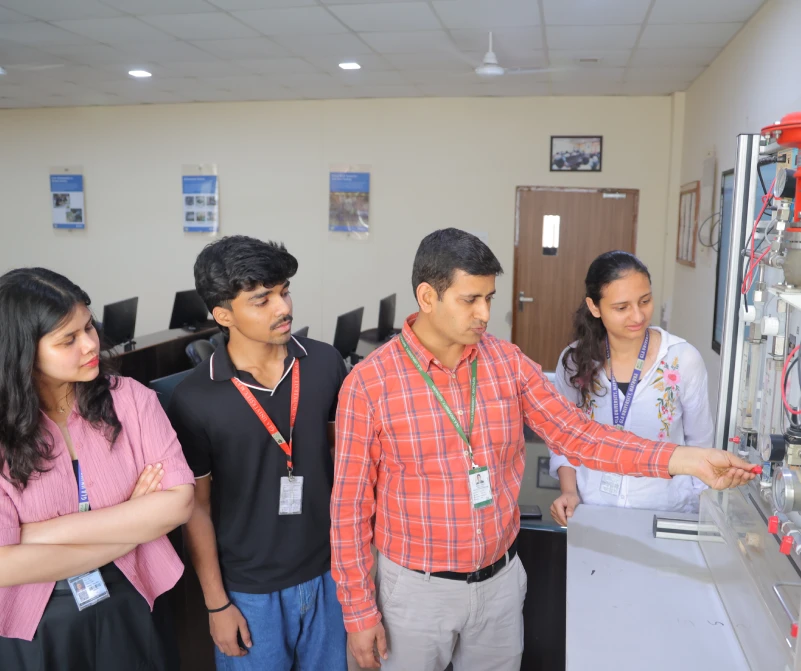
- Apart from software, the laboratory is very well equipped with versatile hardware as well. To provide hands-on learning experiences, the laboratory offers NI myRIO units, each equipped with a sensor kit.
- The LabVIEW laboratory also provides the Process control trainer kit with the compressor and accessories.
Major tools/Hardware:
- Design of an Adaptive fractional order PD controller for spatial power control of AHWR.
Projects Completed:
- Display temperature on a digital indicator.
- Show readings using a thermometer gauge.
- Generate an alarm when the temperature exceeds a predefined limit.
Digital Temperature Monitoring System
Objective: To monitor and display temperature readings using LabVIEW.
Main features:
Software concepts: Numeric controls, indicators, comparison functions, and While Loops.
- Display voltage readings.
- Set minimum and maximum voltage limits.
- Indicate overvoltage conditions.
Digital Voltmeter
Objective: To develop a virtual instrument for measuring and displaying voltage.
Main features:
Software concepts: Numeric controls, indicators, comparison functions, and data acquisition.
- Generate sine, square, and triangular waves.
- Adjust amplitude and frequency.
- Display waveforms on a graph.
Signal Generator
Objective: To generate and display different electrical waveforms.
Main features:
Software concepts: Waveform generation, loops, numeric controls, and waveform graphs.
- Start, stop, and reset buttons.
- Display elapsed time.
- Measure time intervals.
Digital Stopwatch
Objective: To design a stopwatch with basic timing functions.
Main features:
Software concepts: While Loops, Event Structures, shift registers, and timing functions.
- Control red, yellow, and green indicator lights.
- Switch lights in a predefined sequence.
- Adjust the duration of each signal.
Traffic Light Controller
Objective: To simulate an automatic traffic signal system.
Main features:
Software concepts: Boolean LEDs, timing functions, Case Structures, and state machines.
- Display temperature and humidity.
- Plot readings on charts.
- Generate warnings when readings exceed set limits.
Temperature and Humidity Monitoring System
Objective: To monitor temperature and humidity values using simulated or real sensor inputs.
Main features:
Software concepts: Numeric indicators, charts, comparison functions, and data logging.
- Perform addition, subtraction, multiplication, and division.
- Display calculation results.
- Handle division-by-zero errors.
Calculator Using LabVIEW
Objective: To develop a basic calculator using graphical programming.
Main features:
Software concepts: Numeric controls, arithmetic functions, Case Structures, and error handling.
- Generate a test waveform.
- Display the waveform graphically.
- Calculate or estimate its frequency and amplitude.
Frequency and Amplitude Measurement
Objective: To generate a signal and determine its basic characteristics.
Main features:
Software concepts: Signal processing, waveform analysis, graphs, and numeric indicators.
- Accept a password from the user.
- Display access granted or access denied.
- Limit the number of incorrect attempts.
Password-Based Security System
Objective: To simulate a simple password-protected access system.
Main features:
Software concepts: String controls, comparison functions, Case Structures, and Boolean indicators.
- Generate or acquire measurement values.
- Record readings with timestamps.
- Save data to a CSV or text file.
- Display readings on a chart.
Data Logger
Objective: To record and save measurement readings for later analysis.
Main features:
Software concepts: File I/O, arrays, While Loops, charts, and data handling.
 Virtual Tour
 B.Tech Programs
UG Programs
Lateral Entry
M.Tech Programs
PG Programs
Doctoral Programs
Diploma Programs
Admissions Helpline

-

-

-

-

17km Stone, NH-19, Mathura-Delhi Road, P.O.
Chaumuhan, Mathura-281 406, (U.P.) INDIA