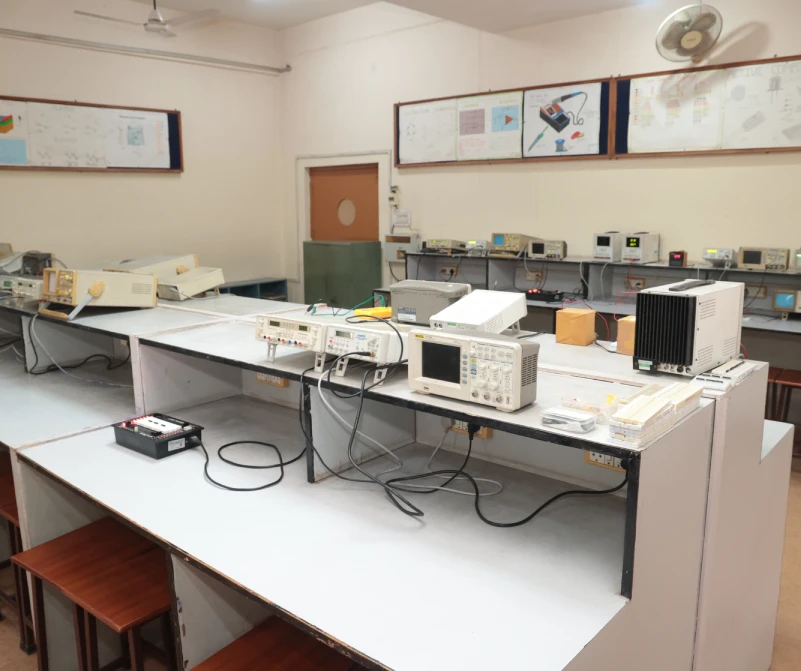
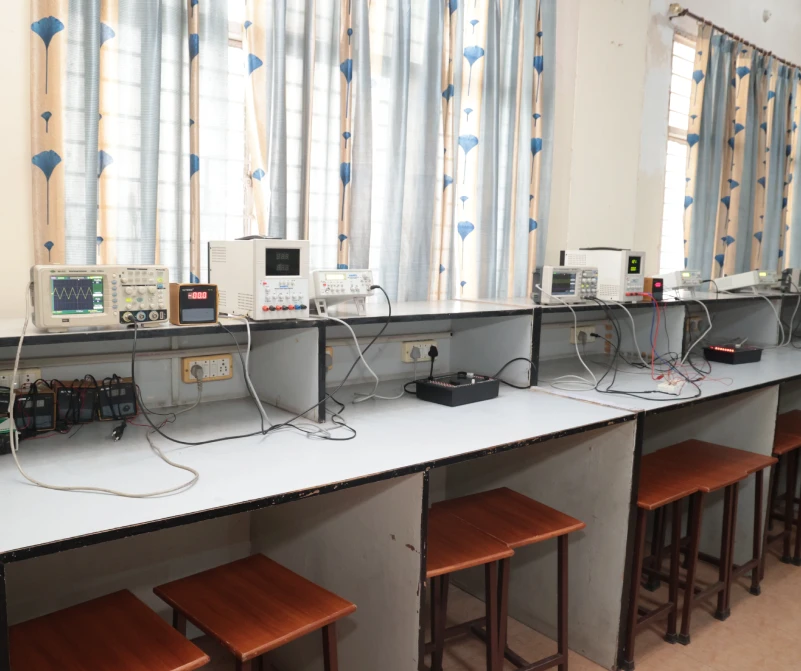
The Basic Electronics Laboratory is one of the most important facilities in engineering education, particularly for students of Electronics and Communication Engineering.
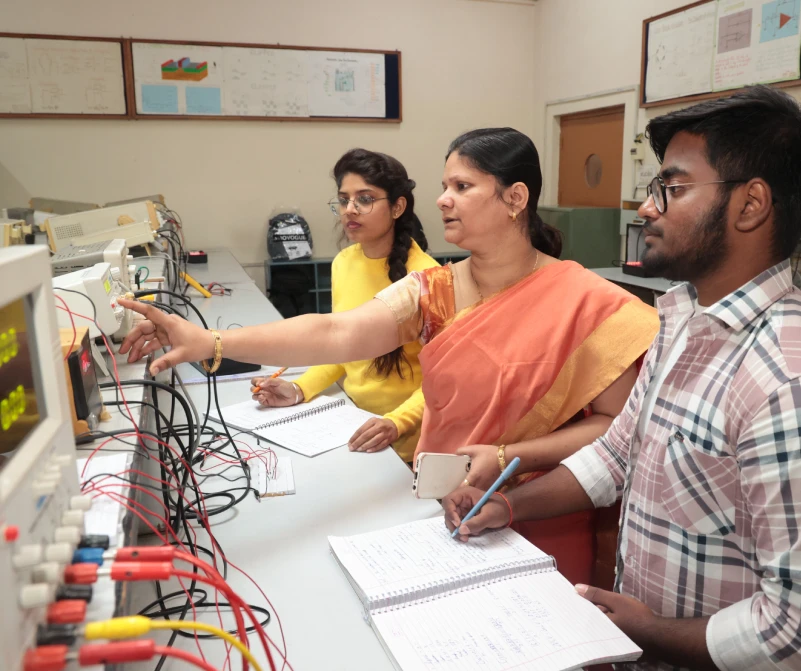
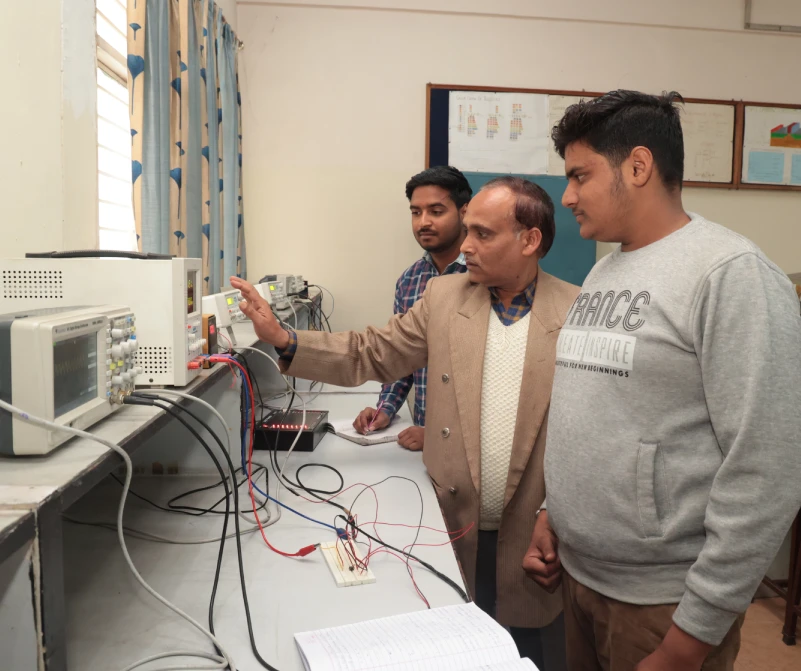
It provides a strong foundation in understanding the fundamental principles, components, and working mechanisms of electronic circuits. The laboratory helps students connect theoretical concepts with practical applications through hands-on experiments and demonstrations.
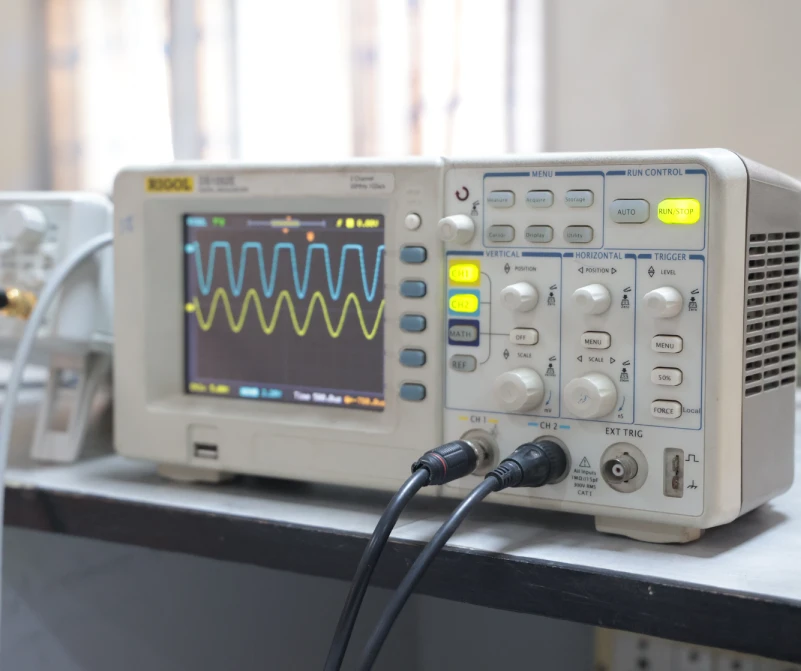
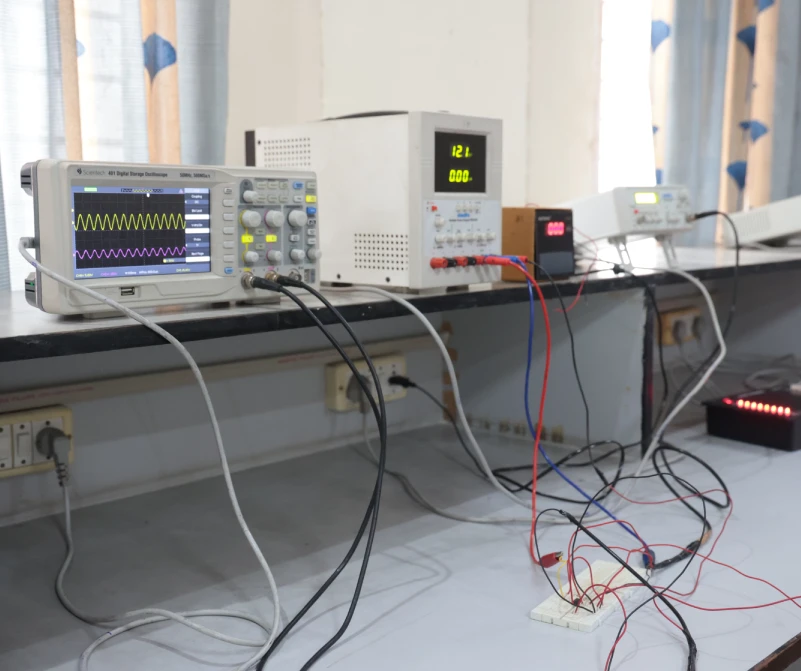
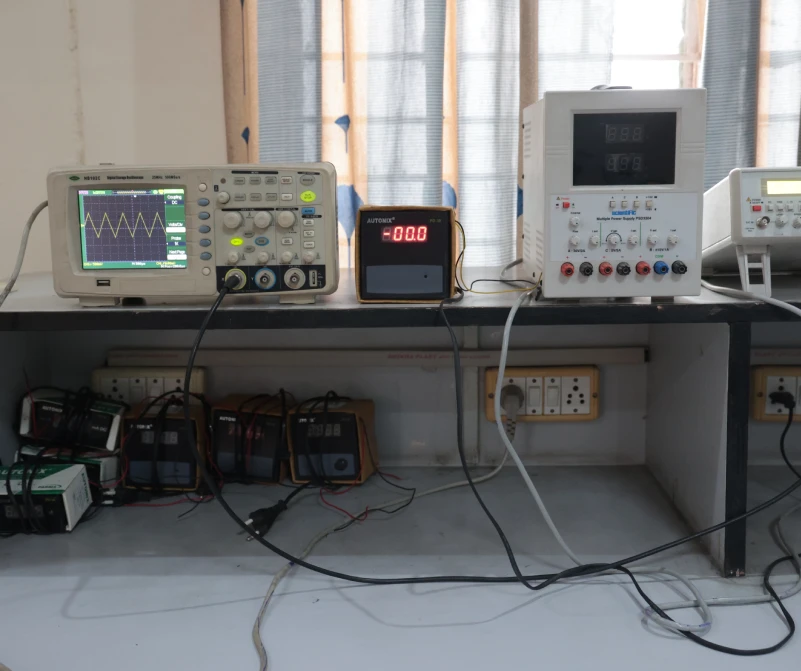
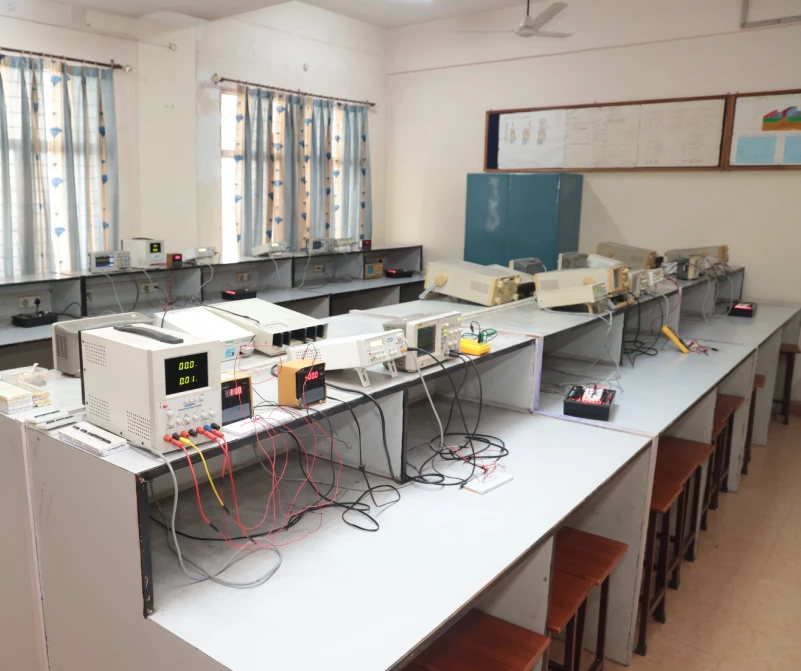
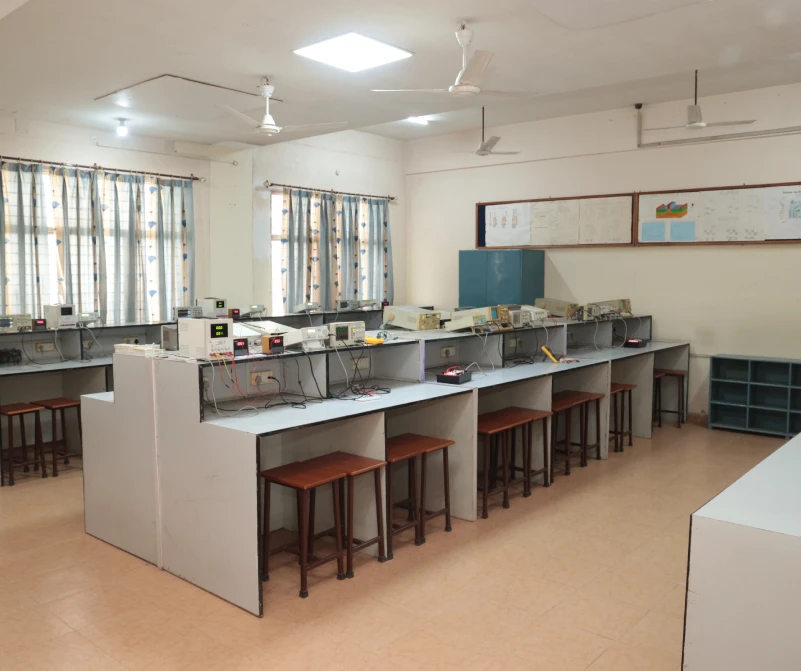
The laboratory is equipped with essential electronic instruments and components, such as Digital Multimeters, Cathode Ray Oscilloscopes (CRO), Digital Storage Oscilloscopes (DSO), Function Generators, DC Regulated Power Supplies, Breadboards, Resistors, Capacitors, Diodes, Transistors, and various Electronic Trainer Kits.
Students perform experiments related to basic electrical and electronic circuits, semiconductor devices, PN junction diodes, Zener diodes, rectifiers, filters, transistor characteristics, amplifiers, and logic gates. These practical activities help students understand the behaviour and characteristics of different electronic components and their applications in real-world circuits.
The Basic Electronics Laboratory develops essential technical skills, including circuit construction, measurement of electrical parameters, waveform observation, circuit testing, and fault identification. It also enhances students' analytical thinking, problem-solving abilities, creativity, and confidence in handling laboratory instruments.
Furthermore, the laboratory provides a strong foundation for advanced subjects such as analog electronics, digital electronics, communication systems, microprocessors, microcontrollers, embedded systems, and modern electronic technologies.
Practical knowledge gained in this laboratory is highly valuable for industrial training, research activities, innovation, and future professional careers.
Faculty: Ms. Sweta
Technical: Mr. Kiran Pal Singh
 Virtual Tour
 B.Tech Programs
UG Programs
Lateral Entry
M.Tech Programs
PG Programs
Doctoral Programs
Diploma Programs
Admissions Helpline

-

-

-

-

17km Stone, NH-19, Mathura-Delhi Road, P.O.
Chaumuhan, Mathura-281 406, (U.P.) INDIA