
The Power System Laboratory provides practical exposure to electrical power system operation, fault analysis, switchgear, and protection.
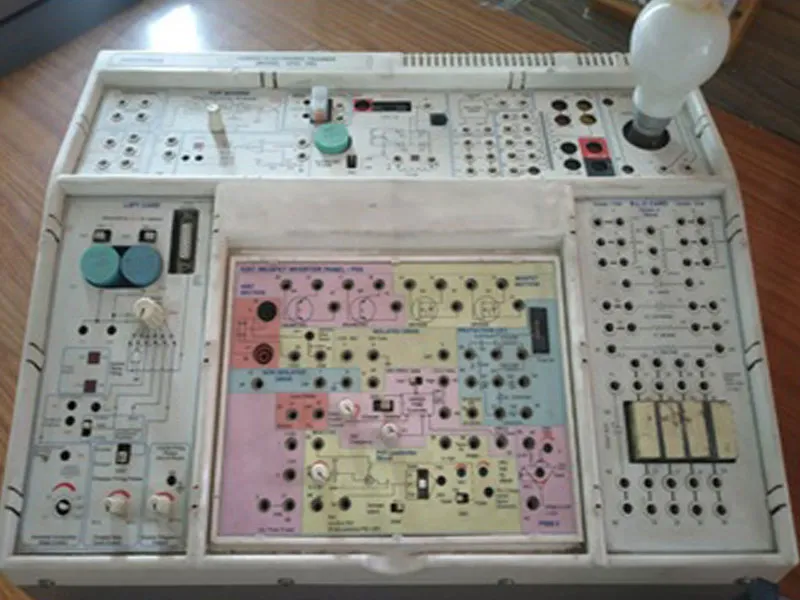
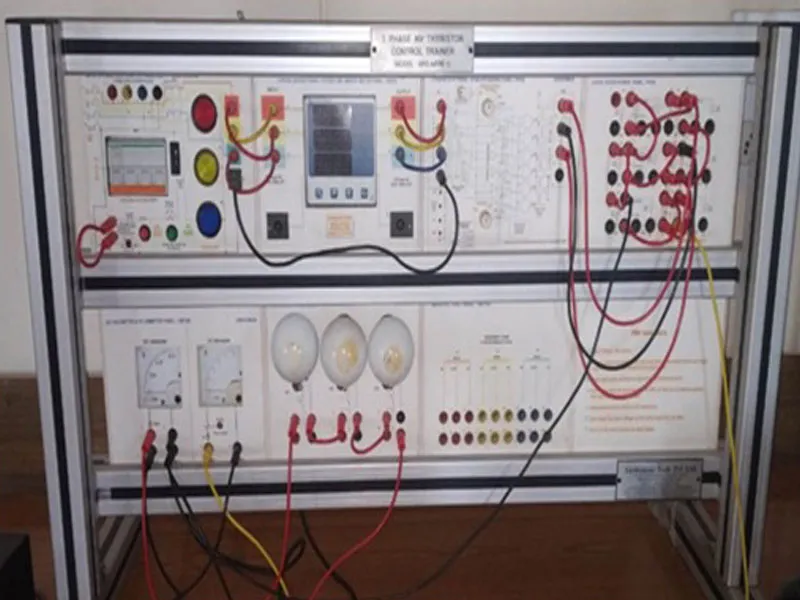
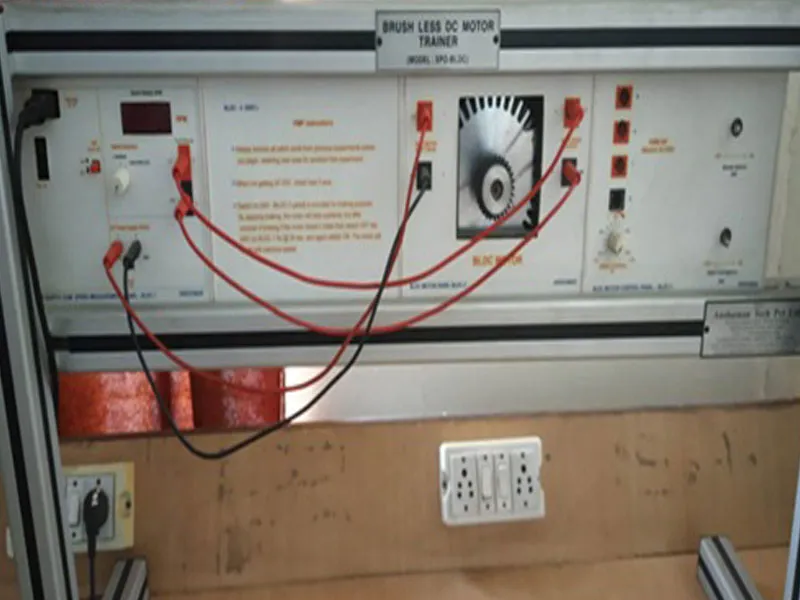
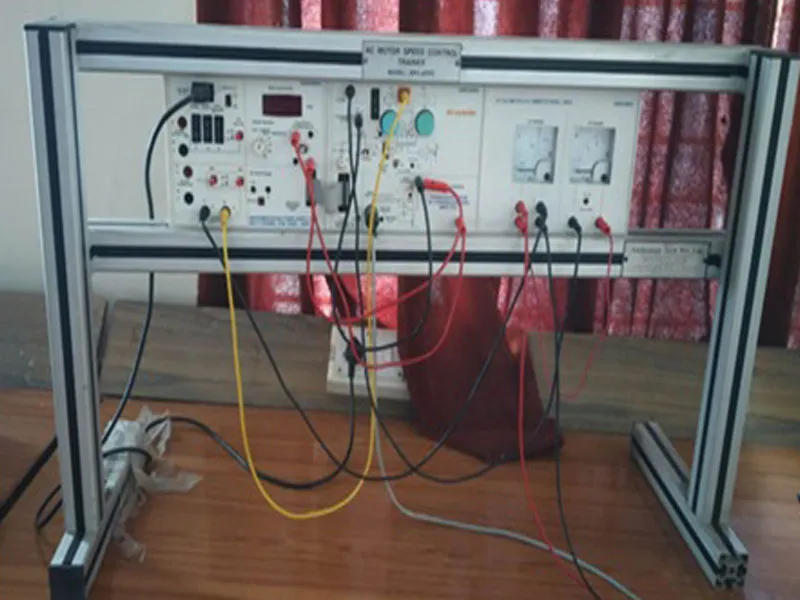
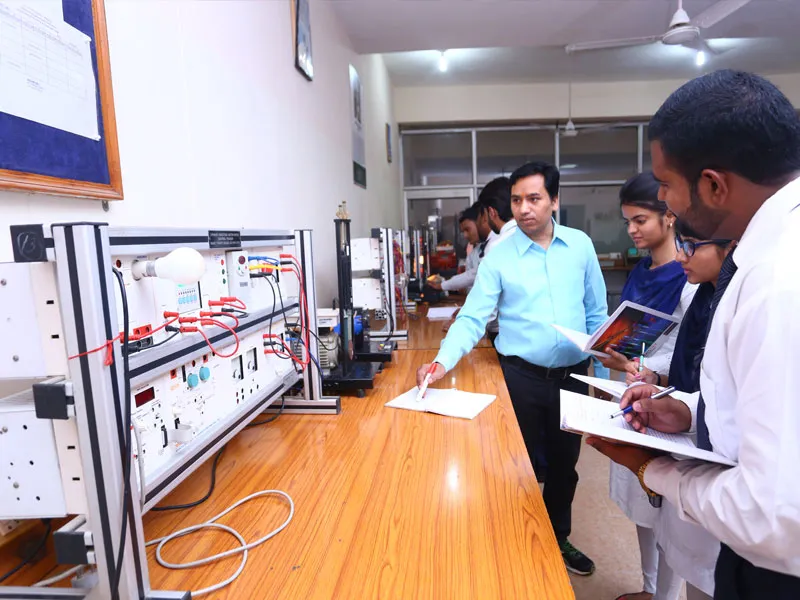
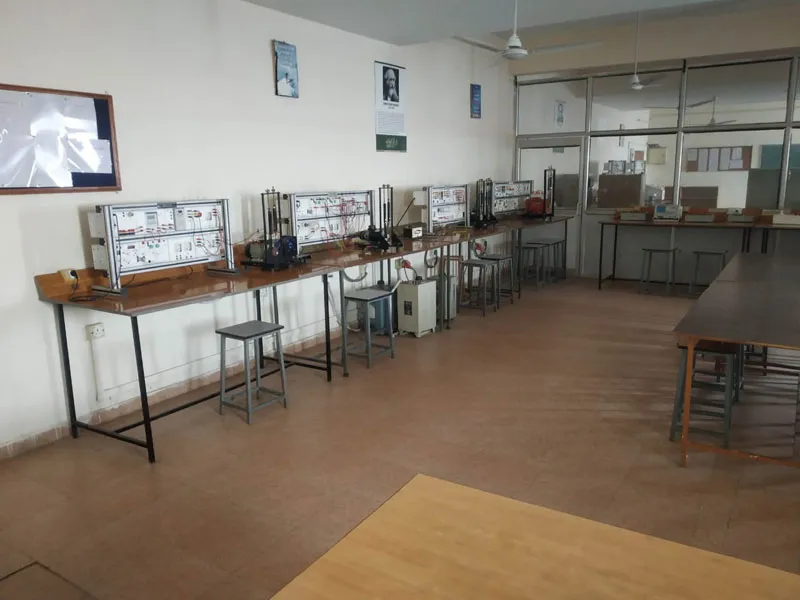
The laboratory is equipped with various trainer kits and testing equipment to help students understand the working principles and characteristics of power system protection devices.
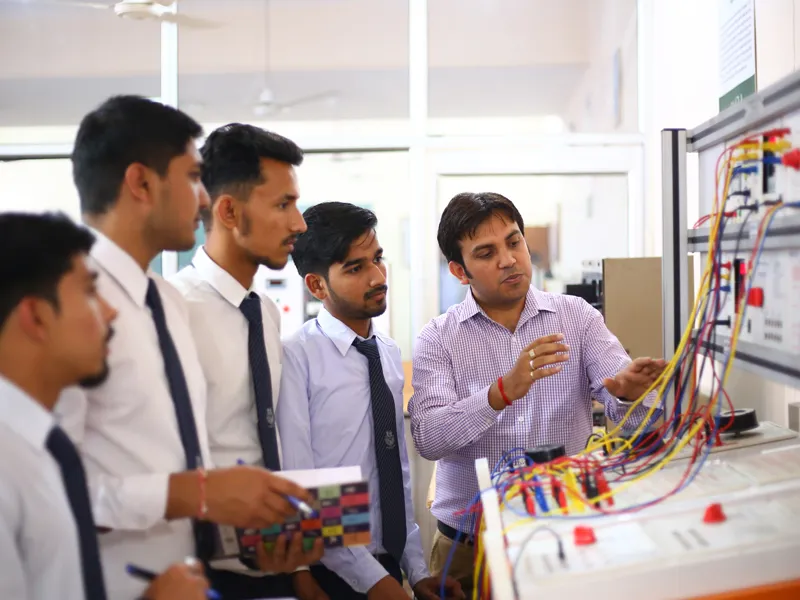
Experiments related to transmission lines, protective relays, transformer oil testing, overvoltage, and earth-fault protection are conducted to strengthen students' theoretical knowledge and practical skills.
List of Major Equipment Hardware
- Power Transmission Line Trainer
- Percentage Biased Differential Relay Trainer
- Overvoltage Relay Test Set
- Overcurrent and Earth-Fault Relay Trainer
- Fuse Testing Kit
- Transformer Oil Testing Kit
Software
- MATLAB Software
List of Experiments
List of Experiments for Power System Lab
- Study of the characteristics and operation of a short transmission line model.
- Study of the performance of a long transmission line model under no-load and light-load conditions, including the Ferranti effect.
- Determine the voltage regulation and efficiency of a short transmission line under different loading conditions.
- Determine the voltage regulation, efficiency, and power flow of a transmission line using the π-model.
- Study the effect of reactive power compensation on transmission-line performance.
- Perform symmetrical and unsymmetrical fault analysis on a transmission line using the hardware trainer.
- Investigate the effect of different fault types on transmission-line voltages and currents.
- Perform load-flow analysis of a power system using MATLAB/Simulink or suitable power-system analysis software.
- Perform symmetrical and unsymmetrical fault analysis of a power system using MATLAB.
- Perform economic load dispatch of generating units using MATLAB.
List of Experiments of Switchgear & Protection Lab
- To study the construction and operating principle of an electromechanical-type overcurrent/overvoltage relay.
- To plot the plug setting multiplier (PSM) versus operating time characteristics of an induction disc-type overvoltage relay.
- To study the construction of an earth fault relay and determine its current and time-setting characteristics.
- To study the different types of fuses.
- To determine the pickup value of a differential relay.
- To plot the operating characteristics of a percentage-biased differential relay.
- To study the transformer differential protection scheme using a differential relay under in-zone fault conditions.
- To determine the breakdown strength of the transformer oil using oil testing kit.
- Plot inverse definite minimum time (IDMT), very inverse, and extremely inverse characteristics.
- Analyze the effect of Plug Setting (PS) and Time Multiplier Setting (TMS).
- To study the restriking voltage and recovery voltage characteristics of a circuit breaker using MATLAB/Simulink.
- To study the operating characteristics of an instantaneous overcurrent relay using MATLAB/Simulink.
Additional Information
The laboratory supports practical learning in power system protection, fault analysis, and the testing of electrical protection equipment. It helps students develop hands-on skills in understanding relay operation, fault detection, and the application of protective devices in electrical power systems.
 Virtual Tour
 B.Tech Programs
UG Programs
Lateral Entry
M.Tech Programs
PG Programs
Doctoral Programs
Diploma Programs
Admissions Helpline

-

-

-

-

17km Stone, NH-19, Mathura-Delhi Road, P.O.
Chaumuhan, Mathura-281 406, (U.P.) INDIA