
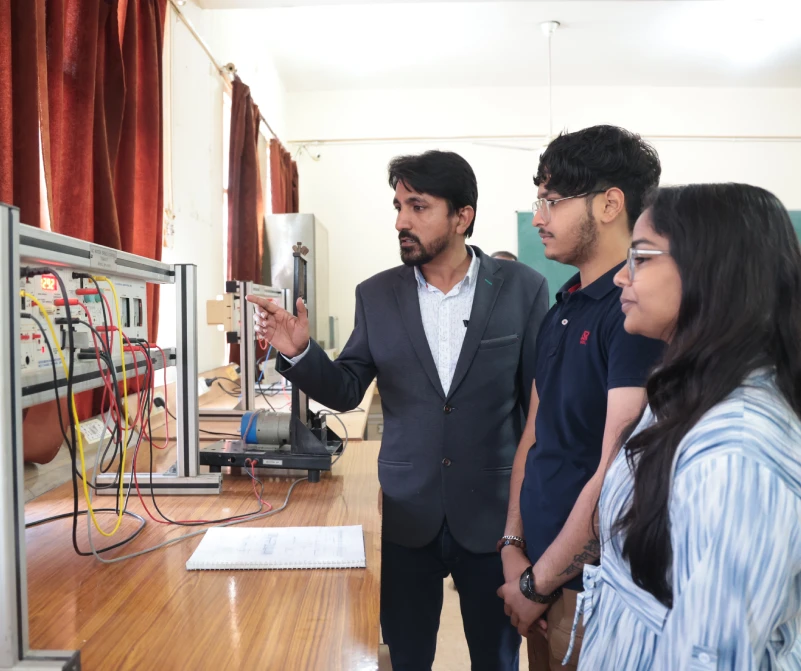
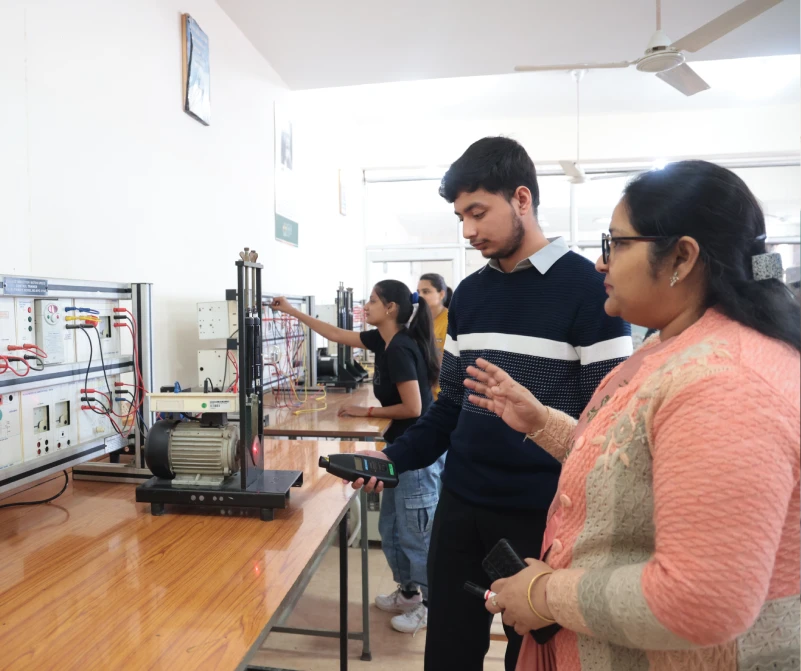
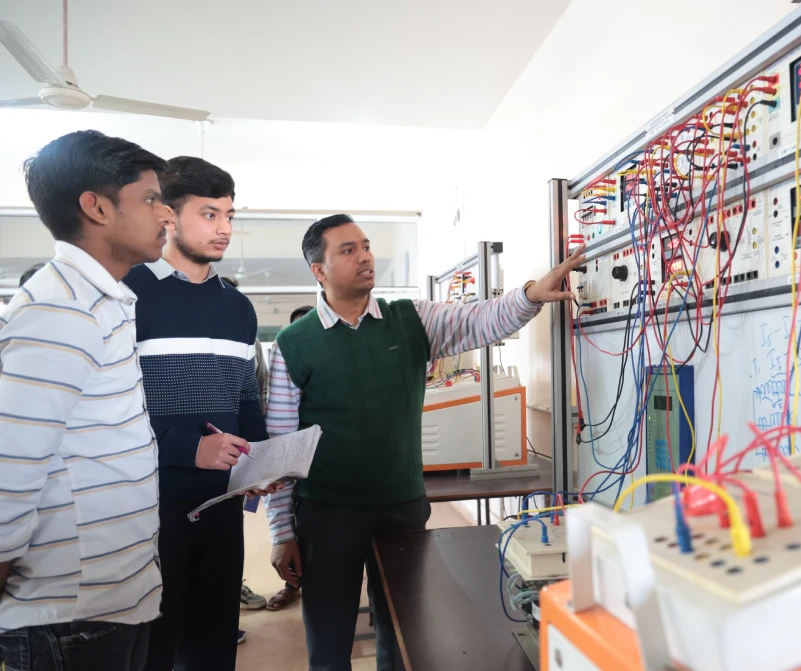
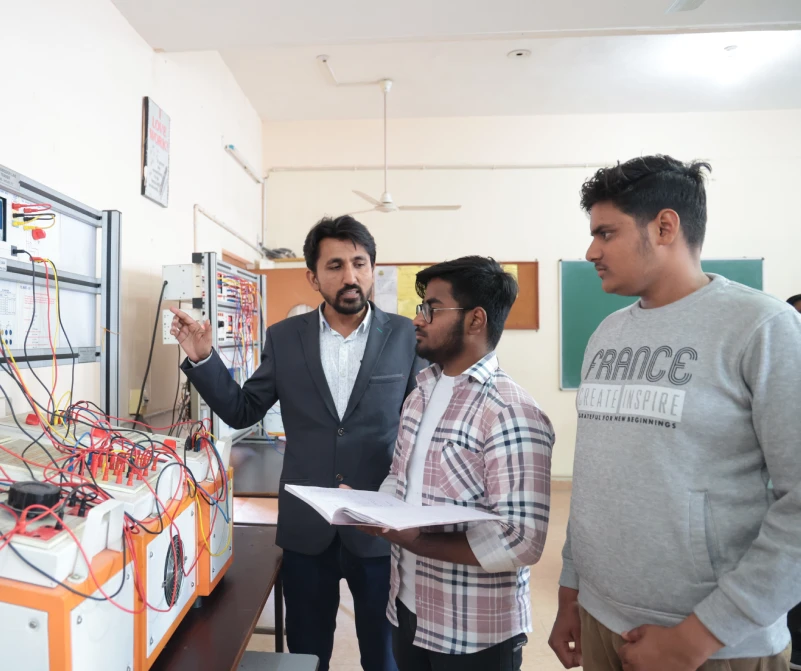
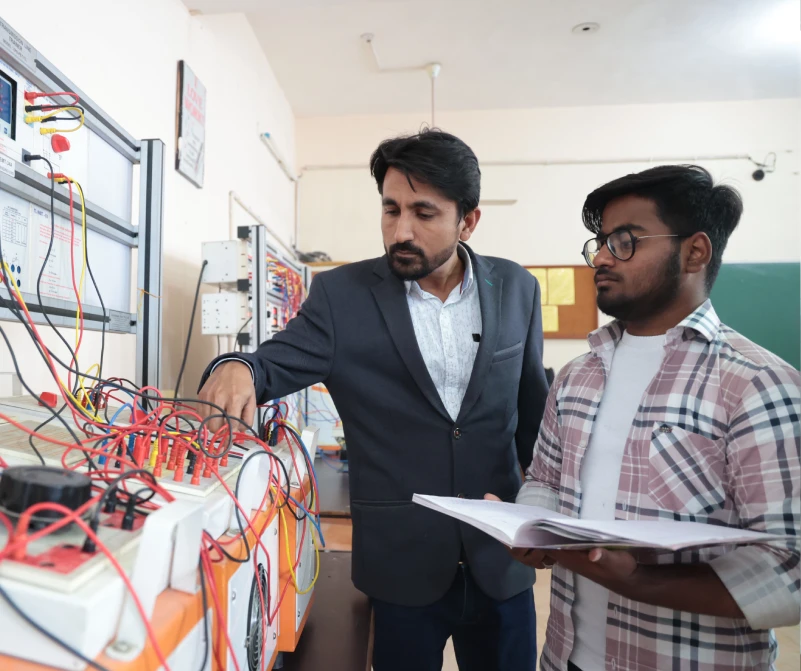
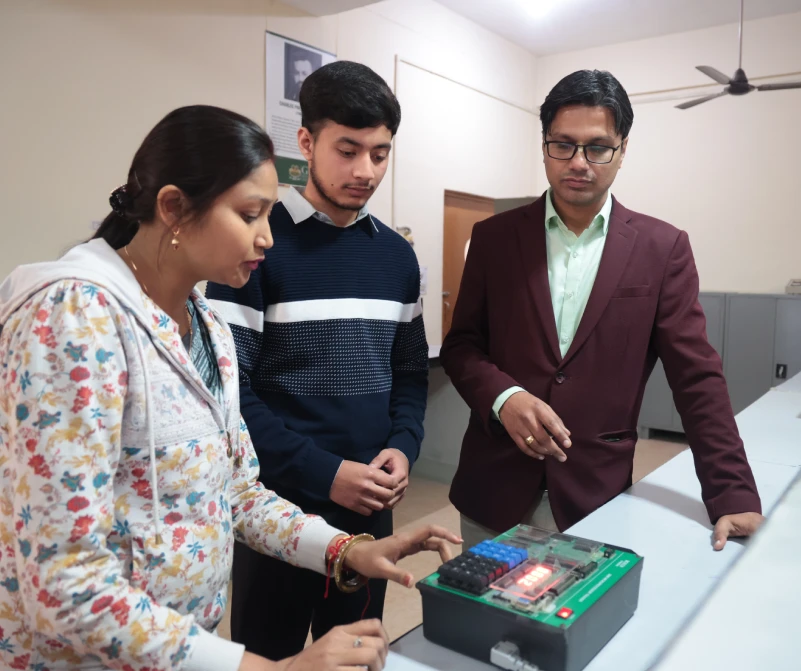
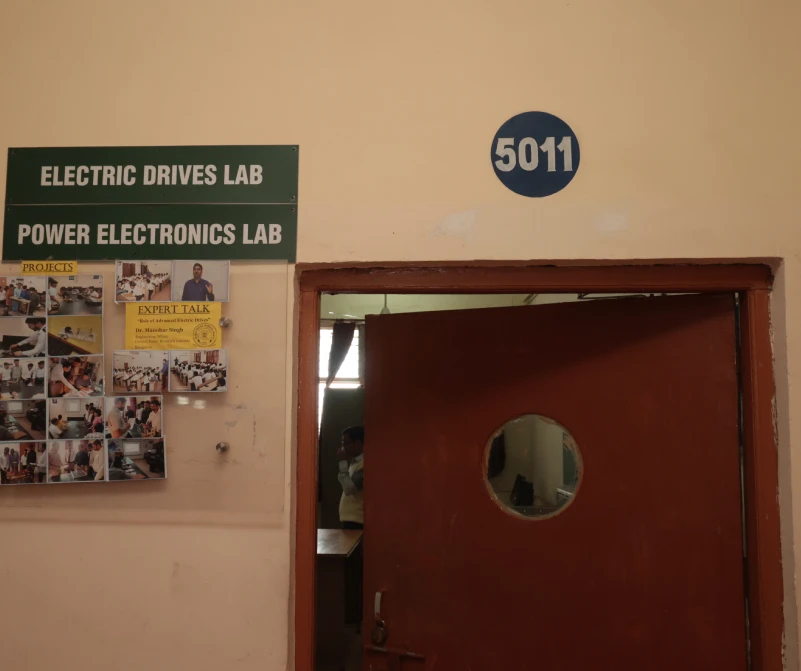
The Power Electronics and Drives Laboratory provides hands-on exposure to power semiconductor devices, power converters, and the speed control of electric motors.
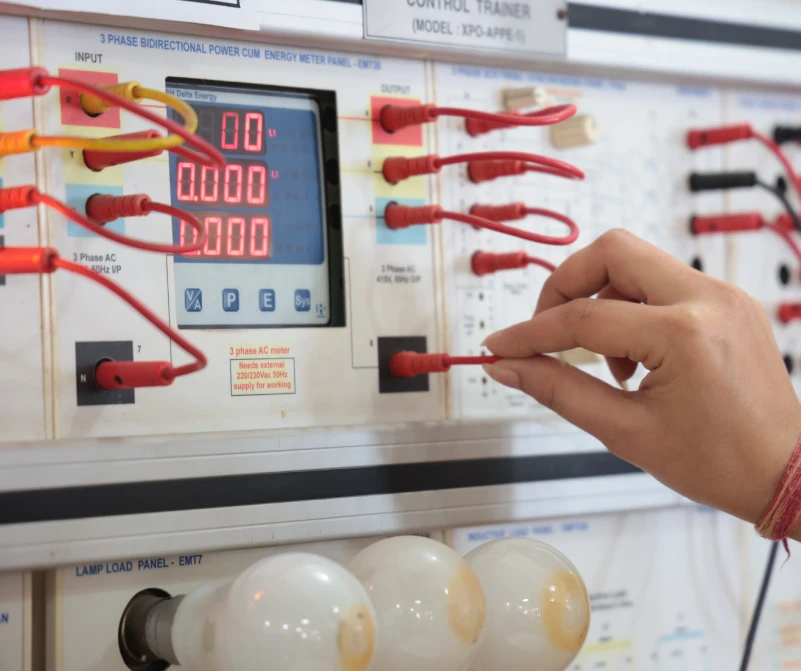
The Power Electronics section is equipped with device characteristics trainers, firing circuit kits, and controlled rectifier and AC voltage regulator setups that help students understand the switching behaviour of thyristors and power transistors and the operation of phase-controlled converters.
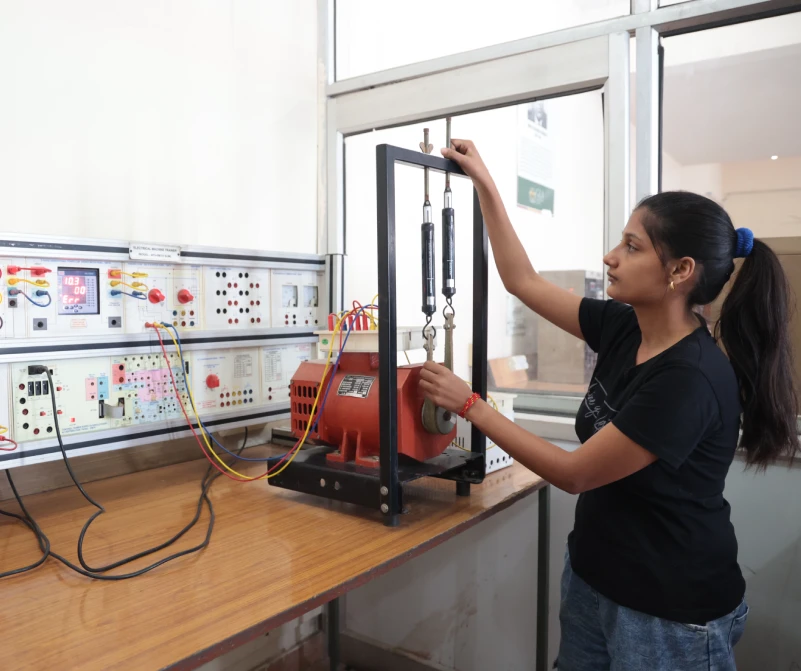
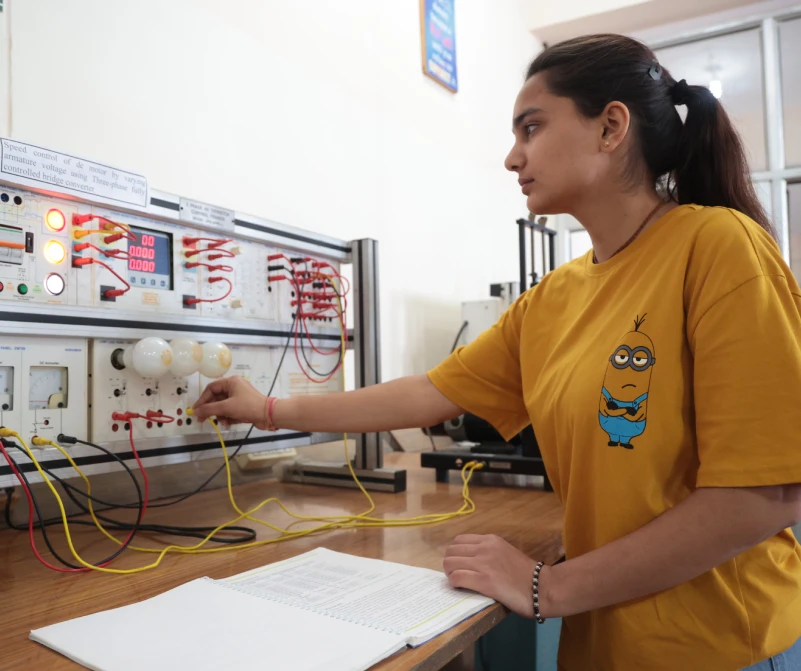
The Electrical Drives section houses converter- and inverter-fed motor trainers for DC motors, squirrel-cage and slip-ring induction motors, and BLDC motors, along with a dSPACE DS1104 real-time controller for implementing closed-loop control. Hardware experiments are complemented by MATLAB/Simulink simulation, giving students a clear link between converter theory and practical motor-drive applications.
List of Major Equipment
Hardware – Power Electronics
- SCR Characteristics Trainer
- TRIAC Characteristics Trainer
- DIAC Characteristics Trainer
- Firing Circuit Trainer for IGBT, MOSFET and Power Transistor
- UJT Triggering Circuit Kit
- Single-Phase Half-Wave Controlled Rectifier
- Single-Phase Full-Wave Fully Controlled Rectifier
- Three-Phase Fully/Half-Controlled Bridge Rectifier
- Single-Phase AC Voltage Regulator
Hardware – Electrical Drives
- Single-Phase Fully Controlled Bridge Converter with DC Motor
- Single-Phase Dual Converter with DC Motor
- Single-Phase AC Voltage Controller with Single-Phase Induction Motor
- Three-Phase Current Source Inverter with Three-Phase Induction Motor
- Rotor Chopper Controller with Slip-Ring Induction Motor
- MOSFET/IGBT-Based DC–DC Chopper with DC Motor
- Three-Phase High-Voltage Thyristor Control Trainer
- dSPACE DS1104 Real-Time Control Kit
Measuring Instruments
- Dual-Channel Digital Storage Oscilloscope (SMO502ED+)
- TPS2012B Digital Oscilloscope
Software
- MATLAB/Simulink
List of Experiments
List of Experiments for Power Electronics Lab
- To draw the V-I characteristics of an SCR.
- To draw the V-I characteristics of a DIAC.
- To draw the V-I characteristics of a TRIAC.
- To study a single-phase half-wave-controlled rectifier with different loads.
- To control the illumination of a lamp using a TRIAC in a single-phase circuit.
- To study a single-phase full-wave controlled rectifier with different loads.
- To study a three-phase half-controlled rectifier (semi-converter) with different loads and observe the output waveforms using a CRO.
- To study a single-phase mid-point cycloconverter and observe the output waveforms using a CRO.
- To simulate various types of choppers using MATLAB/Simulink.
- To simulate a three-phase full-bridge inverter with different loads in MATLAB/Simulink for (a) 180° and (b) 120° conduction modes.
List of Experiments for Electrical Drives Lab
- To study the speed control of a DC motor using a single-phase dual converter (Static Ward-Leonard control).
- To study the speed–torque characteristics of an AC motor using a closed-loop proportional (P) controller.
- To study the speed–torque characteristics of an AC motor using a closed-loop proportional-integral (PI) controller.
- To study the speed control of a three-phase induction motor using a three-phase AC voltage controller.
- To study the speed control of a three-phase induction motor using a three-phase cycloconverter.
- To study the speed control of a DC motor by varying the armature voltage using a three-phase fully controlled bridge converter.
- To study the speed–torque characteristics of a DC series motor using a DC chopper.
- To study the speed–torque characteristics of a three-phase squirrel-cage induction motor using V/f control.
- To study the speed control of a BLDC motor using a PWM inverter at no load.
- To study the speed control of a three-phase slip-ring induction motor by rotor resistance control using a rectifier and chopper.
 Virtual Tour
 B.Tech Programs
UG Programs
Lateral Entry
M.Tech Programs
PG Programs
Doctoral Programs
Diploma Programs
Admissions Helpline

-

-

-

-

17km Stone, NH-19, Mathura-Delhi Road, P.O.
Chaumuhan, Mathura-281 406, (U.P.) INDIA