
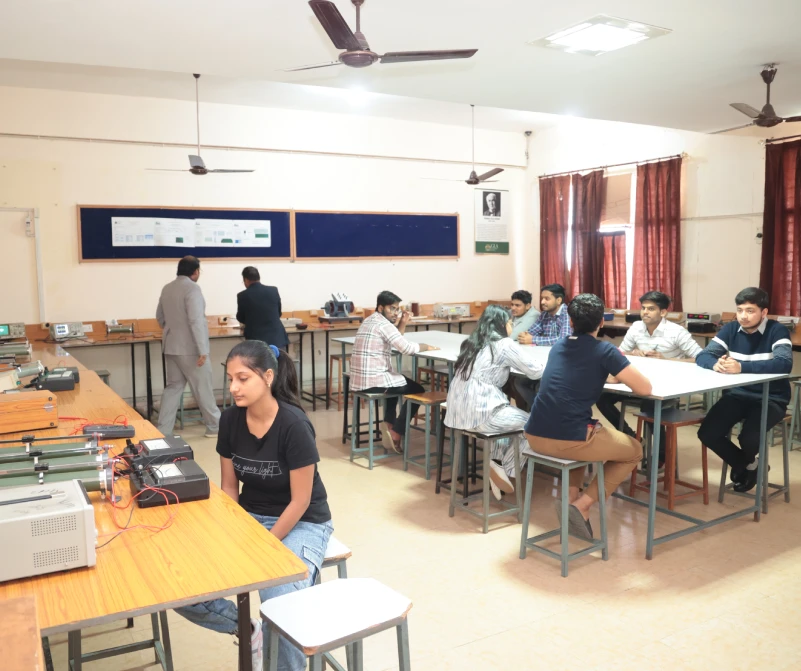
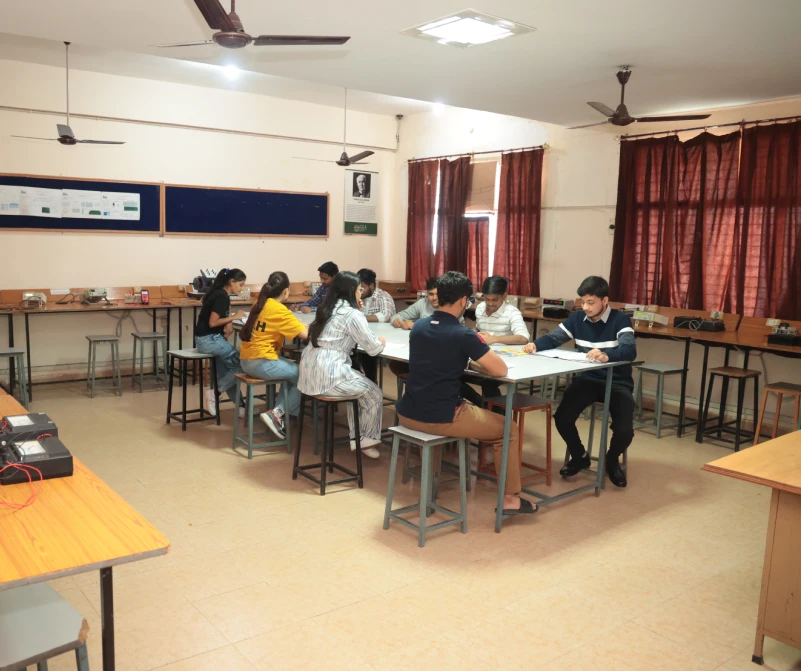
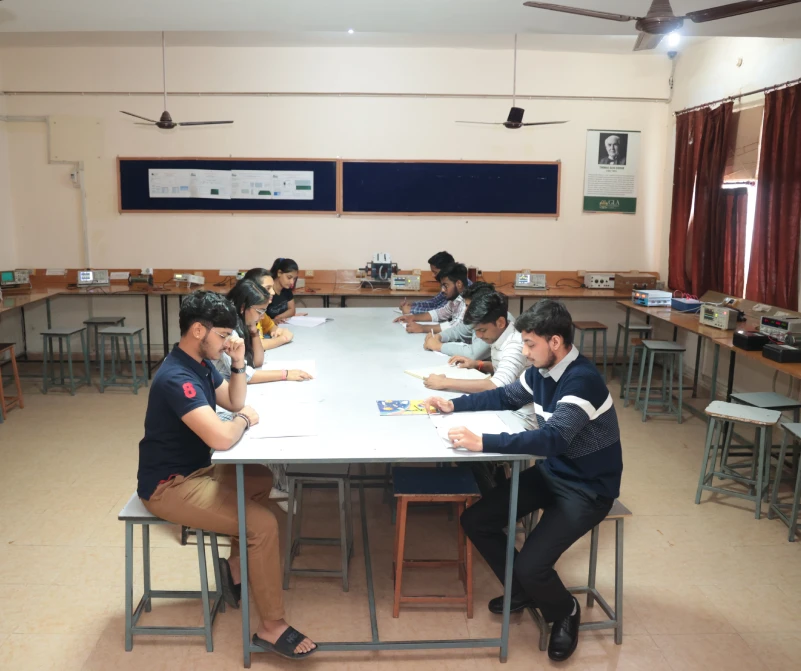
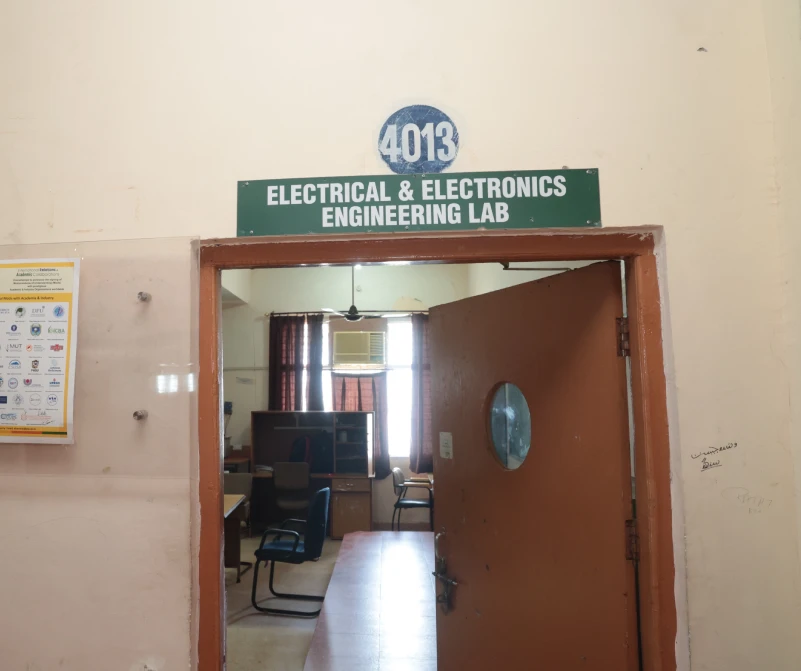
The Electrical Engineering Laboratory (Lab 4013) is the first-year foundation laboratory of the department.
It provides hands-on exposure to the fundamentals of electrical and electronics engineering to first-year B.Tech students of all branches, through two courses of 1 credit each (L–T–P–J: 0–0–2–0): BEEG 0800 for non-Computer Science branches and BEEG 1800 for Computer Science branches.
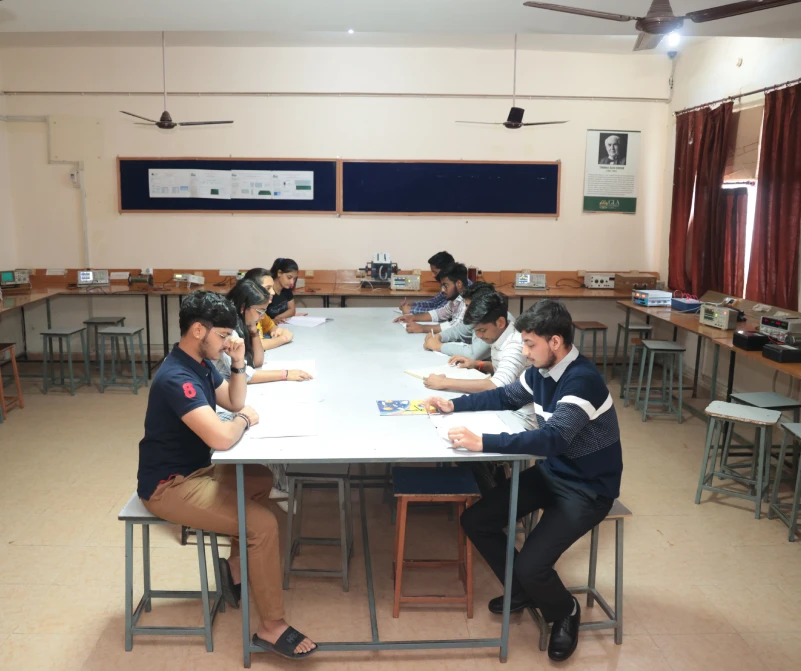
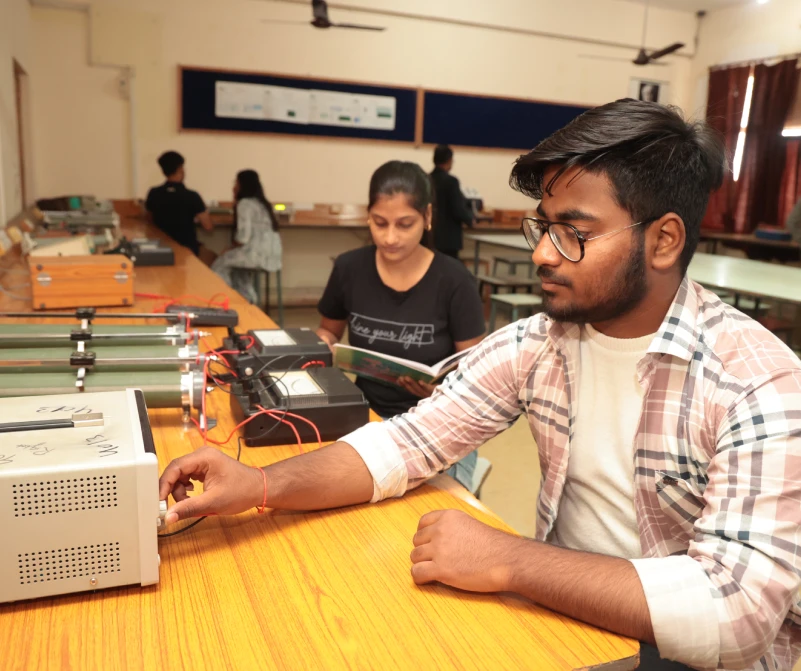
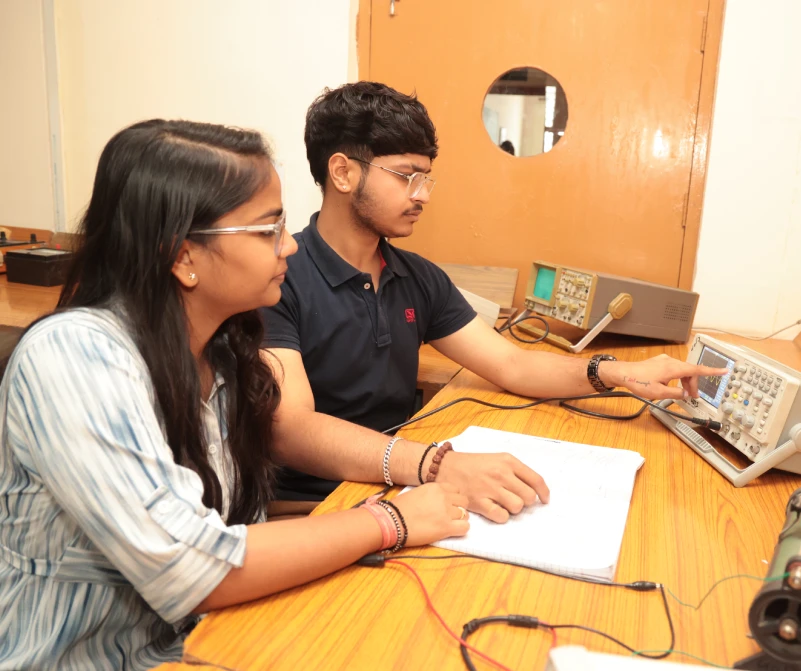
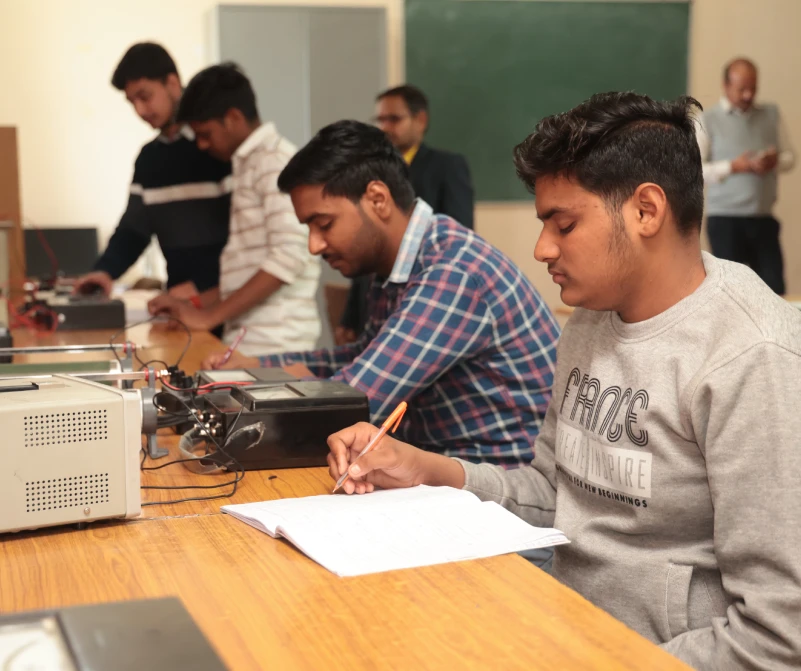
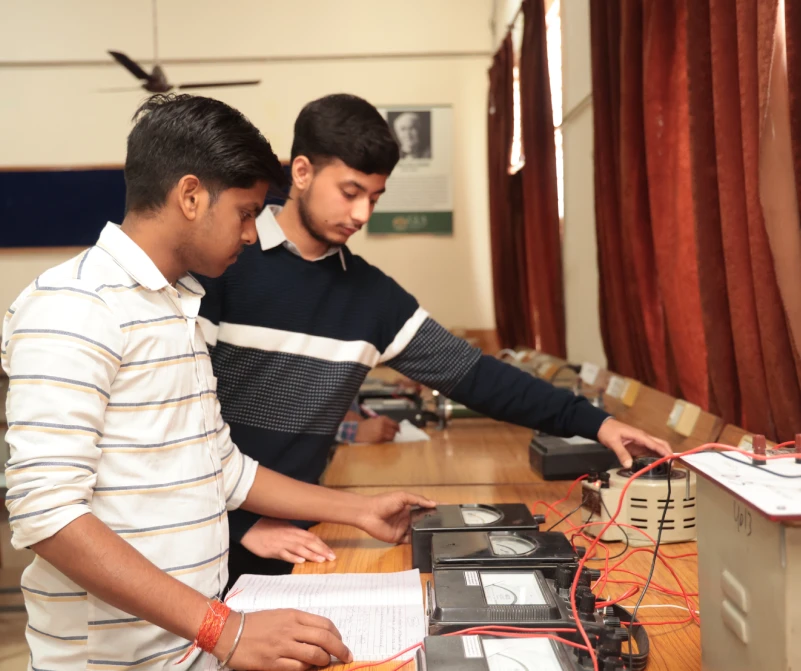
Students verify network theorems, study resonance, characterise semiconductor devices, build rectifier and wave-shaping circuits, and learn to use measuring instruments such as the CRO/DSO, function generator, multimeter and energy meter. Each course combines hardware experiments with software simulation using MATLAB/PSpice/PSIM, so that students can compare measured results with theory and simulation.
Course focus: Employability. Learning outcomes: on completion, students are able to (i) implement basic electric and electronic circuits using rheostats, bread-boards, resistors, capacitors, inductors, diodes, transistors, voltage sources, ICs, transformers, DSO/CRO and measuring devices, and (ii) measure electrical quantities such as voltage, current, frequency, power and energy.
List of Major Equipment
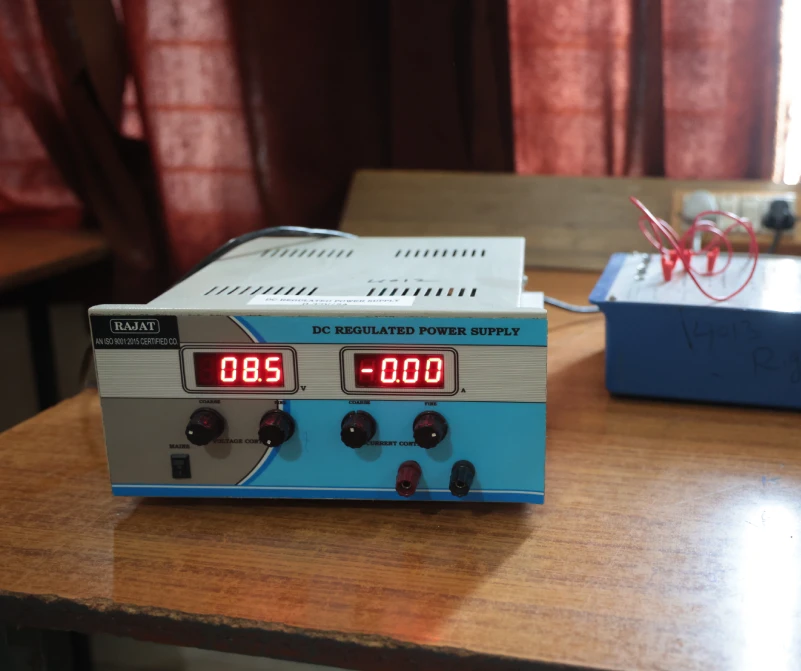
- Regulated DC power supplies (0–30 V, 2 A; dual supplies)
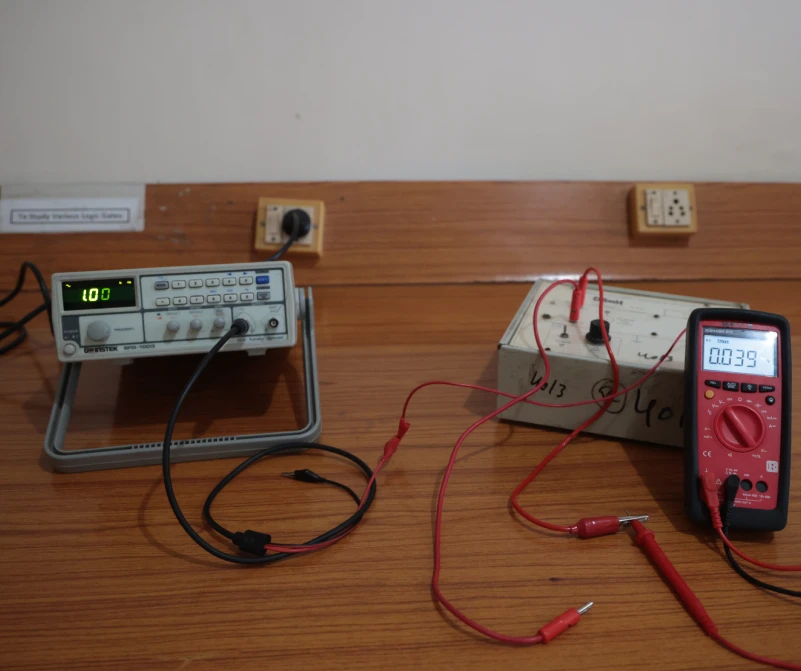
- Function generators (0–3 MHz)
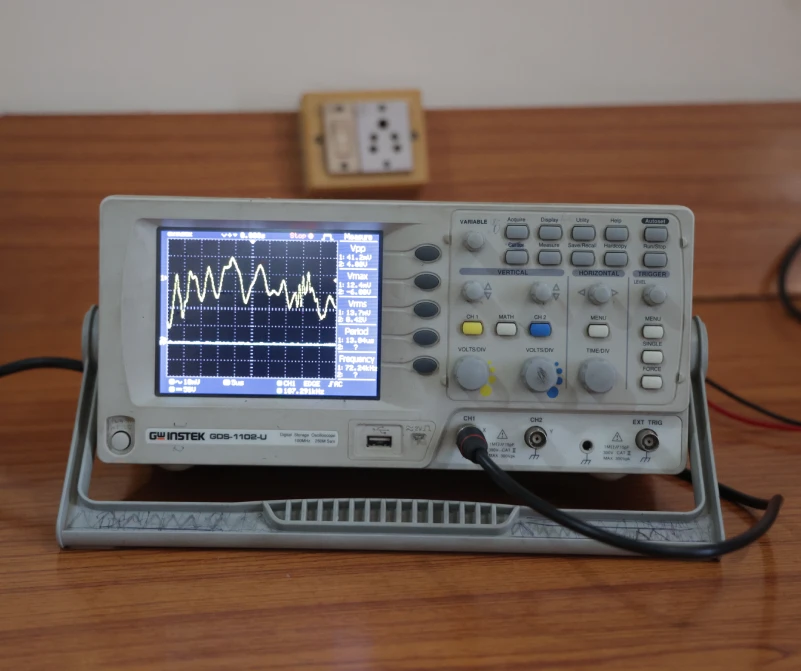
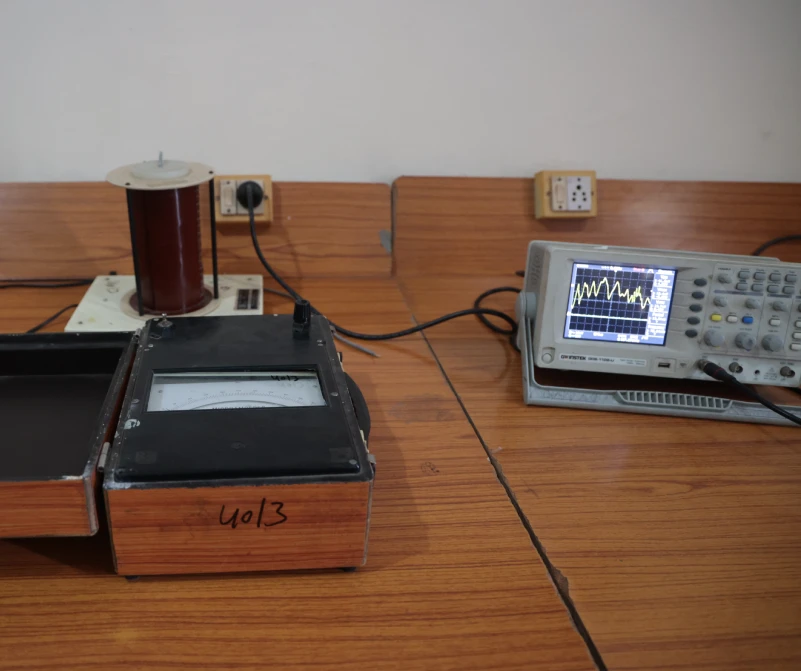
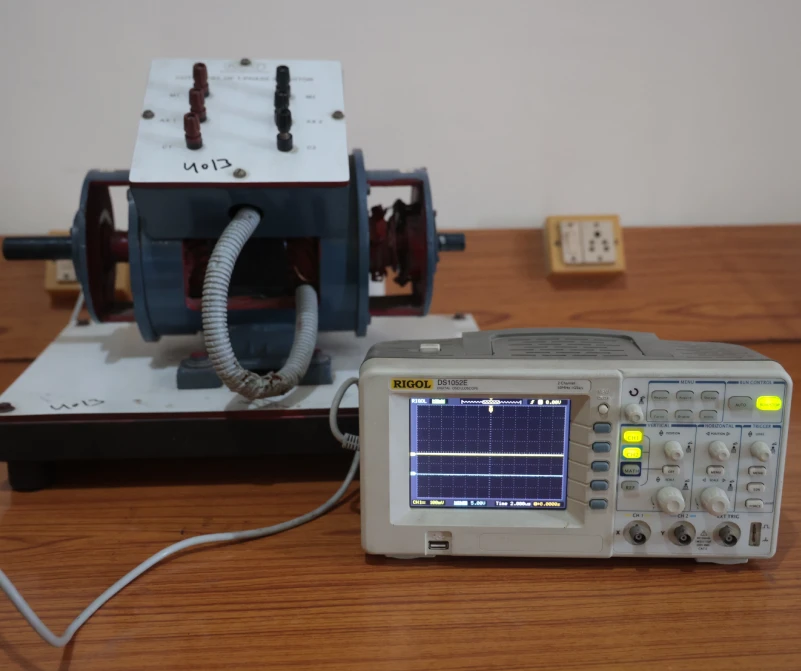
- Cathode Ray Oscilloscopes (20–25 MHz) / DSO with probes
- PMMC ammeters, milli-ammeters, micro-ammeters and voltmeters
- Digital multimeters
- Rheostats (0–30 Ω, 0–200 Ω and other ranges)
- R-L-C circuit kits (resistor, inductor, capacitor elements)
- Semiconductor diodes, BJTs and MOSFETs with trainer/bread-board kits
- Centre-tapped / step-down transformers (230/15-0-15 V)
- Single-phase induction-type energy meter and digital energy meter
- Logic gate trainer kits and ICs
- Bread-boards, resistors, capacitors, connecting wires and probes
- Computer systems with MATLAB / PSpice / PSIM
List of Experiments
A. BEEG 0800 – Electrical Engineering Lab (non-CS branches)
Hardware-based experiments
- To verify Thevenin’s theorem (DC circuits)
- To verify the maximum power transfer theorem (DC circuits) and draw the graph between power and load resistance
- To study resonance in a series R-L-C circuit and draw the graph between frequency and current
- To determine the V-I characteristics of a semiconductor diode; calculate forward and reverse static and dynamic resistances
- To study the working of half-wave and full-wave (bridge) rectifiers and determine the ripple factor
- To determine the efficiency of a single-phase transformer by direct loading test and draw the graph between load and efficiency
- To study the applications of CRO (voltage, current and frequency measurement)
- To study a single-phase induction-type energy meter and calibrate it with a digital energy meter
- To study various logic gates (OR, AND, NOT, NAND, NOR)
- To verify the Superposition theorem (DC circuits)
Software-based experiments (MATLAB/PSIM/PSpice)
- To verify Thevenin’s theorem
- To verify the maximum power transfer theorem
- To study resonance in a series R-L-C circuit and draw the graph between frequency and current
- Half-wave and full-wave (bridge) rectifiers with ripple factor – resistive load
- Half-wave and full-wave (bridge) rectifiers with ripple factor – inductive load
- To verify the Superposition theorem
B. BEEG 1800 – Electrical and Electronics Engineering Lab (CS branches)
Hardware-based experiments
- To verify Thevenin’s theorem (DC circuits)
- To verify the maximum power transfer theorem (DC circuits) and draw the graph between power and load resistance
- To verify the Superposition theorem (DC circuits)
- To study resonance in a series R-L-C circuit and draw the graph between frequency and current
- Study of CRO and measurement of voltage and frequency using CRO
- Realization and analysis of the V-I characteristic of a PN junction diode
- Realization and analysis of the bridge-type full-wave rectifier
- Realization and analysis of clipper and clamper circuits
- Realization and analysis of input and output characteristics of a common-emitter BJT
- Realization and analysis of drain and transfer characteristics of an enhancement-type n-channel MOSFET
Software-based experiments (MATLAB/PSpice)
- To verify Thevenin’s theorem
- To verify the maximum power transfer theorem
- To study resonance in a series R-L-C circuit and draw the graph between frequency and current
- Full-wave (bridge) rectifier and ripple factor for resistive load
- To verify the Superposition theorem
- Input and output characteristics of a common-emitter BJT
Skills developed
- Building and testing electrical and electronic circuits on hardware
- Using CRO/DSO, function generators, multimeters and energy meters
- Circuit simulation and result comparison with theory
- Safe laboratory practice, observation recording and technical reporting
- Students maintain a lab manual with pre- and post-experiment questions, observations, results and precautions for each experiment
 Virtual Tour
 B.Tech Programs
UG Programs
Lateral Entry
M.Tech Programs
PG Programs
Doctoral Programs
Diploma Programs
Admissions Helpline

-

-

-

-

17km Stone, NH-19, Mathura-Delhi Road, P.O.
Chaumuhan, Mathura-281 406, (U.P.) INDIA