
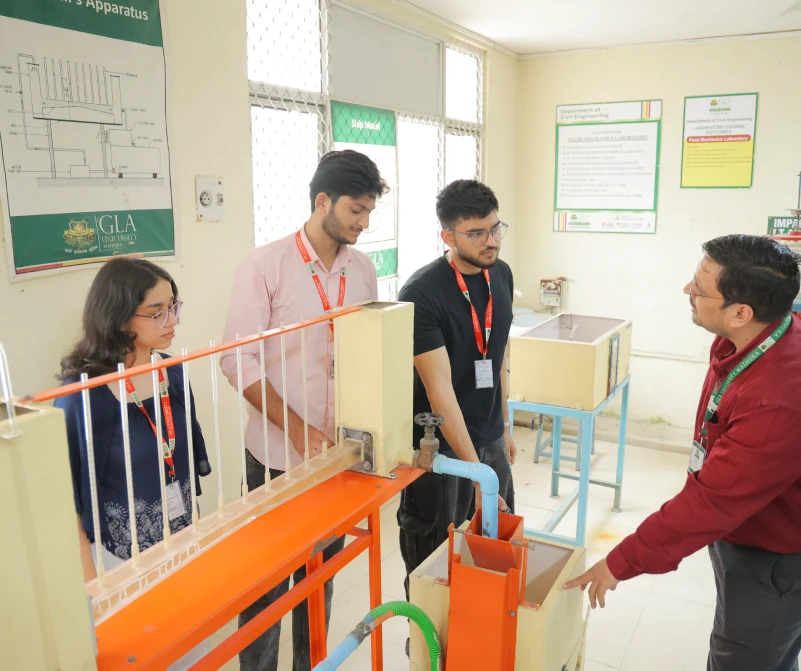
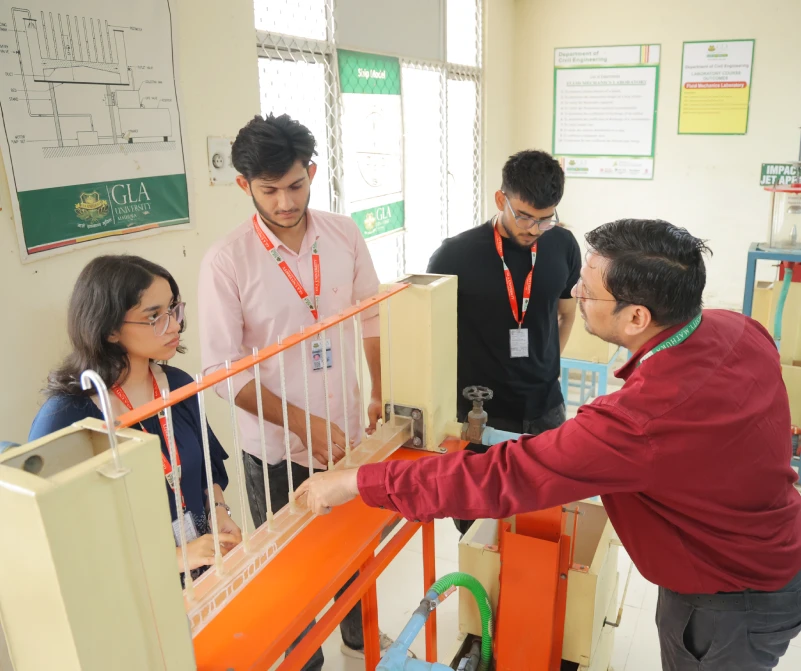
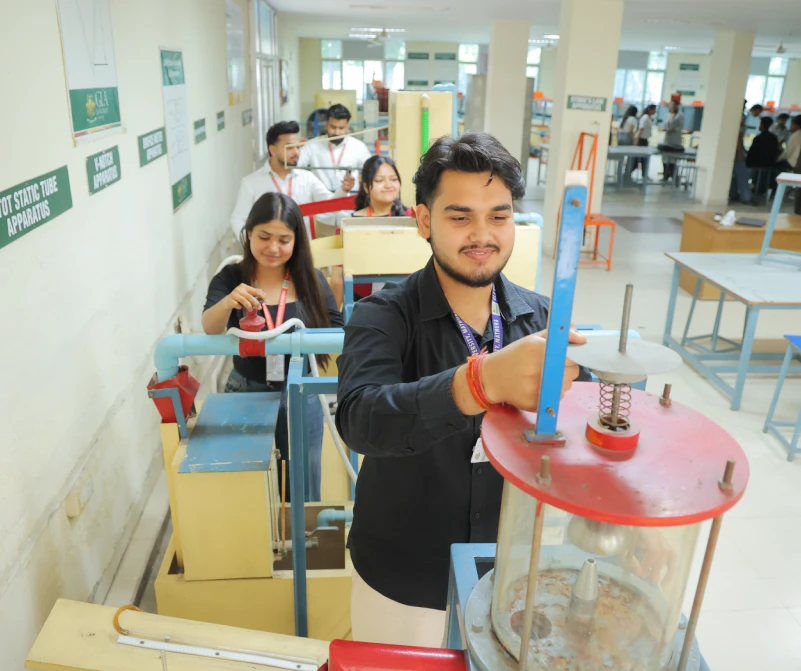
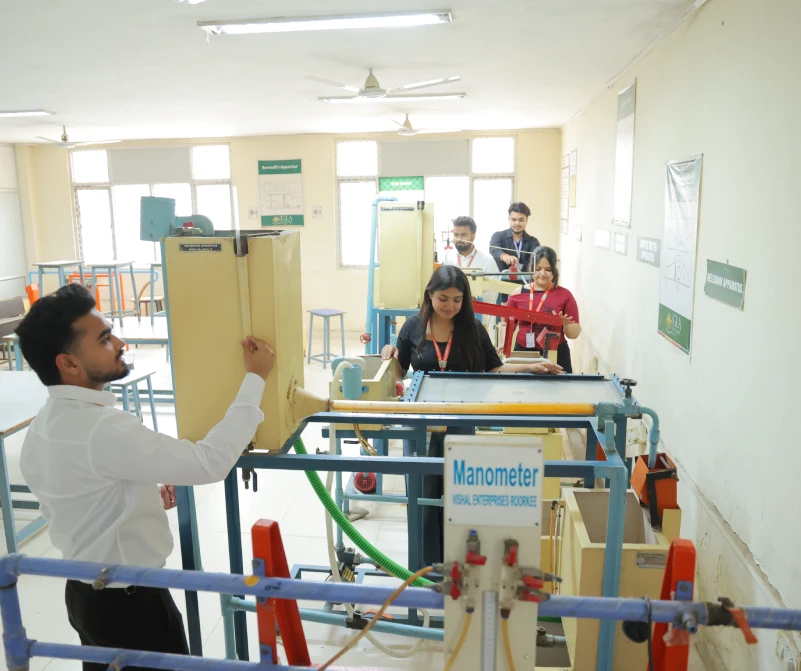
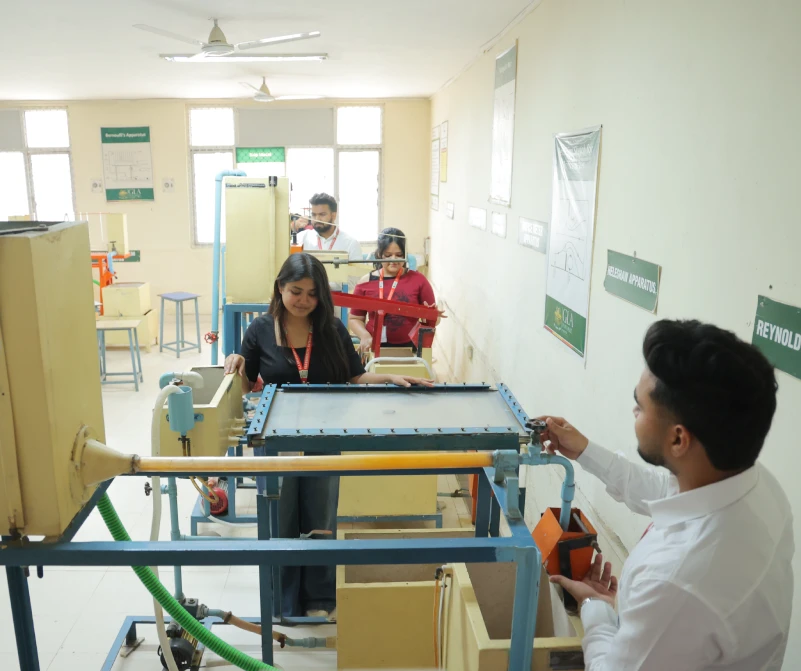
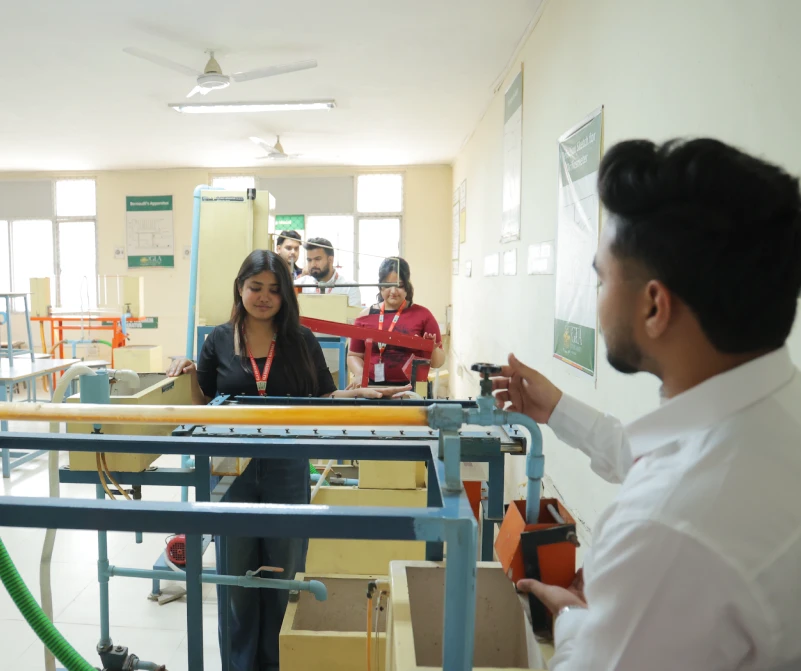
Fluid Mechanics and Open Channel Hydraulics Laboratory provides a practical learning environment for understanding the behavior of fluids at rest and in motion,
and the principles governing flow through pipes, channels, and hydraulic structures.
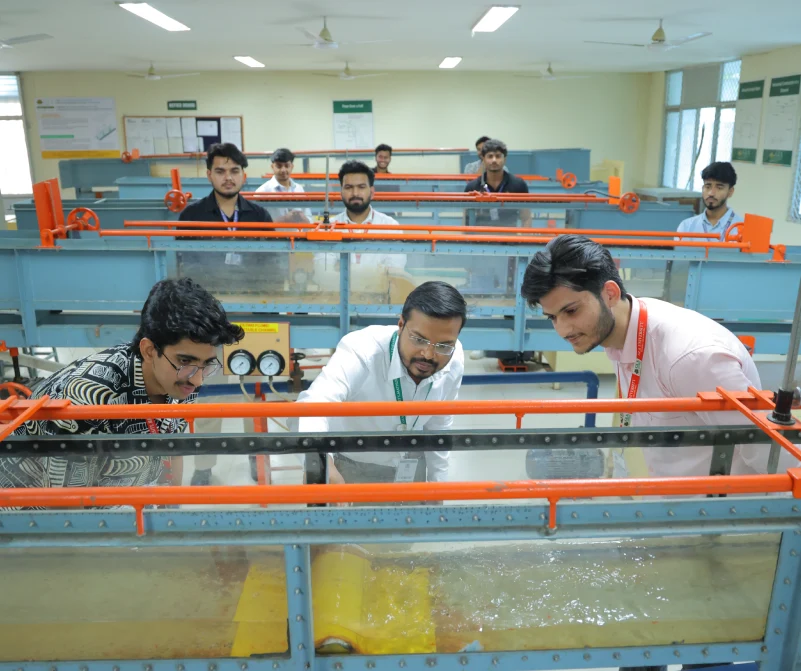
The laboratory supports undergraduate teaching, experimental investigations, and project-based learning in core areas such as pressure measurement, flow measurement, energy losses, flow resistance, and the characteristics of open-channel flow. Through laboratory experiments, students can verify fundamental relationships and compare measured results with theoretical predictions.
The facility can also support studies involving Reynolds number, Bernoulli’s theorem, pipe friction, discharge measurement, flow over weirs and notches, hydraulic jumps, and specific energy. By developing skills in experimental setup, observation, data analysis, and technical report writing, the laboratory helps students connect fluid mechanics theory with practical civil engineering applications in water supply, irrigation, drainage, river engineering, and hydraulic design.
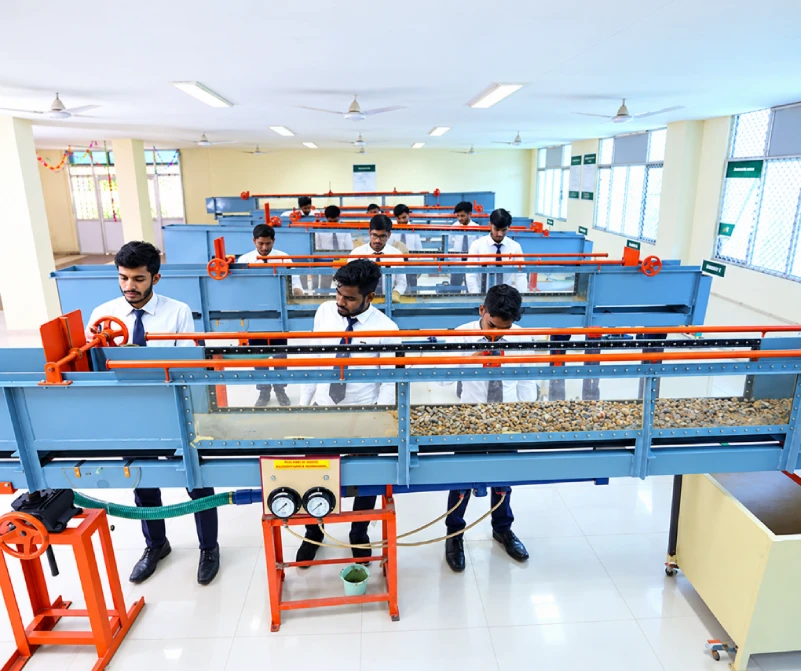
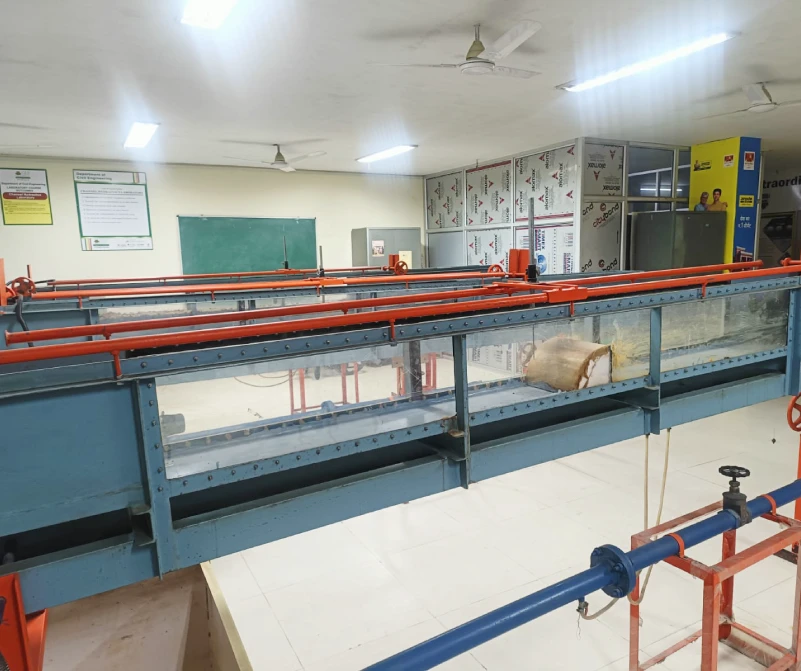
Manning’s Roughness / Open Channel Flume
| S. No. | Name of Equipment / Item | Qty. |
|---|---|---|
| 1 | Glass tube / capillary tubes of different diameters | 1 |
| 2 | Ship model with movable masses / weights and removable steel strips | 1 |
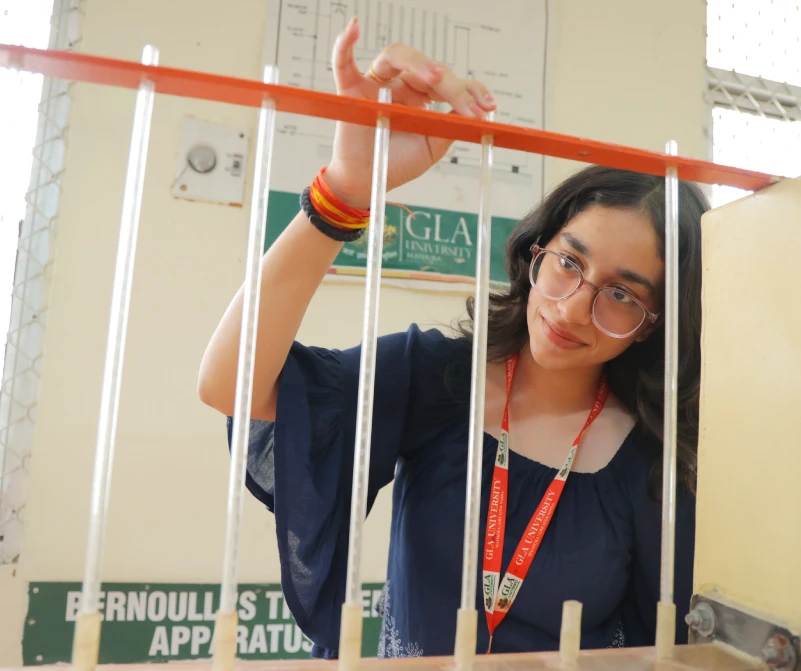
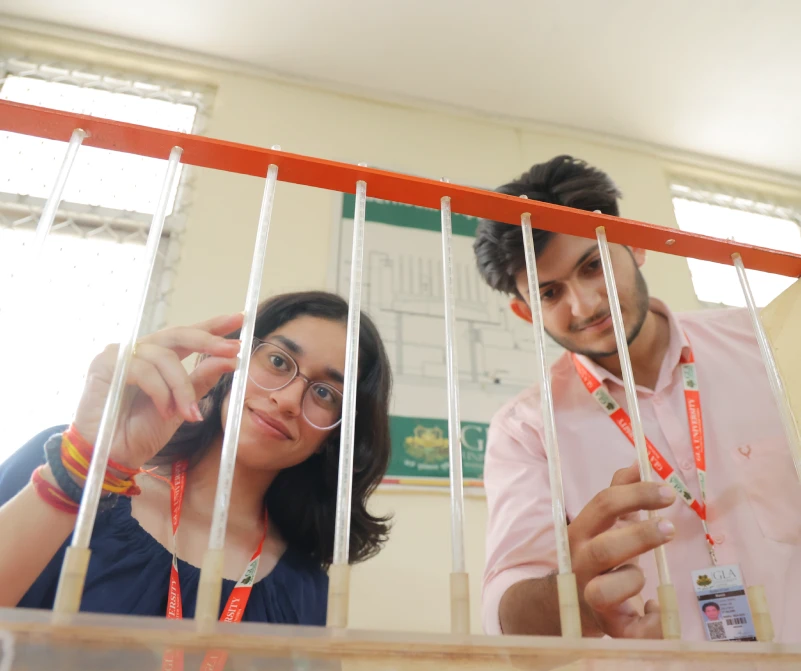
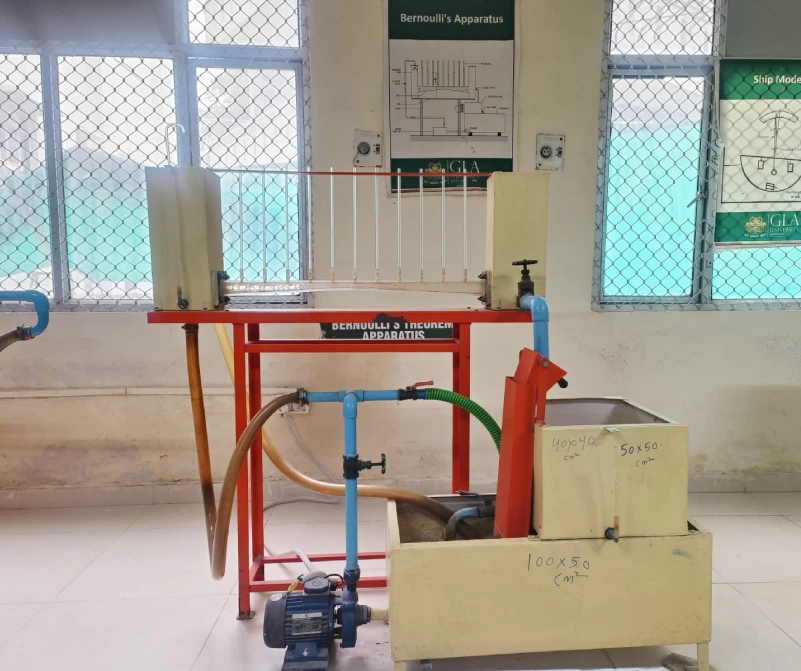
| 3 | Bernoulli experimental set-up | 1 |
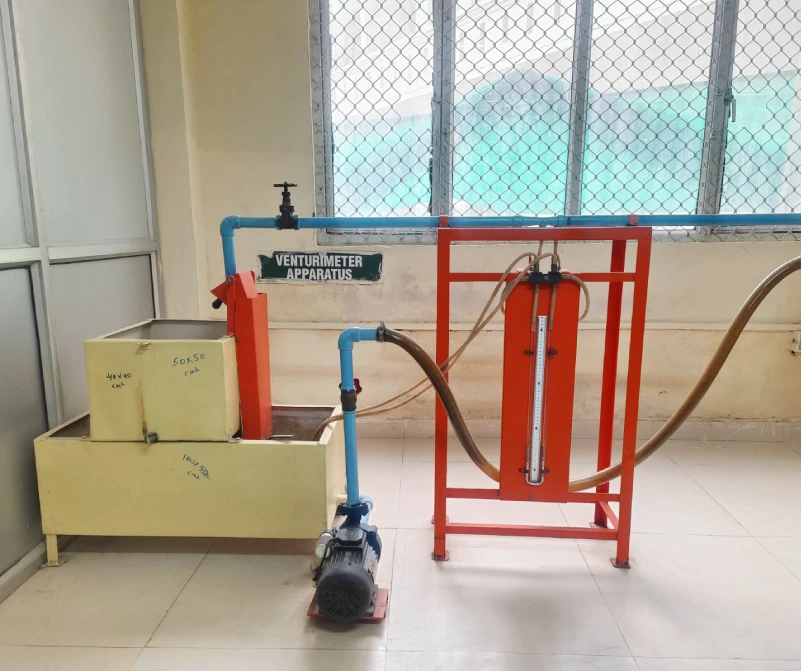
| 4 | Venturimeter & Orrificemeter experimental set-up | 1 |
| 5 | Pipe-flow experimental set-up for velocity distribution in a pipe | 1 |
| 6 | Pitot-static tube | 1 |
| 7 | Triangular weir mounted in a small steel flume | 1 |
| 8 | Reynold’s Apparatus | 1 |
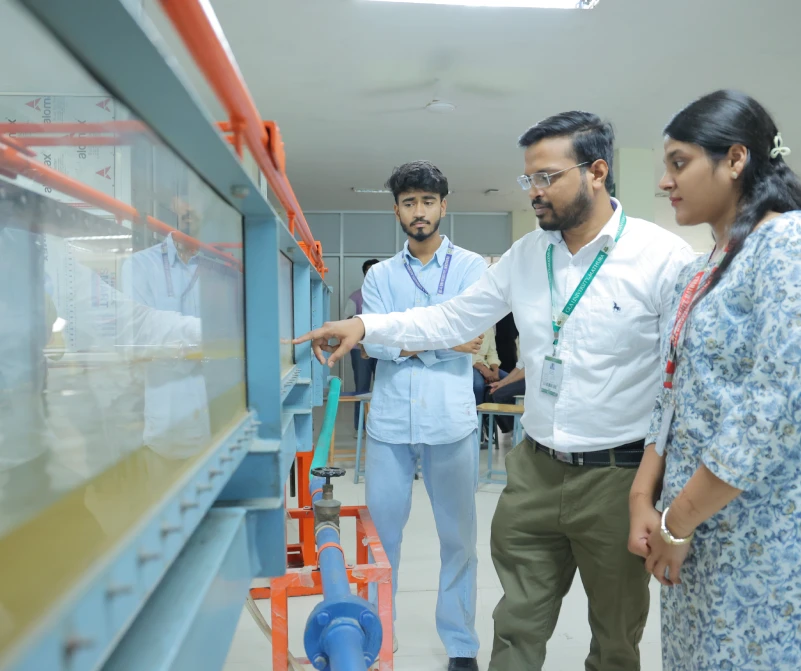
| 9 | Glass-walled rectangular flume / open channel | 5 |
| 10 | Roughened-bed flume for Manning’s roughness coefficient experiment | 1 |
| 11 | Current Meter for Velocity Measurement | 2 |
| 12 | Stop Watch | 1 |
 Virtual Tour
 B.Tech Programs
UG Programs
Lateral Entry
M.Tech Programs
PG Programs
Doctoral Programs
Diploma Programs
Admissions Helpline

-

-

-

-

17km Stone, NH-19, Mathura-Delhi Road, P.O.
Chaumuhan, Mathura-281 406, (U.P.) INDIA