
The Microbiology Laboratory of the Department of Biotechnology, GLA University, Mathura,
is a dedicated teaching laboratory designed to provide systematic, hands-on training in fundamental microbiological techniques and their applications.
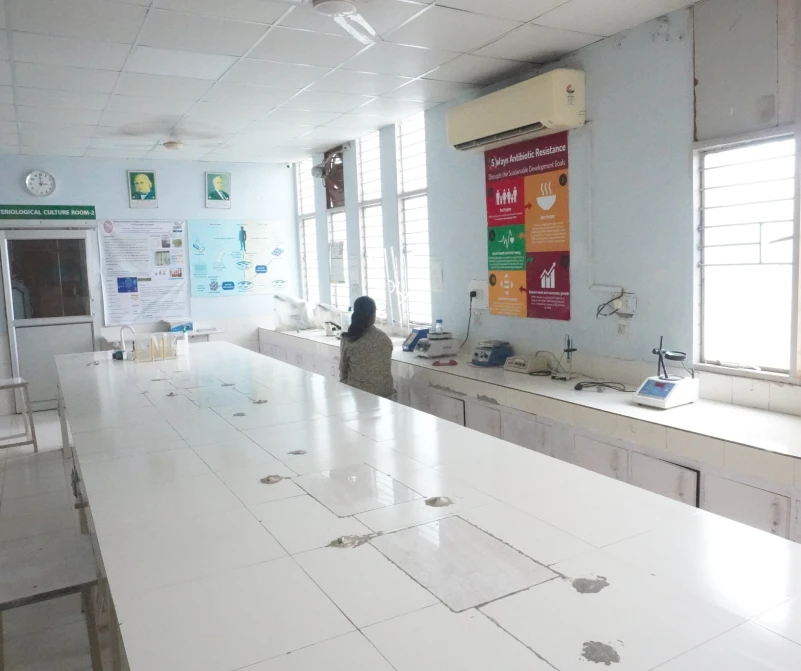
The laboratory facilitates experiential learning in the cultivation, observation, isolation, enumeration, staining, characterization, and identification of microorganisms. It provides students with practical exposure to essential microbiological procedures, beginning with laboratory safety, cleaning of glassware, aseptic techniques, and proper handling of microbiological instruments.
The laboratory supports practical training in both bacteriology and mycology, including preparation of culture media, maintenance of cultures, pure-culture techniques, microscopic examination, and morphological characterization. Particular emphasis is placed on aseptic practices and accurate laboratory procedures to ensure reliable experimental outcomes. The facility also incorporates elements of environmental microbiology and applied microbiology, with practical exercises involving the isolation and enumeration of microorganisms from soil and the assessment of water quality through BOD and COD determination.
Major Equipment
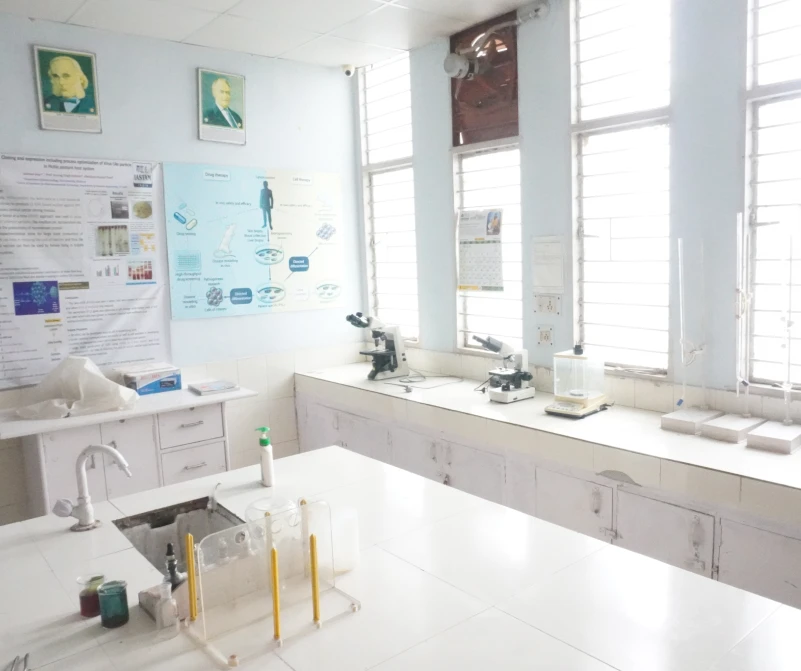
The laboratory is supported by essential equipment required for conducting routine microbiological practicals and microscopic investigations. Compound microscopes constitute a key component of the laboratory and are used for the examination of bacterial morphology, fungal structures, stained preparations, and microscopic specimens. Students are trained in the correct operation, handling, and precautionary measures associated with microscopy. The laboratory also facilitates microscope calibration and standardization using ocular and stage micrometers, enabling students to undertake quantitative microscopic measurements, including determination of fungal conidial size.
The laboratory has the necessary working facilities for preparation of microbiological culture media, culture tubes and slants, bacterial and fungal cultivation, pure-culture techniques, staining procedures, biochemical testing, and antimicrobial susceptibility testing. The practical infrastructure further supports analytical exercises related to biological oxygen demand (BOD) and chemical oxygen demand (COD) of raw and treated water samples.
Experiments
The laboratory offers a comprehensive set of practical exercises covering the major areas of introductory and applied microbiology. Students are trained in microbiology laboratory safety, glassware cleaning, aseptic techniques, and handling of laboratory instruments. Microscopy-based exercises include studying the components and operation of a compound microscope, microscope calibration using micrometers, and measurement of fungal conidia. Culture and media-related practicals include the preparation of Nutrient Agar Medium (NAM) for routine bacterial cultivation, preparation of Potato Dextrose Agar (PDA) for fungal cultivation, and preparation of PDA slants in culture tubes. Students are also introduced to pure-culture techniques, bacterial smear preparation and fixation, and differential and special staining procedures, including simple staining, Gram staining, negative staining, acid-fast staining, and endospore staining.
The laboratory further facilitates isolation and enumeration of bacteria and fungi from soil samples, determination of BOD and COD in raw and treated water, investigation of biochemical activities of microorganisms, and bacterial identification through the IMViC test. Antimicrobial susceptibility is demonstrated through the Kirby–Bauer disc diffusion method, providing students with practical exposure to phenotypic assessment of bacterial response to antibiotics.
Utilities and Facilities
The laboratory provides a structured practical-learning environment with dedicated work areas and facilities for microbial culture preparation, microscopic examination, staining, isolation and enumeration of microorganisms, biochemical characterization, and antimicrobial susceptibility testing. Its facilities support the preparation and handling of bacterial and fungal culture media, including nutrient agar and PDA, as well as culture tubes and PDA slants required for cultivation exercises.
The laboratory also provides facilities for microscopic measurement and fungal morphology assessment, including microscope calibration and determination of conidial dimensions. Environmental microbiology activities are supported through practical work involving soil microorganisms and water-quality parameters such as BOD and COD. In addition, facilities for biochemical and IMViC testing enable students to develop practical skills in the characterization and identification of bacterial isolates.
Overall, the Microbiology Laboratory serves as an integrated practical training facility for developing competency in microbiological laboratory practices, microbial cultivation, microscopy, staining, isolation, enumeration, biochemical identification, environmental microbiology, and antimicrobial susceptibility testing. The laboratory-oriented training strengthens students' technical proficiency, observation skills, accuracy, and understanding of microbiological principles through direct experimental learning.
 Virtual Tour
 B.Tech Programs
UG Programs
Lateral Entry
M.Tech Programs
PG Programs
Doctoral Programs
Diploma Programs
Admissions Helpline

-

-

-

-

17km Stone, NH-19, Mathura-Delhi Road, P.O.
Chaumuhan, Mathura-281 406, (U.P.) INDIA