
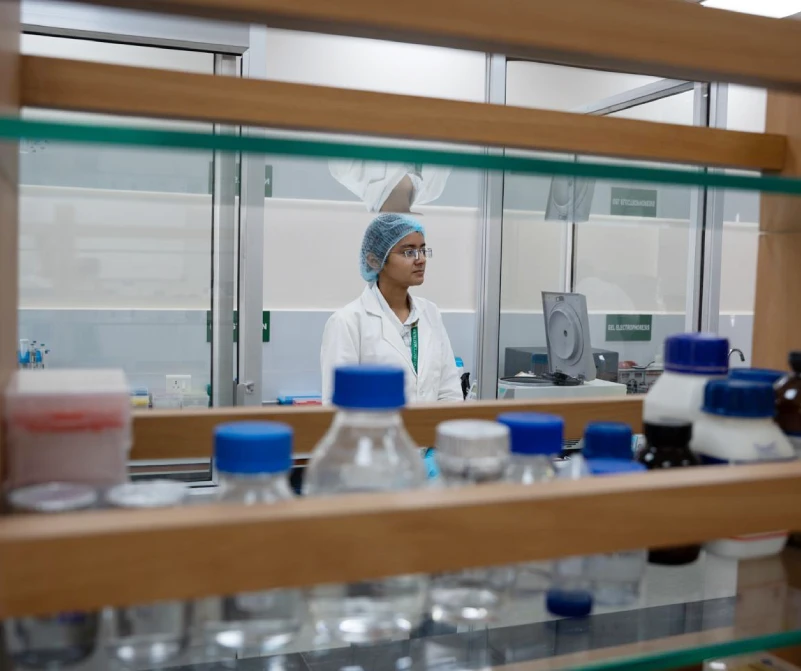
List of facilities in the lab:
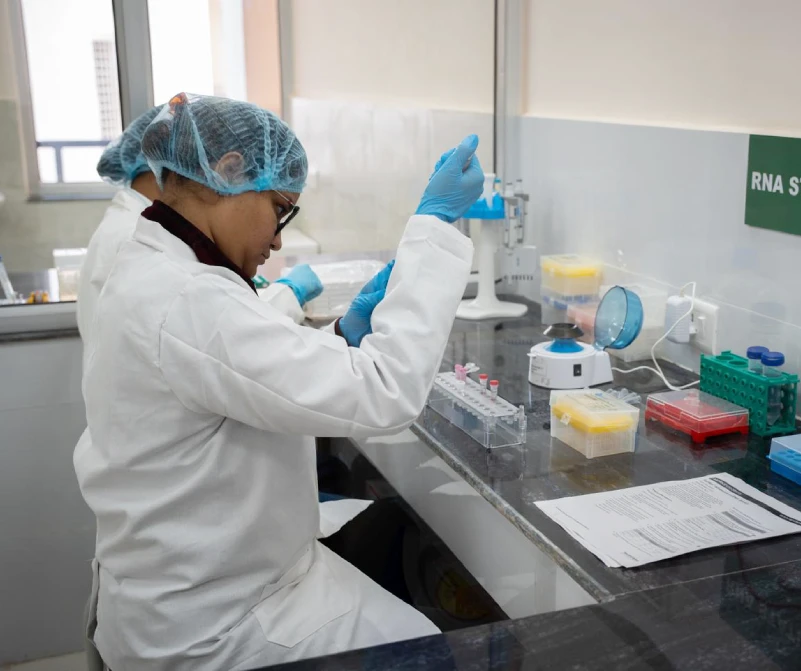
- DNA and RNA Extraction
- microRNA Library Preparation
- cDNA Synthesis
- SNP Analysis
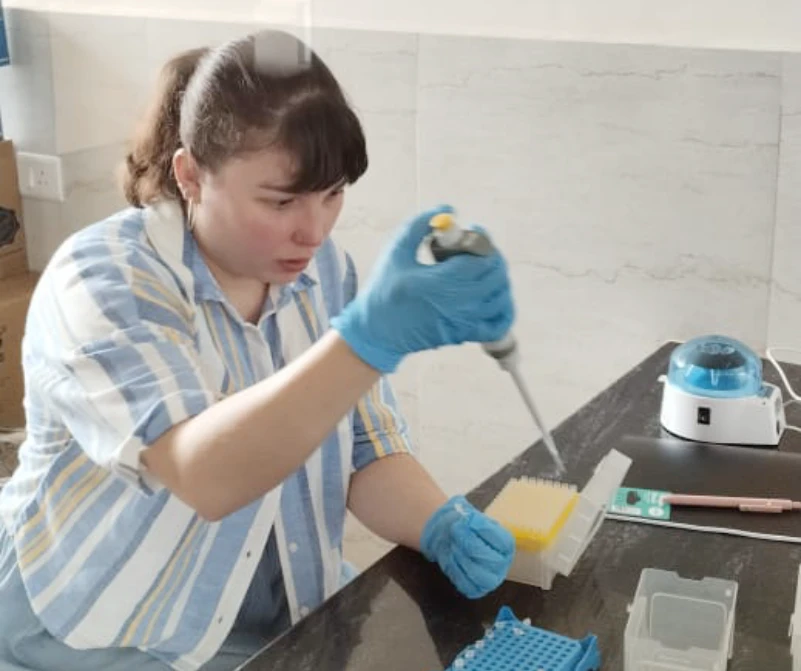
- PCRs
- Gel Electrophoresis
- ELISA
- Biochemical Estimation
Key highlights of the lab:
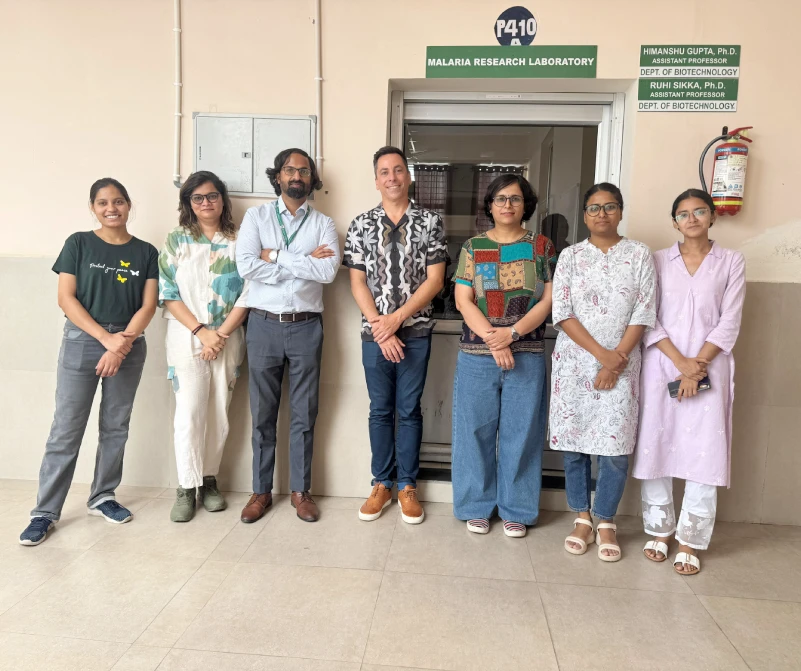
Integrated multi-omics expertise: The laboratory employs integrated genomics, transcriptomics, proteomics, and microRNA-based approaches to investigate infectious and inflammatory diseases, with a primary focus on malaria, pterygium, and arboviral infections. These approaches are complemented by clinical phenotyping and biomarker-oriented analyses.
MicroRNA biomarkers for severe malaria: In malaria research, the laboratory has demonstrated that a combinatorial microRNA signature comprising miR-21, miR-150, and miR-3158 can distinguish cerebral malaria cases with 92% classification accuracy, highlighting the potential of host microRNAs as adjunct diagnostic and prognostic biomarkers for severe disease.
Well-characterized pterygium biorepository: Over the past four years, the laboratory has established a unique biorepository of approximately 200 blood and ocular tissue samples from pterygium patients spanning different stages of disease severity, along with appropriate healthy and cataract controls.
Inflammatory profiling in pterygium: Systematic analysis of pro- and anti-inflammatory cytokines in pterygium samples indicates a significant reduction in IL-10 levels in pterygium patients compared with healthy and cataract controls, suggesting dysregulated anti-inflammatory responses in disease pathogenesis.
Arboviral disease cohort development: Over the last two years, the laboratory has collected more than 100 dengue virus–positive and –negative clinical samples from the Delhi-NCR region, creating a valuable resource for downstream molecular investigations.
Multi-omics biomarker discovery in dengue: Ongoing work leverages genomics, transcriptomics, and proteomics to identify host- and pathogen-derived biomarkers associated with dengue infection. These efforts aim to support the development of improved diagnostic tools and to advance mechanistic understanding of dengue pathogenesis.
Translational orientation and public-health relevance: Across disease areas, the laboratory emphasizes biomarker discovery, clinical translation, and diagnostic innovation, aligning basic molecular findings with unmet needs in disease stratification, early diagnosis, and severity prediction.
- -86°C Ultra-Low Temperature Freezer (Blue Star)
- PCR (Bio-Rad)
- Refrigerated Centrifuge (Borosil)
- Gel Electrophoresis (Genei)
- Plate Centrifuge
Funding
Assessing the use of microRNAs involved in regulating immune cells as biomarkers of severity in Plasmodium falciparum infection. Funded by GLA University, Mathura; Budget – 9,50,000/- INR; Duration: 2025 – 2027; On-going. Centre for the Study of Complex Malaria in India - microRNAs based Biomarkers of Hidden Plasmodium infections. Funded by National Institutes of Health (NIH), USA; Budget – approx. 82,00,000/- INR; Duration: 2024 – 2029; On-going. Differentially expressed miR-3158-3p microRNA in severe malaria: from discovery to validation. Funded by SERB, New Delhi, India; Budget – 30,50340/- INR; Duration: 2022 – 2024; Completed.
 Virtual Tour
 B.Tech Programs
UG Programs
Lateral Entry
M.Tech Programs
PG Programs
Doctoral Programs
Diploma Programs
Admissions Helpline

-

-

-

-

17km Stone, NH-19, Mathura-Delhi Road, P.O.
Chaumuhan, Mathura-281 406, (U.P.) INDIA