IEEE Conference Record No:
65210
Organised By:
Department of Computer Engineering and Applications
GLA University, Mathura
(ISCON) Is 7th conference in sequence on Information Systems & Computer Networks (ISCON - 2025) is a forum in which deliberations will be held on various topics pertaining to Information Systems and Computer Networks. Information Systems addresses the challenges for the gathering, processing, storing, distributing and use of information, and its associated technologies, for society and organizations. The computer networks is an emerging domain and a basis for wide variety of research covering various kinds of network like distributed networks, ad-hoc networks, sensor networks, content centric networks, grid computing, peer to peer networks, different wireless networks, etc.
The networks domain has generated challenges for transmission of various data formats in secure form, making technology available for real time data exchange and so on. Up-to-date, complete and accurate information has now become a necessity to survive in an increasingly competitive world. Modern organizations become more and more dependent over information systems to deal with the complexity and changeability of the modern systems.
An information system is essentially made up of five components hardware, software, database, network and people. These five components integrate to perform input, process, output, feedback and control. Hardware consists of input/output device, processor, and operating system and media devices. Internet of Things (IoT) consists of emerging technologies to communicate between software/hardware components. Innovative wireless communication and data networking technologies are required to support IoT technologies. For smaller size and improved performance, whole System is required to be implemented as system on chip (SOC), which requires integration of transmitter, receiver, antenna, filters, power supply and peripheral devices integrated on single chip as SOC. SOC are required to be implemented with state of the art VLSI and signal processing technologies.
GLA University is one of the premier universities in India, situated in Northern India. The university was established by our present Chancellor, Shri Narayan Das Agrawal in 1998. The chancellor envisioned GLA as a quality educational institution to serve the higher education needs of the youth of the region and beyond. The institute was accorded the status of the university under the U.P. State Legislative Act of 2009 (UP Act 21 of 2010). Recently the University was accredited with 'A' grade by NAAC A+.
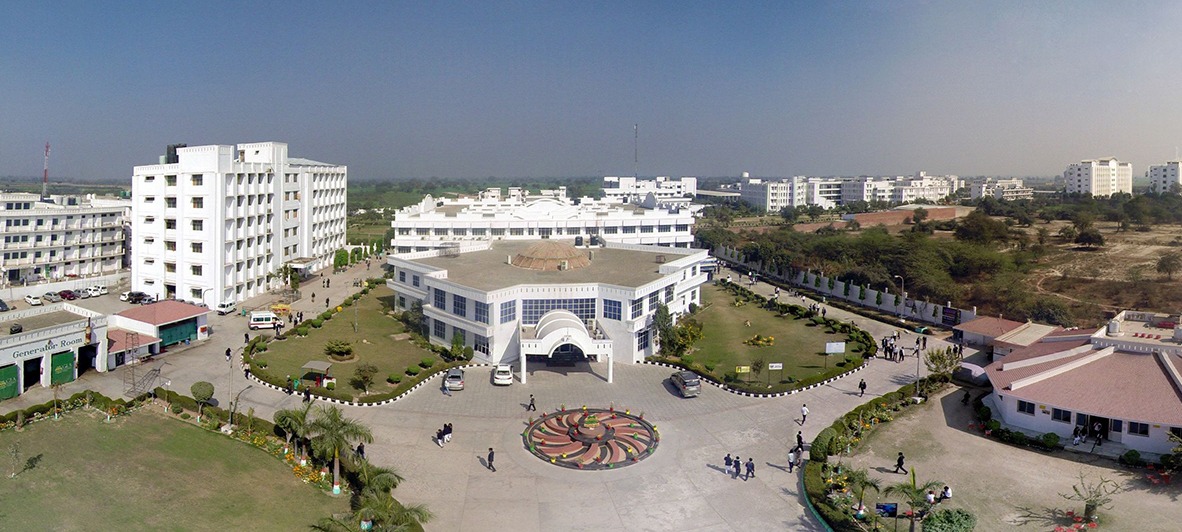
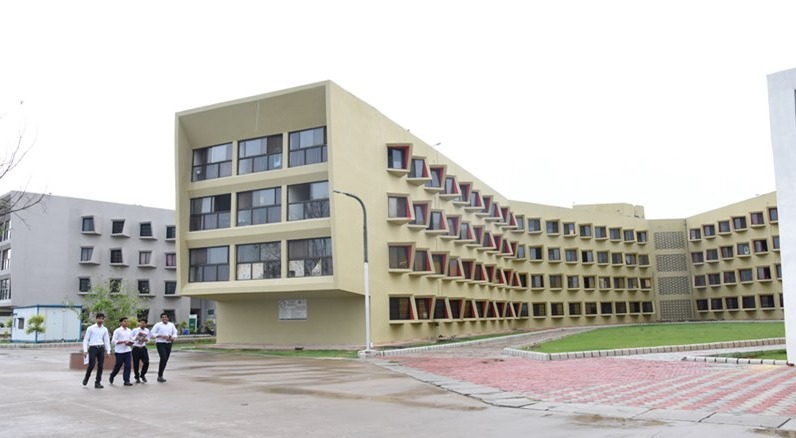

It spread across 120 acres of land and is home to more than 22,000 students, enrolled in a variety of professional courses. It boasts of well-designed and maintained buildings, contemporary laboratories, spacious residential complexes, and recreational facilities. The facilities of such kind and grandeur make the GLA campus one of the best in the region, providing its students an ideal environment to hone their skills in an increasingly competitive and demanding world.
The ever-growing usage of computer systems in a wide variety of fields has generated a large demand of computer professionals. India is one of the leading exporters of IT talent and Indian Computer Engineers have played a major role in the growth and development of IT sector across the globe. According to NASSCOM, the Indian IT exports are expected to expand to the tune of US$ 175 billion by 2020 and the domestic sector will account for US$ 50 billion in terms of earnings.
In order to meet the demand of computer professionals, the Department of Computer Engineering and Applications at GLA University offers various programs at both under graduate and post graduate level. All the programs feature a combination of theoretical and practical elements in order to provide the students a platform for co-relating the learning.
Submit your research papers to ISCON 2025 and share your innovative ideas with the academic community.
All papers must be submitted in IEEE format. Papers should be written in English with a maximum length of 6 pages including figures and references. Additional pages will be subject to extra charges.
All papers must be submitted electronically through the Microsoft CMT system. Please ensure that your paper is submitted to the correct track.
All submissions must be original and not simultaneously submitted to another journal or conference. Plagiarism in any form will result in rejection of the paper.
All submissions will undergo a double-blind peer review process. Please ensure that your paper does not contain any information that can identify the authors.
Please use the following IEEE templates for preparing your paper. Make sure to follow the formatting guidelines strictly.
Download the IEEE LaTeX template package which includes class files and example documents.
Download LaTeX TemplateDownload the IEEE Word template for authors who prefer using Microsoft Word.
Download Word Template
All papers must be submitted through the Microsoft CMT
system.
Please follow these steps to submit your paper:
September 01, 2024
April 30, 2025 Midnight
June 01, 2025 onwards
July 30, 2025 Midnight
July 30, 2025
September 5-6, 2025